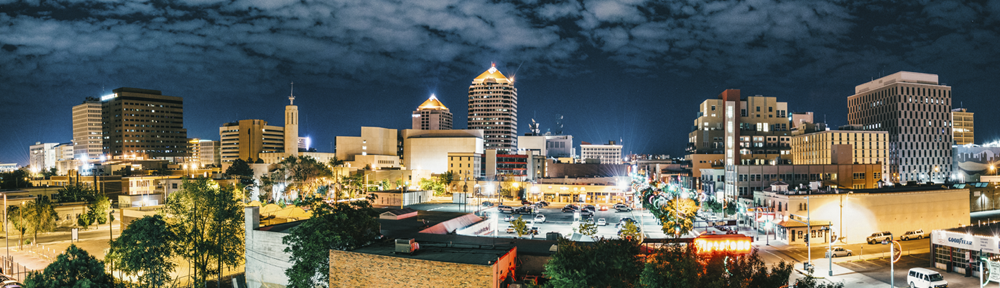
Attorney Rudolph “Rudy” Chavez Second Attorney To Plead Guilty To Federal Charges In Bribery And Conspiracy Case To Dismiss DWI Cases; 8 Law Enforcement Plead Guilty; 2 Ring Leaders Plead Guilty; 20 Law Enforcement Implicated; No One Sentenced Yet

On July 10, private criminal defense attorney Rudolph “Rudy” Chavez plead guilty to a federal extortion charge admitting he bribed an Albuquerque police officer in 2023 to help get his  client’s drunken driving case dismissed. Chavez  plead guilty to one count each of interference with commerce by extortion and lying to FBI agents investigating the payoff in March 2024.

The Chavez guilty plea is the latest in the  largest corruption and bribery scandal  involving the state’s 3 largest law enforcement agencies of APD, the Bernalillo County Sheriff’s Office and the New Mexico State Police.  The corruption and bribery scheme involved law enforcement officers from all 3 agencies  who conspired to take bribes and dismiss DWI cases with criminal defense attorney Thomas Clear III and his investigator Ricardo “Rick” Mendez.  It was Clear and Mendez who were the ring leaders who orchestrated the massive scheme to bribe officers not to appear in court in order to get DWI cases dismissed. The Bernalillo County District Attorneys Office was forced to dismiss 275 DWI cases because of the law enforcement officers implicated and who were handling the DWI cases.

Chavez sometimes teamed up on DWI cases with  now-disbarred DWI defense attorney Thomas Clear III and his former legal assistant Ricardo “Rick” Mendez who orchestrated the bribery of law enforcement officers, all of whom have retired, resigned or have entered guilty pleas. None have been sentenced, as the FBI continues its investigation.

In his plea agreement Chavez admitted he contacted Clear’s assistant Recardo “Rick” Mendez after he was hired by his client who had been arrested in April 2023 by Albuquerque Police Department DWI officer Honorio Alba Jr. Through Mendez, Chavez paid Alba to intentionally not appear in court on the DWI case.  Chavez admits this in his plea agreement and said this:

“I admit that when coordinating the scheme, I knew that Alba was a necessary witness and because Alba planned to fail to appear, I knew that the case and proceedings would likely be dismissed.”

The trial for Chavez’s defendant client in the drunken driving case was set for January 17, 2024, but DWI officer Honorio Alba Jr. contacted the 2nd Judicial District Attorney’s Office that day to say he “had worked the night before and was too tired to attend the court setting…”.  The DA’s office dismissed the case.

Chavez  states in his plea agreement he agreed to be interviewed by FBI agents on March 26, 2024.  During his FBI interview, Chavez was warned of the potential criminal consequences of lying to federal law enforcement officers. During his interview with  FBI agents, Chavez denied knowing Alba was not going to appear in court. In his federal plea, Chavez admits he  lied to  FBI agents and admits he had phone calls with Mendez ahead of the court hearings to ensure Alba would not attend. Chavez  admits  in his plea he spoke on the phone with Mendez after the dismissal “during which I thanked him and asked him to thank Alba.”

Chavez is the 11th person plead guilty for their role in the bribery and conspiracy scheme to dismiss DWI cases. Chavez faces up to 25 years in prison and up to $500,000 fines.  No date has been set for Chavez’s sentencing.

On April 7, 2 025  Rudolph “Rudy” Chavez agreed to forgo a public hearing on allegations by the New Mexico Supreme Court Disciplinary Board alleging his involvement in the DWI bribery and extortion conspiracy case under investigation by federal authorities after previously denying any criminal involvement in the scheme. Chavez accepted an “indefinite suspension” of his law license.

DEDICATED  LOBO ATHELTICS PROMOTER

Rudolph “Rudy” Chavez has been a license New Mexico attorney for over  40  years. Chavez is a well-known fan and financial contributor to  University of New Mexico Lobo sports. Chavez is a staunch Lobo basketball athletics fan who has had season tickets for decades. He is known to travel to games and to the Mountain West basketball tournament in Las Vegas, Nevada, each March. Chavez is also on the Executive Committee of the New Mexico Bowl.

Links to quoted or relied upon news sources are here:

https://www.abqjournal.com/news/article_bd101397-640f-4c77-b830-3a22da1e81b2.html#tncms-source=home-featured-7-block

https://www.kob.com/news/top-news/dwi-deception-albuquerque-lawyer-pleads-guilty-to-role-in-scandal/

https://www.koat.com/article/albuquerque-attorney-guilty-dwi-scandal-charges/65372637

https://www.krqe.com/news/crime/albuquerque-police-department-dwi-investigation/second-albuquerque-lawyer-admits-to-role-in-dwi-unit-scheme/

HOW DWI ENTERPRISE WORKED

According to criminal complaints, indictments and plea agreements filed in Federal District Court by the New Mexico United States Attorney and the US Department of Justice, the DWI Enterprise scheme was very simple and straight forward. Arresting officers would give contact information on motorists they arrested to Mendez and Clear. In exchange, the officers would receive cash, gifts and legal services and intentionally fail to show up to required pretrial interviews, court hearings. They would also withhold evidence in cases where the suspects hired Clear. Clear would then file motions to dismiss the charges, and judges had no choice but to dismiss the cases for “lack of prosecution” as a sanction against the prosecution.

Clients whose cases were dismissed would typically pay more in legal fees of between $5,000 and $10,000 depending on if the charges were DWI, aggravated DWI other charges in addition to DWI. Law enforcement officers would be recruited by Clear and Mendez to participate in the scheme over many years. The conspirators would also profile people as to their ability to pay higher fees. Defense attorneys customarily charge between $3,000 and $6,000 to defend DWI cases depending on if the case is a person’s first, second, third or even fourth offense, misdemeanor or felony DWI. There is no charge if a defendant  qualifies and is defended by the Public Defender’s Office.

SEVEN APD COPS AND ONE BERNALILLO COUNTY DEPUTY SHERIFF PLEAD GUILTY AS CHARGED

Seven APD officers and one Bernalillo County Sheriff’s Office Deputy have  plead guilty to federal charges of taking bribes and they are:

  1. On February 7, 2025 former APD Officer Honorio Alba plead guilty to racketeering, bribery, extortion and conspiracy.(Article link: Took a plea deal on February 7, 2025.)
  2. On February 7, 2025 former APD Officer Joshua Montaño plead guilty as charge to  racketeering, bribery, extortion and conspiracy.(Article link: Took a plea deal on February 7, 2025.)
  3. On February 12, 2025 former APD Officer Neill Elsman plead guilty as charged  to 5  counts of  conspiracy, extortion, and bribery.  ( February 12, 2025.)
  4. On March 24, 2025 former APD officer Nelson Ortiz admitted to his role in the DWI Enterprise bribery scandal and pleaded guilty in federal court to one count of Conspiracy to Commit Interference With Commerce By Extortion Under Color of Official Right. He faces 20 years in prison.
  5. On April 29, 2025 former APD Police Officer Harvey Johnsonplead guilty to one count of conspiracy to commit “Interference With Commerce By Extortion Under Color Of Official Right”. He is facing 20 years in jail.
  6. On May 27, 2025 former APD Officer Lucas Perezpleaded guilty to “conspiracy to commit interference with commerce by extortion under color of official right.” It was on March 24, 2024 that APD announced it  has  placed Lucas Perez  on leave as a part of its internal investigation into its DWI unit and the federal investigation. Perez has been with the department since 2016 and served in the DWI unit to become the unit sergeant.
  7. On June 23, 2025 former APD officer Louis Henckelpleaded guilty in federal court, admitting to his role in the conspiracy with criminal defense attorney Thomas Clear and his paralegal Ricardo Mendez to accept bribes to get DWI cases dismissed. Henckel plead guilty to one count of “conspiracy to commit interference with commerce by extortion under color of official right.”The maximum penalty is up to 20 years in prison and a fine up to $250,000.
  8. On February 25, 2025,  BCSO Deputy Jeff Hammerel resigned from BCSO and  plead guilty to one count of conspiracy to commit extortion, two counts of extortion and two counts of bribery. (Took a plea deal on February 25, 2025.)

TWO RING LEADERS PLEAD GUILTY AS CHARGED

Former DWI Criminal defense attorney Thomas Clear III and his investigator Ricardo “Rick” Mendez  plead guilty as charged to paying bribes to law enforcement to get their client’s DWI cases get dismissed.

On January 24, Ricardo “Rick” Mendez, 53, the investigator for attorney Thomas Clear III, plead guilty to all the charges contained in the criminal Information including racketeering, bribery of an agent receiving federal funds, aiding and abetting, interference with commerce by extortion under color of official right and to conspiracy. Mendez is facing 110 years in prison on the charges. On April 29  Ricardo “Rick” Mendez was scheduled to be sentenced connection with the DWI scandal. In a surprise move on the day of his sentencing it was simply vacated by the federal court. The  likely reason for the delay is that Mendez is providing new information about the DWI scandal and identifying more suspects to be charge.

On February 12, DWI defense attorney Thomas Clear III, 67 plead guilty as charged to nine federal charges including racketeering (RICO) conspiracy, bribery, and extortion. Clear faces up to 130 years in prison and $2 million in fines. Clear admits in his Plea Agreement that for nearly 30 years he led a criminal racketeering enterprise that paid off generations of law enforcement officers to get his clients’ DWI cases thrown out. Clear admits to running the “DWI Enterprise” since at least 1995. The DWI Enterprise scheme was run out of Clear’s law office.

According to Clear’s plea agreement, prior to 2022, Clear and his investigator Ricardo “Rick” Mendez would arrange for officers to intentionally fail to appear at required pretrial interviews involving DWI offenders the officers arrested. Clear would file motions to dismiss the proceedings, claiming the officers were necessary witnesses who didn’t show up as required. The courts would dismiss the cases as a sanction against the prosecution. Clear has been permanently disbarred from the practice of law by the New Mexico Supreme Court and the Federal Court and a forfeiture action against a home Clear used as his offices has been taken as an asset and as part of the racketeering charge

TWENTY  LAW ENFORCEMENT OFFICERS FROM 3 AGENCIES IMPLICATED

Twenty (20) law enforcement officers have resigned, retired, been terminated or federally charged or indicted since the FBI executed five searches in January 2024 at three APD  officers’ residences, the home of private investigator Ricardo “Rick” Mendez  and the law offices of DWI defense attorney Thomas Clear III.  Sixteen APD Officers, three  Bernalillo County Sherriff Officers and one New Mexico State Police Sergeant thus far have been implicated in the bribery racketeering enterprise.

16 APD OFFICERS IMPLICATED, CHARGED OR PLEAD GUILTY

During the past year, a total of 16 APD Police officers have been implicated in the largest corruption scandal in APD’s history. APD Commander Kyle Hartsock is overseeing the Internal Affairs  investigations. One by one, the accused APD officers have been turning in their badges and resigning or retiring  rather than talking to Internal Affairs investigators about an alleged public corruption scheme involving DWI cases. The names and dates of the 16 officers who have resigned, placed on leave, who have been terminated, retired, charged or plead guilty are:

  1. On February 7, 2024 Justin Hunt, who started at APD in 2000, resigned.
  2. On February 29, 2024, Honorio Alba, who started at APD in 2014, resigned. On February 7, 2025 he plead guilty to racketeering, bribery, extortion and conspiracy.(Article link: Took a plea deal on February 7, 2025.)
  3. On March 13, 2024, Harvey Johnson, who started at APD in 2014, resigned.
  4. On March 15, 2024, Nelson Ortiz, who started at APD in 2016, resigned. On March 24, Nelson Ortiz  admitted to his role in the DWI Enterprise bribery scandal and  plead guilty in federal court to one count of Conspiracy to Commit Interference With Commerce By Extortion Under Color of Official Right. He faces 20 years in prison.
  5. On March 20, 2024 Joshua Montaño, who started at APD January 2005, resigned. On Friday, February 8, Montaño plead guilty as charge to  racketeering, bribery, extortion and conspiracy. (Article link: Took a plea deal on February 7, 2025.)
  6. On May 2, 2024 Daren DeAguero, who started with APD in 2009, resigned.
  7. On May 9, 2024, Matthew Trahan was placed on paid leave as the investigation played out. Trahan has been with APD since 2006, was with the DWI unit from 2014-16 and recently worked as a detective.
  8. On July 30, 2024 APD Officer Neill Elsman, who had worked in the DWI unit within the past several years, resigned before returning to work from military leave. On February 12, 2025 Elsman plead guilty as charged  to 5  counts of  conspiracy, extortion, and bribery. (Article: February 12, 2025.)
  9. On August 1, APD announced that it fired Mark Landavazo, the APD Commander of Internal Affairs for Professional Standards, who started with APD in  2007 and was with the DWI unit from 2008 through 2013.
  10. October 16, 2024 Deputy Commander Gustavo Gomez placed on paid administrative leave. Gomez was with the DWI unit from 2010 to 2013.
  11. On January 24, 2025 APD announced they placed officers Matthew Chavez on leave.
  12. On February 28, Kyle Curtis announced his retirement after he was placed on leave on February 24 amid being targeted in the Internal investigation involving DWI arrests.
  13. In 2022, Timothy McCarson retired from the Albuquerque Police Department  and he has been implicated in the DWI scandal. The last week of January, 2025,  the FBI asked that he be added to the Bernalillo County District Attorney’s Office‘s Giglio list, which classifies potential court testimony as unreliable.
  14. On May 12, former APD officer Steve Hindiwas placed on the Giglio list of officers whose credibility is compromised after being implicated in the scandal.
  15. On May 27,2025 Lucas Perez plead guilty to conspiracy to commit interference with commerce by extortion under color of official right. On March 24, 2024the Albuquerque Police Department (APD) announce it  has  placed Lucas Perez on leave as a part of its internal investigation into its DWI unit and the federal investigation. Perez has been with the department since 2016 and served in the DWI unit to become the unit sergeant.
  16. On June 26, 2025 it was reported that former APD Officer Daniel Carr who served with APD for nearly 20 years and who then became a lateral hire and went to work for the Durango Police Department, became the 16th former APD officer to join the ranks of officers listed on the Bernalillo County District Attorney’s Office ‘Giglio list‘ of officers who are no longer trusted witnesses in court. He was implicated in the DWI bribery and conspiracy case to dismiss cases. Carr immediately resigned from the Durango Police Department after the Department was notified of the action. Carr has not been charged with a crime.

THREE BERNALILLO COUNTY SHERRIFF DEPUTIES IMPLICATED

The names and dates of the 3 BCSO officers who have resigned or placed on leave by Sherriff John Allen or who have plead guilty to charges are:

  1. On February 25, 2025  BCSO Deputy Jeff Hammerel resigned from BCSO and  plead guilty to one count of conspiracy to commit extortion, two counts of extortion and two counts of bribery.
  2. On February 24, 2025, BCSO Undersheriff Johann Jareno was asked to resign by  Bernalillo County Sheriff John Allen.
  3. March 7th, Deputy Jeffry Bartram was placed on leave on after early findings that he may have been involved in the scheme. He has been with BCSO since February 2010 and was on the BCSO DWI Unit from July 2014 to August 2020.

ONE MEXICO STATE POLICE OFFICER

On February 14, 2025 the New Mexico State Police announced it placed Sgt. Toby LaFave on administrative leave after he was implicated by the FBI as accepting bribes in the DWI Enterprise to dismiss cases.  Sgt. Toby LaFave is on paid leave as the agency does its own internal investigation into allegations. LaFave was featured for years in state ENDWI campaigns and was referred to as the DWI King.

LaFave, who joined State Police in 2012, said in an online public service promotion video that he has made 3,000 arrests during his 20 years in law enforcement. Court records show LaFave has filed at least 1,300 felony and misdemeanor DWI cases from 2009 to February, 2025. Of the 31 DWI cases where LaFave was the arresting officer and Clear was the defense attorney, 17, or 57%, were dismissed by the courts.

The link to a quoted or relied upon news source is here:

https://www.abqjournal.com/news/article_97483524-eb17-11ef-9c15-8320a7b16191.htm/

COMMENTARY AND ANALYSIS

There is absolutely no doubt that APD’s reputation has been trashed to a major extent because of this scandal. APD is viewed by many as again having just another bastion of “dirty and corrupt cops” who have brought dishonor to their department and their badge and to the department’s professed values of “Pride, Integrity, Fairness and Respect”.  There is little doubt that this whole DWI dismissal bribery scandal has shaken the public’s faith in our criminal justice system and APD to its core especially with the involvement of the Bernalillo County Sheriffs Office BCSO and New Mexico State Police Officers.

The only way that any semblance of faith can be restored and for people to begin trusting APD and law enforcement in general again is if all the police officers involved in this scandal are held accountable and the lawyers involved are held accountable. That will only happen with aggressive prosecutions, convictions, and lengthy prison sentences for the law enforcement officers and attorneys involved in the “DWI Enterprise” scheme. Justice will not be served until all are charged and sentenced.

City Council Ballot Complete For November 4 Ballot; All Four Incumbent City Councilors Qualify For Ballot And Public Finance; 3 Incumbents Opposed, One Incumbent Unopposed; Three Qualify For District 1 Open Seat With 2 Publicly Financed, One Privately Financed; 6 Candidates Privately Financed; One Candidate Falls Short To Make Ballot By 7, Audit Likely Of Rejected Signatures

On November 4, 2025, the municipal elections for Albuquerque Mayor and City Council will be on the ballot. Of the nine-member city council, the 5 odd number City Council Districts 1,3,5,7, and 9 will be on the ballot.

Initially, there were a total of 16 candidates running for the 5 City Council seats with 13 seeking public finance and 3 privately financed.

All Candidates for City Council were required to gather 500 verified nominating petition signatures from registered voters within the district the candidate wishes to represent. The nominating petition collection period was from June 2, 2025, at 8:00am to July 7, 2025, at 5:00pm.

A total of 12 out of 16 candidates made the ballot by collecting the required 500 verified qualifying signatures .

Applicant candidates for public finance were required to receive Qualifying Contributions from 1% of the registered voters in the district the candidate wishes to represent. The actual amount of public finance given to a candidate by the city if they qualify for public finance varies in each council district and an amount is given for each registered voter.

The Public Finance qualifying contribution period for city council candidates was also from June 2, to July 7, 2025 where candidates were allowed to collect $5.00 donations to qualify for public financing. The number of $5.00 qualifying donations for public finance varies in each council district based upon the number of registered voters.

A total of 6 candidates qualified for public finance. The 6 who qualified for public finance are all 4 incumbents and two first time candidates in District 1 who  qualified for public finance.

A total of 6 candidates are privately financed candidates with 3 running against incumbents who have qualified for public finance,

This blog article provides an update of the status of the city council candidates who have made the ballot and who have qualified for public finance as of July 10 at 6:00 a.m. and as posted by the  City Clerk on the city website.

The city council candidates who have qualified for the ballot and public finance in each district are as follows:

CITY COUNCIL DISTRICT 1

District 1 City Council District is currently represented by first term Democrat  City Councilor Louie Sanchez who did not seek reelection and who is one of 7 candidates running for Mayor. City Council District 1 is the centrally located Westside District between City Council District 5 on the North represented by Republican Dan Lewis and City Council District 3 on the South represented by Democrat Klarissa Pena. The geographical borders generally include Central Avenue on the South, Coors and the Rio Grande River on the East and “zig zags” on the North to include  Atrisco Dr., Tesuque Dr. and Buterfield Trail  and with the West border  jetting outwards to the city limits and vacant land.

Three out of 4 District 1 City Council candidates have qualified for the ballot having collected more than 100% of  the required 500 nominating petition signatures and one candidate appears to have failed to qualify for the ballot having secured 99% of the nominating signatures and falling short by 7. The 3 city Council Candidates who have qualified for the ballot are:

  1. AHREN GRIEGO 
  2. DANIEL LEIVA
  3. JOSHUA TAYLOR NEIL

The one City Council Candidate who ostensibly has failed to collect the required 500 qualifying donations by 7 is Stephanie Telles and she will not appear on the ballot. She does have the option to demand an audit of all the signatures the city clerk reject that she  submitted in the hopes of finding errors in those signatures rejected. Stephanie Telles also failed to collect the 450 required qualifying $5.00 donations and collected 362 verified donations and 80% of those required falling short by 88.

The number of qualifying $5.00 contributions to secure public finance in District 1 is 450.  The amount of public finance given to candidates by the city and the spending cap for District 1 is $56,311.25. Two City Council candidates in District 1 have qualified for public finance having collected more than the 450 qualifying donations and they are:

  1. AHREN GRIEGO 
  2. DANIEL LEIVA

The third candidate to make the balot Joshua Neil is a privately finance candidate.

CITY COUNCIL DISTRICT  1 TABULATIONS OF VERIFIED SIGNATURES AND QUALIFYING DONATIONS

Following are the  tabulations posted by the City Clerk  for both nominating petition signatures and qualifying $5.000 donations for public finance for the District 1 candidates:

  1. AHREN GRIEGO  (Publicly Financed)

 PETITION NOMINATING SIGNATURES

  • Required Petition Signatures                                 500
  • Verified Petition Signatures                                    729
  • Rejected Petition Signatures                                  372
  • Remaining Petition Signatures                               -0-
  • % of Verified Petition Signatures Met                100%

QUALIFYING $5 CONTRIBUTIONS   

  • Required Qualifying Contributions                                   450
  • Verified Qualifying Contributions                                     507
  • Rejected Qualifying Contributions                                     61
  • Remaining Qualifying Contributions Needed                    -0-
  • % of Verified Qualifying Contributions Needed         100%
  1. DANIEL GILBER LEIVA  (Publicly Financed)

 PETITION NOMINATING SIGNATURES

  • Required Petition Signatures                             500
  • Verified Petition Signatures                                873
  • Rejected Petition Signatures                              620
  • Remaining Petition Signatures                           -0-
  • % of Verified Petition Signatures Met            100%

QUALIFYING $5 CONTRIBUTIONS                                                     

  • Required Qualifying Contributions                                450
  • Verified Qualifying Contributions                                   492
  • Rejected Qualifying Contributions                                  69
  • Remaining Qualifying Contributions Needed                 -0-
  • % of Verified Qualifying Contributions Needed       100%

  3. JOSHUA TAYLOR NEAL  (Publicly Financed)

PETITION NOMINATING SIGNATURES

  • Required Petition Signatures                             500
  • Verified Petition Signatures                                545
  • Rejected Petition Signatures                              59
  • Remaining Petition Signatures                           -0-
  • % of Verified Petition Signatures Met            100%

QUALIFYING $5 CONTRIBUTIONS

  • Required Qualifying Contributions                                450
  • Verified Qualifying Contributions                                    18
  • Rejected Qualifying Contributions                                   -0-
  • Remaining Qualifying Contributions Needed                432
  • % of Verified Qualifying Contributions Needed        4%   

   4. STEPHANIE TELLES  (Publicly Financed)

      PETITION NOMINATING SIGNATURES

  • Required Petition Signatures                             500
  • Verified Petition Signatures                                493
  • Rejected Petition Signatures                               80
  • Remaining Petition Signatures                            7
  • % of Verified Petition Signatures Met                 99%

      QUALIFYING $5 CONTRIBUTIONS

  • Required Qualifying Contributions                                450
  • Verified Qualifying Contributions                                   362
  • Rejected Qualifying Contributions                                  24
  • Remaining Qualifying Contributions Needed                 88
  • % of Verified Qualifying Contributions                      80%

The link to the City Clerk web page to verify tallies for petition signatures and qualifying donations is here:

https://www.cabq.gov/vote/candidate-information/2025-candidates-and-committees-1/2025-petition-qualifying-contribution-tally

CITY COUNCIL DISTRICT 3

District 3 is currently represented by Klarissa Peña and she is running for a fourth term. The district is considered safe democrat. The geographic borders are generally “Old Coors Road” on the East and the Valley area, Central on the North, and Dennis Chavez Road on the South, with the West side border jetting out to the city limits and mostly vacant area.

The number of qualifying $5.00 contributions to secure public finance in District 3 is 335.  The amount of public finance given to candidates by the city and the spending cap for District 3 is $41,865.00.

 Three out of four District 3 City Council candidates have qualified for the ballot having collected more than 100% of  the required 500 nominating petition signatures. The 3 city council candidates in District 3 who will appear on the ballot are:

  1. KLARISSA PEÑA (Incumbent) 
  2. CHRISTOPHER R. SEDILLO 
  3. TERESA GARCIA 

Natalie Saldana failed to qualify for the ballot and is listed by the City clerk as dropping out of the race and not collecting qualifying $5.00  donations.

Only incumbent KLARISSA PEÑA qualified for public finance having collected more than the 335 qualifying donations and she will be given $41,865.00 in public finance.  City Council candidates Christopher R. Sedillo and Teresa Garcia are privately finance candidates having failed to collect the required number of qualifying donations and becoming privately financed.

CITY COUNCIL DISTRICT  3 TABULATIONS OF VERIFIED SIGNATURES AND QUALIFYING DONATIONS

Following are the  tabulations posted  by the City Clerk  for both nominating petition signatures and qualifying $5.000 donations for public finance for the District 3 candidates:

  1. KLARISSA PEÑA (Incumbent)  (Publicly Financed)

PETITION NOMINATING SIGNATURES

  • Required Petition Signatures                                    500
  • Verified Petition Signatures                                       557
  • Rejected Petition Signatures                                     192
  • Remaining Petition Signatures                                  -0-
  • % of Verified Petition Signatures Met                   100%

QUALIFYING $5 CONTRIBUTIONS 

  • Required Qualifying Contributions                                335
  • Verified Qualifying Contributions                                  355
  • Rejected Qualifying Contributions                                  49
  • Remaining Qualifying Contributions Needed                -0-
  • % of Verified Qualifying Contributions Needed      100%
  1. CHRISTOPHER R. SEDILLO  (Publicly Financed)

PETITION NOMINATING SIGNATURES

  • Required Petition Signatures                                  500
  • Verified Petition Signatures                                     610
  • Rejected Petition Signatures                                    144
  • Remaining Petition Signatures                                 -0-
  • % of Verified Petition Signatures Met                 100%

QUALIFYING $5 CONTRIBUTIONS                                                 

  • Required Qualifying Contributions                                  335
  • Verified Qualifying Contributions                                     154
  • Rejected Qualifying Contributions                                     9
  • Remaining Qualifying Contributions Needed                   181
  • % of Verified Qualifying Contributions Needed          46%

The City Clerk lists Christopher R. Sedillo as withdrawing from public finance and as a private fiancé candidate.

  3.   TERESA GARCIA  (Publicly Financed)

PETITION NOMINATING SIGNATURES

  • Required Petition Signatures                                  500
  • Verified Petition Signatures                                    520
  • Rejected Petition Signatures                                  179
  • Remaining Petition Signatures                                -0-
  • % of Verified Petition Signatures Met                100%

QUALIFYING $5 CONTRIBUTIONS 

  • Required Qualifying Contributions                                335
  • Verified Qualifying Contributions                                     73
  • Rejected Qualifying Contributions                                  -1-
  • Remaining Qualifying Contributions Needed                 362
  • % of Verified Qualifying Contributions Needed         22%
  1. NATALIA SALDANA 

PETITION NOMINATING SIGNATURES

  • Required Petition Signatures                                500
  • Verified Petition Signatures                                    34
  • Rejected Petition Signatures                                   31
  • Remaining Petition Signatures                              466
  • % of Verified Petition Signatures Met                 7%

The City Clerk has stricken Natalia Saldana as a candidate collecting qualifying signatures.

QUALIFYING $5 CONTRIBUTIONS

Natalia Saldana  withdrew from public financing  and collected no public finance donations.

The link to verify tallies for petition signatures and qualifying donations is here:

https://www.cabq.gov/vote/candidate-information/2025-candidates-and-committees-1/2025-petition-qualifying-contribution-tally

CITY COUNCIL DISTRICT 5

District 5 is the city’s northwest quadrant council district which is currently represented by Dan Lewis who is seeking a fourth term on the city council.

The number of qualifying $5.00 contributions to secure public finance in District 5  is 446. The amount of public finance given to candidates by the city and the spending cap for District 5 is $55,718,75.

https://www.cabq.gov/vote/candidate-information/publicly-financed-candidates

Two City Council candidates have qualified for the ballot in District 5 having collected more than 100% of  the required 500 nominating petition signatures. The two candidates in District 5 who have qualified for the ballot are:

  1. Republican Incumbent Dan Lewis
  2. Democrat Athena Allen

Republican Incumbent Dan Lewis has qualified for public finance and has collected more than 446 qualifying donations and will be given $55,718,75 in public finance.

Democrat Athena Allen is a privately financed candidate.

CITY COUNCIL DISTRICT 5 TABULATIONS OF VERIFIED SIGNATURES AND QUALIFYING DONATIONS

Following are the  tabulations posted by the City Clerk  for both nominating petition signatures and qualifying $5.000 donations for public finance for the District 5 city council  candidates:

  1. DAN LEWIS  (Incumbent) Publicly Financed

PETITION NOMINATING SIGNATURES

  • Required Petition Signatures                                500
  • Verified Petition Signatures                                   546
  • Rejected Petition Signatures                                   6
  • Remaining Petition Signatures                               -0-
  • % of Verified Petition Signatures Met              100%

QUALIFYING $5 CONTRIBUTIONS 

  • Required Qualifying Contributions                                446
  • Verified Qualifying Contributions                                   471
  • Rejected Qualifying Contributions                                  1
  • Remaining Qualifying Contributions Needed                  -0-
  • % of Verified Qualifying Contributions Needed       100%
  1. ATHENEA ALLEN   (Privately Financed)

PETITION NOMINATING SIGNATURES

  • Required Petition Signatures                                500
  • Verified Petition Signatures                                   550
  • Rejected Petition Signatures                                  40
  • Remaining Petition Signatures                              -0-
  • % of Verified Petition Signatures Met               100%

QUALIFYING $5 CONTRIBUTIONS

Athena Allen is a privately financed candidate and therefor collected no $5.00 qualifying donations.

The link to verify tallies for petition signatures and qualifying donations is here:

https://www.cabq.gov/vote/candidate-information/2025-candidates-and-committees-1/2025-petition-qualifying-contribution-tally

CITY COUNCIL DISTRICT 7

District 7  is the mid heights city council district currently represented by first term Democrat City Councilor Tammy Fiebelkorn.  The district includes the uptown retail business district including the Commons, Winrock and Coronado Shopping Center. The District boundaries are generally Montgomery Boulevard on the North, I-25 on the West, Lomas on the South and Eubank on the East.

The number of qualifying $5.00 contributions to secure public finance in District 7 is 466.  The amount of public finance given to candidates by the city and the spending cap for District 7 is $58,205.00.

https://www.cabq.gov/vote/candidate-information/publicly-financed-candidates

Democrat Incumbent City Councilor Tammy Feibelkorn  is the only incumbent running unopposed.  She has secured 100% of the required nominating petitions signatures  and 100% of the required $5.00 donations for public finance. Feibelkorn will be given  $58,205.00 to run her campaign. The fact she is unopposed would dictate that there is no need for public finance and she should consider declining the public finance funding.

CITY COUNCIL DISTRICT  7 TABULATIONS OF VERIFIED SIGNATURES AND QUALIFYING DONATIONS

Following are the  tabulations posted by the City Clerk  for both nominating petition signatures and qualifying $5.000 donations for public finance for District 7 incumbent City Councilor Tammy Feibelkorn:

PETITION NOMINATING SIGNATURES

  • Required Petition Signatures                                   500
  • Verified Petition Signatures                                      612
  • Rejected Petition Signatures                                     38
  • Remaining Petition Signatures                                 -0-
  • % of Verified Petition Signatures Met                 100%

QUALIFYING $5 CONTRIBUTIONS 

  • Required Qualifying Contributions                                  466
  • Verified Qualifying Contributions                                     491
  • Rejected Qualifying Contributions                                    10
  • Remaining Qualifying Contributions Needed                   -0-
  • % of Verified Qualifying Contributions Needed        100% 

The link to verify tallies for petition signatures and qualifying donations is here:

https://www.cabq.gov/vote/candidate-information/2025-candidates-and-committees-1/2025-petition-qualifying-contribution-tally

CITY COUNCIL DISTRICT 9

City Council District 9 is often referred to as the Four Hills area city council district and is currently represented by first term Republican City Councilor Renee Grout who is seeking a second term. Grout has 4 opponents. The District is very condensed and safe Republican. The Northern border is Menaul, the West border is Eubank, the Southern border is Dennis Ave, SE and the East border is the Sandia foothills federal land.

The number of qualifying $5.00 contributions to secure public finance in District 9 is 416.  The amount of public finance given to candidates by the city and the spending cap for District 9 is $51,957.50.

Originally there were 5  candidates running for District 9 City Council. Three City Council candidates have qualified for the ballot in District 9 having collected more than 100% of  the required 500 nominating petition signatures. The three  candidates in District 9 who have qualified for the ballot are:

  1. Incumbent Republican Renee Grout
  2. Democrat Melani Buchanan Farmer
  3. Colton Alan Newman (Party affiliation unknown)

Republican Incumbent City Councilor Renee Grout  has secured 100% of the required nominating petitions signatures  and 100% of the required $5.00 donations for public finance and she will be on the ballot and will be given  $51,957.50  to run her campaign.

Melani Buchanan Farmer has secured more than 100% of the 500 qualify petitions signatures and has qualified for  the ballot. Buchannan is a privately finance candidate and therefor collected no qualifying $5.000 donations

Colton Alan Newman has secured more than 100%  of the 500 qualifying petition signatures and will appear on the ballot. With only 2% of Verified $5.00  Qualifying Contributions collected, Colton Alan Newman will not qualify for public financing and is now a privately financed candidate.

The two city council candidates who were running and who have been struck as candidates by the city clerk and who ostensibly withdrew from the race are:

  1. Anami Dass
  2. Byron Powdrell

Confidential sources have confirmed that candidate Byron Powdrell withdrew from the race for city council and has decided to run for Bernalillo County Commission against incumbent Eric Olivas.

CITY COUNCIL DISTRICT 9 TABULATIONS OF VERIFIED SIGNATURES AND QUALIFYING DONATIONS

Following are the  tabulations posted by the City Clerk  for both nominating petition signatures and qualifying $5.000 donations for public finance for the District 5 city council  candidates:

  1. RENEE GROUT (Incumbent)  PUBLICLY FINANCED

PETITION NOMINATING SIGNATURES

  • Required Petition Signatures                                   500
  • Verified Petition Signatures                                      540
  • Rejected Petition Signatures                                       9
  • Remaining Petition Signatures                                  -0-
  • % of Verified Petition Signatures Met                 100%

QUALIFYING $5 CONTRIBUTIONS   

  • Required Qualifying Contributions                                416
  • Verified Qualifying Contributions                                   447
  • Rejected Qualifying Contributions                                   8
  • Remaining Qualifying Contributions Needed                 -0-
  • % of Verified Qualifying Contributions Needed       100%
  1. MELANI BUCHANAN FARMER  (PRIVATELY FINANCED)

PETITION NOMINATING SIGNATURES

  • Required Petition Signatures                                    500
  • Verified Petition Signatures                                       530
  • Rejected Petition Signatures                                      39
  • Remaining Petition Signatures                                  -0-
  • % of Verified Petition Signatures Met                 100%

QUALIFYING $5 CONTRIBUTIONS 

Melani Farmer Buchanan is a privately financed and there are no qualifying donations to report.

   3.  COLTON ALAN NEWMAN  (Publicly Financed)

PETITION NOMINATING SIGNATURES

  • Required Petition Signatures                                   500
  • Verified Petition Signatures                                      520
  • Rejected Petition Signatures                                   120
  • Remaining Petition Signatures                                 -0-
  • % of Verified Petition Signatures Met                 100%

QUALIFYING $5 CONTRIBUTIONS

  • Required Qualifying Contributions                                416
  • Verified Qualifying Contributions                                    8
  • Rejected Qualifying Contributions                                -0-
  • Remaining Qualifying Contributions Needed                408
  • % of Verified Qualifying Contributions Needed       2%

Colton Alan Newman qualified for the ballot and collected 100% of the qualifying signatures but he failed to collect the required 416 qualifying donations and is now a privately financed candidate.

   4 . ANAMI DASS   (Publicly Financed)

PETITION NOMINATING SIGNATURES

  • Required Petition Signatures                                   500
  • Verified Petition Signatures                                      27
  • Rejected Petition Signatures                                      9
  • Remaining Petition Signatures                                473
  • % of Verified Petition Signatures Met                  5%

QUALIFYING $5 CONTRIBUTIONS 

  • Required Qualifying Contributions                                 416
  • Verified Qualifying Contributions                                     2
  • Rejected Qualifying Contributions                                  -0-
  • Remaining Qualifying Contributions Needed                414
  • % of Verified Qualifying Contributions Needed        0%

On July 3, the City Clerk listed Anami Dass as no longer a candidate with all statistical data lined through.

 5.  BYRON K. POWDRELL  (Publicly Financed)

PETITION NOMINATING SIGNATURES

  • Required Petition Signatures                                   500
  • Verified Petition Signatures                                      234
  • Rejected Petition Signatures                                      49
  • Remaining Petition Signatures                                 266
  • % of Verified Petition Signatures Met                   47%

QUALIFYING $5 CONTRIBUTIONS 

  • Required Qualifying Contributions                                 416
  • Verified Qualifying Contributions                                     28
  • Rejected Qualifying Contributions                                   1
  • Remaining Qualifying Contributions Needed                 388
  • % of Verified Qualifying Contributions Needed         7%

On July 10, the City Clerk listed Byron Powdrell as no longer a candidate with all statistical data lined through.  .

The link to verify tallies for petition signatures and qualifying donations is here:

https://www.cabq.gov/vote/candidate-information/2025-candidates-and-committees-1/2025-petition-qualifying-contribution-tally

COMMENTARY AND ANALYSIS

All four incumbent City Councilors have secured ballot positions and have qualified for public fiancé. Three of the  incumbent City Councilors have opposition who have qualified for the ballot and with 3 opponents who are privately financed. One City Councilor has qualified both for the ballot and is unopposed. Three candidates who have never run for office before have qualified for the ballot to fill the open District 1 seat with two of those candidates qualifying for public finance.  A total of 6 candidates have qualified for public finance and a total of 6 candidates are privately financed candidates.

The fact that all 4 incumbent City Councilors have qualified both for the ballot and public public finance is evidence of the power of incumbency. All four incumbents qualified for public finance as all other candidates seeking public finance struggled and failed in their efforts.  It’s a clear indication that the public finance system favors incumbents and discourages opposition.

The campaigns for city council will now completely engage and get serious as each candidates competes for votes. Congratulations to all the candidates who are running for city council and thank you for the time and effort and service to this community. Best wishes to all the candidates.


“State Fairgrounds District Board” Holds First Meeting; Gov. MLG Merely Suggests State Fair May Not Be Moved Contrary To Her Expressed Thoughts; Development Of Master Plans Moves Forward; Highest And Best Use Of Property Is “Expo New Mexico” And Creation Of Year Around Entertainment District With No Affordable Housing   

On December 3, 2024 Governor Michelle Lujan Grisham, accompanied by Speaker of the House Javier Martinez, Mayor Tim Keller and State Fair Commission Chairman Eric Serna and other officials held a news conference at Expo New Mexico. They announced a plan to move the state fairgrounds to a different location and redevelop the 236 acre State Fair property into a mixed-use development. The announcement to move the Fair Grounds shocked surrounding neighborhoods and businesses of the State Fair.

Among the many ideas suggested for the development of the 236 acres of prime property included low income and affordable housing and demolishing the 60-year-old Tingly Coliseum and building a multipurpose entertainment and sports facility. Recommendations for future land use included commercial retail business development.

No new location was announced during the December 3, 2024 press conference, but it was suggested that keeping the State Fair centrally located such as in Bernalillo, Valencia or Torrance County would be beneficial due to the interstates. Governor Lujan Grisham said this:

“We have made the decision preliminarily to ask for folks to focus on the center of the state … but there are a lot of spaces. Though Albuquerque is a bit constrained, there are still plenty of opportunities in Bernalillo County. Imagine, if you will, that Valencia County could offer up some interesting proposals, that the South Valley right here in Bernalillo County [could do the same]. Bernalillo County ought to think about where would a new developed platform in space be. Maybe Torrance County, maybe Edgewood and Santa Fe.

STATE FAIRGROUNDS DISTRICT” CREATED

On March 21, the New Mexico legislature  passed Senate Bill 481, which creates what is known as the “State Fairgrounds District” which is redistricted to the existing State Fair grounds area. It will slightly raise local income taxes and authorizes the state to issue revenue bonds for redevelopment of the property. The bill was signed into law by the governor, and its funding mechanisms are expected to raise $12 million for initial ramp-up efforts.

https://trackbill.com/bill/new-mexico-senate-bill-481-state-fairgrounds-district-act/2670164/

https://www.abqjournal.com/news/article_b361e58f-51de-45d8-ae7d-f705601cf467.html#tncms-source=home-featured-7-block

Senate Bill 481 creates a “State Fairgrounds District” for  the 236-acre State Fairgrounds located North of  Central Avenue, South of Lomas, East of San Pedro and  West of Louisiana and any additional land adjoining it nearby the state may acquire. The legislation empowers the board to issue bonds up to $1billion with the pledge to repay those bonds with Gross Receipt Tax (GRT)  from GRT and Gaming Tax with maturity of up to 25 years for the bonds.

The State Fairgrounds District fund would receive “net receipts” attributable to the Gross Receipts Tax from business locations on the state fairgrounds once it is developed to include other year round businesses on the property. The State Fairgrounds District fund would also receive “net receipts taxes” attributable to gaming tax from business locations on land owned by the state fairgrounds.

In addition to classifying the area as a “state district”, SB481 creates a governing board of 5 elected officials and one neighborhood coalition representative to make financial decisions, including the ability to issue revenue bonds of up to $1 billion for  development of the property.

The “State Fairgrounds District” created  by SB481 establishes  a governing board to oversee and govern it and to make appropriations for development of the property. The Board members are the following:

  • Governor Michelle Lujan Grisham, chair.
  • Albuquerque Mayor Tim Keller
  • Senator Mimi Stewart, Senate President Pro-Tempore, International District, #17
  • City Councilor Nichole Rogers whose district the fair grounds is located
  • County Commissioner Adriann Barboa whose district the fair grounds is located
  • Dr. Peter Belletto, President, District 6 Neighborhood Coalition

According to the legislation, the board will govern the TIDD for six years.

STATE FAIRGROUNDS DISTRICT” HOLDS FIRST MEETING

 On July 3, the State Fairgrounds District held an organization meeting chaired by Governor Lujan Grisham. Appearing  in person were the Governor, Senate Pro Temp Mimi Stewart, City Councilor Nichole Rogers, County Commissioner Adriann Barboa and District 6 Neighborhood Coalition Dr. President Peter Belletto. Appearing by phone were Mayor Tim Keller and State Representative Janelle Anyanon.

The two and a half hour meeting was dedicated to both administrative matters and presentations. Major agenda items discussed included the following:

  • Adoption of Bylaws for the State Fair District.
  • Presentation on the history of SB 481, the bond capacity of the State Fair District and how it is to be exercised by  the governing board.
  • Presentation by State Fair Attorney Justin Horwitz,  on the history of SB 481, the bond capacity of the district and how it is to be exercised and considered
  • Report from the General Services Department on the State Fair Master Plan and the Request For Proposal Process (RFP)
  • Report from Secretary of Transportation Ricky Serna on status of acquisition of properties authorized by the legislature. This included discussion on how the New Mexico State Fair Commission can exercise  eminent domain powers to buy out business owners in the South West Corner of  the fairgrounds located at San Pedro and Central.
  • Report from State Fair Manager Dan Mourning on status of placing certain buildings on the New Mexico Historic Register
  • Introduction and presentation by Santec, the firm hired to design and create the master plan for the fairgrounds. Santec outlined the process it will use to create the master plan and the community engagement process it will use to arrive at its recommendations. The firm was awarded an $844,433 contract for to create and develop the  state fair master plan. The entire process could result in the relocation of the New Mexico State Fair.

POWERS OF “STATE FAIRGROUNDS DISTRICTBOARD

The “State Fairgrounds DistrictBoard is empowered to raise property taxes and issue up to $500 million in bonds to fund future development of the property. The bonds are backed primarily by future gaming revenue taxes generated at the Downs Racetrack and Casino which holds a multi-decade lease on property until 2045 within the fairgrounds perimeter.

According to a report from the Legislative Finance Committee, and based on expected taxes and current interest rates, the State Fairgrounds District Board could raise up to $170 million in bonds to finance the project. The  $500 million investment would be in the International District, South of the State Fair Grounds and could include the area located directly East, both long-struggling neighborhoods in the heart of Albuquerque.

Governor Lujan Grisham and State Senator Mimi Stewart, who represents the International District  and others have touted the potential dramatic change at the fairgrounds as the way to rescue the adjacent International District, which for decades has been plagued with high poverty and crime rates. Some neighborhood advocates have raised concerns about who will benefit from the investment and whether it will gentrify a working-class neighborhood.

Although it has been insisted that no final decisions has been made about whether the re-envisioning of the Expo New Mexico property will mean the relocation of the fairgrounds, Governor Lujan Grisham said that Stantec will be giving serious consideration to that possibility as it completes options for the master plan. While the governor recently said the master plan could eventually call for leasing or selling portions of state-owned Expo New Mexico to private developers, she suggested the idea during the July 2 meeting  that  the annual State Fair might not have to find a new venue. Lujan Grisham said this:

“I want to be really clear about that, because you’ll notice I didn’t say a plan to move [the State Fair]”

Governor Lujan Grisham said redeveloping the community is at the core of whether the state fairgrounds should stay or go. Governor Grisham said this:

“This is an area, I’m just going to say it out loud, with incredible people, but it’s a bit depressed. And when you have depressed [areas], this is why downtowns across America have gotten into trouble, because it’s tough to develop a neighborhood around businesses, and then people give up. … This is really about a vehicle to create financial security and opportunity across these jurisdictions, to invest in this community. … This is the way that we make good on our commitment to provide meaningful resources to a community that didn’t have access for decades.”

ABOUT STANTEC

On June 24 the state General Services Department announced that an $844,433 contract with Stantec Consulting Services Inc., which was signed  on June 18, was entered into by the State to create a master plan for repurposing the 236-acre tract of land that has since 1938 hosted the annual New Mexico State Fair, also known as EXPO New Mexico. The award of the contract to Stantec Consulting Services Inc. came a full four months after the state abruptly canceled the previous RFP contract solicitation without explanation and restarted the process. The signing followed a public procurement process and the contract spans the next 8 months extending until February, 2026. The master plan will include an economic impact study, development plans and a proposal presentation.

Santec is a multinational consulting firm headquartered in Edmonton, Alberta, Canada, with four local offices in New Mexico. This contract isn’t Stantec’s first in New Mexico. The company previously worked with the Department of Transportation to revamp roads and highways in Silver City, Hobbs and Fort Sumner. Stantec also worked with the city of Jal in the southeast corner of New Mexico to produce a community development plan.

Stantec’s portfolio includes major projects across the United States and abroad, such as McGregor Square in downtown Denver, a vibrant entertainment district next to Coors Field, and community spaces in Chicago designed for live concerts, film screenings and outdoor markets. The firm has also worked on developments in Scotland, the United Kingdom and the United Arab Emirates.

STANTEC’S PRESENTATION

The July 3 meeting of the State Fairgrounds District Board was headlined by a presentation from Stantec, the company hired to make a master plan for the property.

Colleen Ruiz, Local Office Lead for Stantec Albuquerque  said this:

“We understand that urban solutions are complicated. It’s not just one person, [but] a whole team of people, and Albuquerque has very specific needs. … We’re just kicking it off so right now we’re in the process of acquiring a list of the stakeholders in the community who we’ll meet with and then we’ll meet with them individually, we’ll have kind of some visioning sessions where we’ll ask for their advice, what they like what they don’t like.  … [We will start ]  with surveying the surrounding neighborhoods and businesses. … What can we do within this very large area to make it maybe a year-round use, or a live-work and play.”

LAND ACQUISITIONS FOR EXPANSION OF EXISTING FAIR GROUNDS

One area discussed that generated much discussion by the new State Fairgrounds District was Expo New Mexico’s forced acquisition of a handful of businesses, including restaurants and a tire shop, on the southwest corner of the property at Central Avenue and San Pedro Avenue.

The state legislature has given the new tax district $14-million to buy out the property at the edge of the Fairgrounds near Central Ave and San Pedro Blvd., which is privately owned today. Much of the commercial office space is vacant. Project leaders said they plan to make offers to those property owners, but they’re also considering eminent domain.

State officials said they will soon approach business owners in the area with offers to buy their properties. The offers will contemplate the value of the businesses, costs relocating and the property themselves.  Ricky Serna, the state Transportation Department secretary, said his agency will support Expo New Mexico as it handles the eminent domain process and outlined steps to be taken.

Bernalillo County Commissioner Adriann Barboa raised concerns about whether the business owners would be fairly compensated and whether buying them out would just result in more vacant buildings in a neighborhood with a lot of them. She pointed out that the nearby Wal-mart and two national pharmacy chains across the street have left.

Former Mayor Chavez described the land acquisition process this way:

“The intent is to acquire the property and hopefully everything will be done, people will say that’s the right amount of money and there’s a lawful process for that and that will be a year or two but the idea is that that real-estate will then belong to the state fair within the next eight to ten months.”

AFFORDABLE HOUSING STILL IN THE MIX

Governor Lujan Grisham said in her December news release touting the redevelopment plan, the area could  allow the state to build affordable housing units in a state and city with there is a  severe housing shortage.  Lujan said this in December:

“This state land in the heart of New Mexico’s largest city presents a unique opportunity to create badly needed new housing for the workforce, while spurring massive private investment.”

Former Albuquerque Mayor Martin Chavez is spearheading the redevelopment  project as the governor’s paid senior adviser. Chavez  told news agency Source New Mexico after the July 3 meeting that while the project has never been intended as an affordable housing development, new mixed-income housing is a key component of the new master plan Stantec is working on. Chavez said there is no minimum number of housing units that the firm is required to develop a plan around.

HISTORIC BUILDINGS

Expo New Mexico Manager Dan Morning said during his July 3 presentation to the Board if redevelopment takes place, EXPO New Mexico still has a list of four historic buildings they want to preserve. Those include the Fine Arts and Indian Arts buildings and the Palomino Barns.

NEXT MEETING ANNOUNCED

The next State Fair Tax District board meeting will be August 7, where they plan to discuss the Downs Racetrack and Casino, which also shares the EXPO property.

The links to the relied upon or quoted news source are here:

https://sourcenm.com/2025/07/03/new-state-fair-board-meets-mulling-international-district-revival-and-500m-investment/

https://www.krqe.com/news/albuquerque-metro/new-mexico-state-fair-tax-district-discusses-fairgrounds-master-plan/

https://www.abqjournal.com/news/article_5603187b-79be-4701-8ce1-723069aa60c3.html#tncms-source=home-featured-7-block

RECALLING ANGER IN THE INTERNATIONAL DISTRIST OVER MOVING STATE FAIR

The Governor’s proposal of moving the State Fair  has been met with opposition from the residents of Albuquerque’s International District south of the Fair Grounds, the very people and the area the Governor proclaimed that the State Fair redevelopment is supposed to help the most. On February 26, Bernalillo County Government held a meeting to discuss and provide information about a county  proposed Tax Increment Development District (TIDD) for the  New State Fairgrounds. The public meeting was held at the State Fair Grounds Alice Hopes African American Pavilion with over 200 people attending. Most if not all of the public present for the February 26 meeting were extremely hostile to the State moving the state fair and lashed out against moving the state fair to another location.

After a very short slide presentation by the county on its proposed TIDD,  former Albuquerque Mayor Marty Chavez,  who now works for the Governor as the state-appointed, paid advisor spearheading the effort to repurpose the fairgrounds, was asked to respond to questions. Chavez said this before answering questions:

 “About six months ago, the governor approached me and said, ‘Look, what’s going on right now in the southeast part of Albuquerque is not sustainable. … You see it every day: the homicides, the unhoused run over, left dead on the street.”

Chavez mentioned the possibility of moving the State Fair to another location. The audience immediately reacted in anger to moving the State Fair. The meeting quickly disintegrated into confrontation and angry questioning by the audience. Demands were shouted by the audience that the Fair Grounds not be moved. At one point Chavez insisted that no final decision had been made on moving the fairgrounds, suggesting that it was just one of the many options.

Most if not all of the public spoke out against moving the State Fair citing that the large homeless population and crime in the area have driven out other businesses and have destroyed the area. When audience members were given the opportunity to speak, they said that the City and Mayor Keller’s Administration have been a total failure in cleaning up Central and have failed to address the homeless crisis on Central.

Audience members argued that before anything is spent on improving or moving the Fair Grounds, money would be better spent cleaning up Central, dealing with the homeless, drug addicted and mentally ill and providing them with services to get them off the streets.

Speakers cast skepticism on their ability to sway the state to not move the State Fair and how the area would be developed. Audience member Paul Losinski said this:

“They will have already decided the main framework, so all we can do is decide, do we want high-rise buildings? Or do we want low-rise buildings? We have already lost the ability to have input as to what the RFP was for.”

Albuquerque area resident  René Horvath said moving the fair won’t solve the problems on East Central and said this:

“LEAVE THE FAIR ALONE, IT’S NOT A PROBLEM!  I’m going to be heartbroken if they move the fair.”

One man asked “You’re just wasting money! Who’s pocket is this going into?!”

One audience member said this:

“We have lost Walmart, we have lost Walgreens, we are in a food desert. And you guys talk about doing this, you need to put your money somewhere else!”

Other audience members argued that the funding should be used to help the homeless rather than remove them. An audience member said this:

“You have a community of 5,000 homeless people, 55% of which are veterans who’ve served this country. And this is where our taxpayer money is going?  To restructure our fairground or change our fair?”

COMMENTARY AND ANALYSIS

Governor Lujan Grisham has yet to back off in any meaningful way on her original announcement made on December 3, 2024 that her plan is to move the state fairgrounds to a different location. Ostensibly her goal is the redevelopment and the total repurposing of the 236 acres into a mixed-use development which would also include low-income housing. Selling portions of the property is also on the table for discussion.

Absent is any decision exactly where the new fairgrounds or the cost of acquiring a new location and rebuilding comparable facilities. No new location was announced during the December press conference, but it was suggested that keeping the State Fair centrally located, such as in Bernalillo, Valencia or Torrance County would be beneficial due to the interstates. Over the years there have been at least 3 feasibility studies on relocating the fair. One study concluded that the cost would be more than $1 billion dollars and the cost is likely significantly higher now.

The “State Fairgrounds District” essentially ignores the State Fair Commission and its authority of development and continued operation of the State Fair. There is absolutely no representation on the State Fairground District from the State Fair Commission nor the General Manager of Expo New Mexico. The blunt reality is the State Fair Commission will no doubt take a “back seat” to all the efforts by the “State Fairgrounds District” to move the fairgrounds to accommodate the Governor’s wishes.  After all it’s the Governor who appoints the State Fair Commission and heaven forbid they oppose her.

It is truly disgusting there is only ONE appointed member of the public is appointed to the “State Fairgrounds District” by the Governor to represent the interests of the numerous neighborhood associations while all the elected officials for the area have a seat at the table with the Governor. Thousands of residents who have lived in the area for decades, in established neighborhoods, especially the International District, and who truly understand the area and have dealt with all the problems associated with the State Fair are essentially being ignored and cut out and do not have an actual seat at the table with the Governor. Hundreds of affected businesses in the area are also being ignored and do not have a seat at the table with the Governor.

RUSH TO ACHIEVE A LEGACY PROJECT

During the July 3 “State Fairgrounds District” meeting, the Governor reference the fact that she has only 18 months left in office. With that said it’s painfully obvious the Governor is rushing seek to complete a last-minute legacy project she will be remembered for as her term expires in a mere 18 months.

The creation of the “State Fairgrounds District” can only be described as a power move by Governor Michelle Lujan Grisham to impose her own will on what she thinks needs to done with the New Mexico State Fair property, which is to move the State Fair, and be damned the thoughts and concerns of citizens of Albuquerque, the residents of the International District  and the State Fair Commission.

EFFORTS TO ADDRESS AFFORDABLE HOUSING

During the Governor’s December 3 press conference announcing plans to move the state fairgrounds, it was pointed out that there is a major shortage of affordable housing in the city and a need for 55,000 houses or living spaces within the next decade. Both Governor Lujan Grisham and Speaker of the House Javier Martinez suggested that affordable housing could be placed on 236 acres of land.

Proposing to commandeer a good portion of the Expo NM State Fair Property for affordable housing is as absurd as it gets. Affordable or low-income housing is not the highest and best use of any portion of the 236 acres of prime property for development in the center of Albuquerque. It would put a small dent in a projected 55,000 shortage of housing.

The Governor’s appointed New Mexico Finance Authority (NMFA) is already taking major steps to address the need for more affordable housing over the next 10 years and accessing low-cost capital for home ownership in New Mexico cities and counties. The NMFA administers hundreds of millions of dollars each year among 40 programs that range from homeless services to homeownership. It includes new housing, down payment assistance and home rehabilitation.

At its May and June meetings last year, the New Mexico Mortgage Finance Authority Board of Directors approved a $50 million allocation, along with the $34.6 million in state fiscal year 2025 severance tax bond funding. The breakdown includes:

  • $26.6 million to create more housing.
  • $20 million for down payment assistance.
  • $10 million to preserve existing affordable housing.
  • $1 million to create stable housing environments.
  • $27 million in reserve to use based on particular demands.

BUILDING A NEW MULTI PURPOSE ARENA

One major project that is being suggested that merits serious discussion is building a new arena as part of the redevelopment of the existing Expo New Mexico property. The new venue would be a modern arena that would have the capacity to support year-round large-scale concerts and events. It would replace the existing Tingley Coliseum. Demolishing the 60-year-old Tingly Coliseum and building a multipurpose entertainment and sports facility with the capacity of upwards 20,000 has been a dream of many a Governor, State Fair Commissions and Fair Managers.

Tingley Coliseum was built in 1957 and has a  seating capacity for 11,000 people. Over the years it’s been repeatedly remodeled and upgraded. Tingley Coliseum last year had  $2 million worth of upgrades geared toward replacing old seats and fixing the electrical system. The work that began in November permanently removed the benches and outdated 80’s-era seats for new, wider ones. In the process, the coliseum lost roughly 700 of its total 10,000 seats, but officials plan to make up the loss with more standing-room availability.

https://www.krqe.com/news/albuquerque-metro/tingley-coliseum-undergoes-renovations-as-governor-looks-to-possibly-move-state-fair-site/

The City of Albuquerque for decades has needed a large capacity, multipurpose entertainment venue after demolition of the 30 year old Albuquerque Civic Auditorium in 1986. It was back on February 25, 2019 that it was reported that there is a need for such a facility and EXPO New Mexico was in the final stages of conducting a feasibility study on the construction of a new arena on the state fairgrounds. Absolutely nothing ever happened with the feasibility study and its collecting dust somewhere in the State Fair mangers office.

https://www.krqe.com/news/officials-want-to-build-new-arena-on-state-fairgrounds/

https://www.krqe.com/news/expo-new-mexico-looking-into-new-arena-to-replace-tingley-coliseum/

HIGHEST AND BEST USE OF PROPERTY IS EXPO NEW MEXICO

Expo New Mexico can be revitalized into an Entertainment and Commercial Hub  that could revitalize the entire SE Heights and surrounding area with creation of all new commercial property areas leased by the State Fair for shops, restaurants, theaters and entertainment venues that would also be used for operations of the annual State Fair and during the State Fair itself.

There should be no affordable housing and no other housing on the property. No portion of the State Fair acreage should be sold to any developer. The existing walls along San Pedro, Lomas and Louisiana should remain intact for security reasons but develop larger entrances. Efforts to revitalize adjoining neighborhoods would only be undertaken by private developers perhaps with state and city development and tax incentives.

CITY NEEDS TO TAKE AGGRESSIVE ACTION TO DEAL NUISANCE PROPERTIES AND UNHOUSED AROUND FAIR GROUNDS

The City of Albuquerque must and can as it has in the past take aggressive action to deal with nuisance properties that are magnets for crime in the immediate surrounding neighborhoods, especially in the International District. Mayor Tim Keller needs to aggressively enforce the city’s vagrancy laws to deal with the homeless, including making arrests if need be and to  provide services to them designed to get them off the streets.

From 2001 to 2009, East Central in the International District was in fact cleaned up before by the Safe City Strike Force with aggressive code enforcement action against Central motels and violent bars that the city tore down or closed. The bars located near the State Fair that were closed or torn down by the Safe City Strike Force included the Blue Spruce Bar (Central and Louisiana), Rusty’s Cork and Bottle (San Pedro and Central) and the Last Chance Bar and Grill (Central and Louisiana). The Safe City Strike Force took code enforcement action against 48 of the 150 motels along central, many near the State Fair grounds and forced compliance with building codes and mandated repairs to the properties.

ALBUQUERQUE DOWNS RACETRACK AND CASINO

The Albuquerque Downs Racetrack and Casino, along with its stables, occupies upwards half of the state fairgrounds and it is not going anywhere anytime soon given that it has year lease until 2045  subject to renewal. Governor Lujan Grisham said this:

“There is a long term lease that is not expiring in the next two years, four or six.  So for now, I would expect that the racino stays for a large amount of time.” 

Prominent Albuquerque businessman Paul Blanchard is one of the owners of the Downs Race Track and Casino and there is no doubt he will try and have major say on what is to be developed on the remaining fairgrounds areas that may affect the casino or racetrack. But the Fair Grounds is still state property that the state can develop as it sees fit. Perhaps it is the racetrack and casino that needs to be moved to another location and county with a buyout, but not the Fair Grounds.

OTHER VENUES

Getting rid of the “midway” ride area on the South side and replacing it with year-round entertainment venues and facilities is in order. Demolishing existing, aging specialty exhibition halls, such as the Manuel Lujan building and livestock exhibition stables and replacing them with new, larger facilities with multipurpose usages likewise is in order. Removing the flea market and replacing it with a Farmers Market or a permanent arts and crafts shopping area should be in the mix.

There are two major facilities that could be integral parts of an entertainment and commercial district hub: the Downs Race Track and Casino if they want to still be a part of the State Fair and the proposed new multipurpose arena. Part of the redevelopment of the existing Expo New Mexico property would be the building of a new, modern arena to replace Tingly Coliseum that would support year-round large-scale concerts and events. It’s a capital improvement project that needs to go forward. With the continuing historical  state revenue surpluses, the building of a multipurpose state of the art arena to replace Tingly Coliseum would be an investment for future generations.

FINAL COMMENTARY

Governor Michelle Lujan Grisham, Albuquerque Mayor Tim Keller, Senate Pro Tempore Mimi Stewart, State Representative Janelle Anyanonu, City Councilor Nichole Rogers and County Commissioner Adriann Barboa who are  the  elected officials and politicians on the “State Fairgrounds District Board” need to keep their greedy little hands off the State Fair grounds and abandon any effort to move it. Simply put, the surrounding neighborhoods, businesses and their constituents want the State Fair to remain where it is.

Affordable housing is not the highest and best use for the property. The highest and best use of the 236 acres of property is the State Fair itself and keeping it as Expo New Mexico and developing a year-round Entertainment District and to preserve the New Mexico State Fair and Expo New Mexico where it is now.

City And State’s Affordable Housing Shortage; Millions Being Spent By Both; State MFA Spends $84 Million; City Spends Millions On Motel Conversions; 3 Of City’s Largest, Vacant Commercial Buildings To Be Converted Into Housing; City Tax Abatements For Major Housing Development Projects Outlined; Affordable Housing Shortage Can Not Be Solved Exclusively By Government

It was on October 18, 2022, Mayor Tim Keller announced his “Housing Forward ABQ Plan.” It is a “multifaceted initiative” where Mayor Keller set the goal of the City of Albuquerque being involved with adding 5,000 new housing units across the city by 2025 above and beyond what private industry normally creates each year. According to Mayor  Keller  the city is in a major “housing crisis shortqage” and the city needs as many as 33,000 new housing units immediately. However, Keller has never fully identified how the inflated statistics were arrived at and he simply declares a crisis.

KELLER’S “HOUSING FORWARD ABQ PLAN.”

To add 5,000 new housing, Keller proposed that the City of Albuquerque fund and be involved with the construction of new low-income housing. The strategy included a zoning code “rebalance” to increase population density in established neighborhoods. It included allowing “casitas” which under the zoning code are known as “accessory dwelling” units and “duplex development” on existing housing. Keller’s “Housing Forward ABQ Plan” includes “motel conversions”. 

According to Keller’ “Housing Forward ABQ” plan, the city also  wanted  to convert commercial office space into to residential use. The Keller administration initially  proposed $5 million to offset developer costs with the aim of transitioning 10 commercial  properties  and creating 1,000 new housing units. However, the Keller Administration announced early on that the conversion office space plan was a heavy lift for the city and the city at the time backed off on its efforts to acquire commercial office buildings to be converted into residential use.

CASITA’S IN, DUPLEX DEVELOPMENT OUT

Mayor Keller called for “transformative” updates to Albuquerque’s Integrated Development Ordinance (IDO) to carry out his “Housing Forward ABQ”.  Keller wanted to allow different forms of multi-unit housing developmenton existing residential properties. The legislation was to allow the construction of 750 square foot casitas and 750 square foot duplex additions on every single existing R-1 residential lot that already has single family house built on it to increase density and to create more “affordable housing” for acquisition or renting. 

City officials said that 68% of the city’s existing housing is single-family detached homes with 120,000 existing residential lots with already built residences.  Keller argued that allowing casita and duplex development on existing housing would double or triple density to 360,000 in established neighborhoods and thereby create more affordable housing for sale or rent. It was pure Keller nonsense ignoring the high cost of construction to private homeowners and the effect of market forcea. Keller’s plan was clearly “overkill” that would destroy the character of established neighborhoods and lead to gentrification. Developers would no doubt purchase existing homes for development of casitas and duplexes.

The zoning code amendments would have made both casitas and duplex additions “permissive uses”.  Historically, they have always been “conditional uses”.  A “conditional use” requires an application process with the city Planning Department, notice to surrounding property owners and affected neighborhood associations and provides for appeal rights.  A “permissive use” would give the Planning Department exclusive authority to issue permits for construction without notices and hearings and with no appeal process to surrounding property owners. Objecting property owners and neighborhood associations to the permissive casita and duplex uses would be relegated to filing lawsuits to enforce covenants and restrictions.

On June 23, 2023,  The Albuquerque City Council voted 5-4 to approve the zoning code changes with amendments made to the Integrated Development Ordinance (IDO) The version of the bill that ultimately passed on a 5-4 vote was amended extensively. The city council voted to allow casita construction as a “permissive use” in all single-family R–1 zone. The city council voted to strike the amendment and to not allow duplexes to be permissively zoned in R–1 zone areas, which make up about two-thirds of the city.

Confidential sources within city hall have confirmed that since enactment of the amendment to the Integrated Development Ordinance in June 2023 that allows construction of accessory  dwelling units known as “casitas”, only 14 have actually been approved. This is clear evidence that demonstrates the Council Council and Mayor Keller’s’ Housing Forward Plan to increase density has been a failure.

THE CITY’S AFFORDABLE HOUSING SHORTAGE

Albuquerque is struggling with being able to provide sufficient “affordable housing” which is a major contributor to homelessness. A 2024 Denver-based Root Policy Research report, entitled “Albuquerque Region Housing Needs Assessment” found a significant shortage of units for low-income renters. The report found that residents are spending more than a third of their monthly income on housing and that occupied units, such as apartments and single-family homes, often had more residents than rooms available.

The link to a quoted or relied upon news source is here:

https://www.abqjournal.com/news/article_84d10e4c-b9a9-4c5c-8929-39740d6c09d7.html#tncms-source=home-featured-7-block

STATISTICS PRESENTED

Over the past 5 years, the city has supported the construction of 2,224 housing units, 1,021 of which are subsidized for low to moderate income tenants. On average, the city has been producing between 200 and 250 affordable units per year, for about 450 units total. The city now has a goal of producing 1,000 affordable housing units per year. To reach that goal, the current housing output will have to at least quadruple.

Joseph Montoya, the city’s Deputy Director of Housing, reported the following statistics to the city council:

  • Nearly half of renters are rent-burdened.
  • Rents have increased 20% since 2021.
  • The median house price is $360,000.
  • The city’s current waiting list for help with housing is about 800 people long. The city needs to produce 1,500 new units a year to keep up however only 200-250 units are being produced.

In addition to the initiatives already in place, Montoya outlined additional strategies the city would like to use. Those strategies include:

  • Expediting planning approvals for affordable housing developments,
  • Opening request for proposals, known as RFPs, to “for-profit” as well as nonprofit developers.
  • Creating a loan fund for homeowners building affordable accessory dwelling units.
  • Align the city’s RFP process with the Metropolitan Redevelopment Agency and to create funding packages for developers.

NEW MEXICO MORTGAGE FINANCE AUTHORITY REPORT ON HOUSING NEEDS

On July 24, 2024 the New Mexico Mortgage Finance Authority (NMFA) officials reported on the findings of the state’s most recent housing needs assessment. It outlined how $84.6 million in state funding will be allocated to address those needs. The New Mexico Housing Needs Assessment is a comprehensive annual report produced by New Mexico Mortgage Finance Authority. It comprises an array of housing indicators describing affordable housing needs in the state.

MAJOR FINDINGS OF REPORT

Following is an edited version of the major findings of the 2024 MFA Housing Needs Report deleting graphs and figures:

NEW MEXICO’S DEMOGRAPHIC PROFILE

 “There are 2,112,463 people residing in New Mexico and 812,852 households in the state. New Mexico’s population grew 1.3% over the last five years, a rate which lags its neighboring states: Utah (9.7%), Nevada (7.5%), Texas (6.6%), Colorado (6.2%), and Arizona (5.3%).

New Mexico’s working population, defined as persons 16 years and older, is primarily employed in education and healthcare, at a rate of 25.7%. This rate is consistent with national trends.”

NEW MEXICO’S ECONOMIC PROFILE

  • The poverty rate in New Mexico’s poverty is 18.3%, higher than the national rate of 12.5%.
  • New Mexico’s median household income is $58,722, which is lower than the national median household income of $75,149.
  • The percentage of the population living with a disability in New Mexico totals 34.4%, which is higher than the national rate of 26.4%.
  • The rate of households with seniors, which are defined as households with one or more people 65 years of age or older, in New Mexico is 33.8%. Nationwide, the rate of households with seniors is 11.5%.
  • Many New Mexico senior households are low or moderate income with 41.8% earning less than $40,000 annually. The national rate is 37.7%.
  • The Homeownership rate in New Mexico is 70.9%, which is higher than the national rate of 64.8%.
  • 43.2% of New Mexican households earn less than $50,000 annually. This rate for the country is 33.8%.
  • Renters in New Mexico, like the rest of the nation, are more likely to be low-income compared to homeowners.
  • The state’s median household income increased from $48,059 to $58,722, or 22.2%. from 2018 to 2022.
  • The median home price increased by a whopping 50% from $200,000 to $306,000.”

HOMEOWNERSHIP MARKET AND DEMOGRAPHICS

“In New Mexico, the median sale price of a home in 2023 was $323,230 which increased 5.6% from the prior year. As home price increases outpace wage growth, the ability to achieve homeownership becomes more difficult.

Inequities in homeownership persist with respect to race:

White households comprise 37.8% of homeowners but 35.6% of the population.

  • Hispanic households account for 35.2% of homeowners but 49.8% of the population.
  • The relative rates for Native American households is 5.2% of homeowners and 8.5% of the population.
  • Black or African American, Asian and households of two or more races are underrepresented among homeowners.”

RENTAL MARKET DISPARITY

“In New Mexico, the median monthly gross rent in 2022 was $966, which increased 7.7% from the previous year and 16.7% from 2018.

The state’s renter median income increased from $34,837 to $37,408 or 7.4% from 2021 to 2022, which lagged behind rent price increases.”

DECLINE IN HOUSING PERMITS

“Single-family detached homes comprise the majority of New Mexico’s housing stock, followed by a high percentage of mobile or manufactured homes. The number of building permits for residential construction issued in 2023 decreased by 2.2% from the prior year. Despite this dip in the pace of construction, the decades-long trend of depressed building has abated in recent years, with a 71.7% increase from 2019 to 2023.”

DECLINE IN AFFORDABLE HOUSING

“Cost-burden among renters (43.9%) is higher than homeowners (28.4%), largely due to lower income levels among renters. A decreasing supply of affordable housing options, for both renters and homeowners, coupled with increasing demand as the state’s population grows, threatens to worsen cost burden rates.”

PRESERVATION AND REDEVELOPMENT NEEDS

2% of houses in New Mexico were built prior to 1980, which indicates a high need to preserve the stock of existing homes.

  • 3% of homes are mobile or manufactured housing units. Mobile homes built before 1976 do not meet HUD’s Manufactured Home Construction and Safety Standards, which are federal standards for the design and construction of manufactured homes to assure quality, durability, safety, and affordability. Thus, HUD only allows for the replacement of these units rather than rehabilitation.
  • 3% of households are overcrowded.
  • 0% of households do not have sufficient plumbing facilities and 1.0% lack complete kitchen facilities.

FUNDING APPROVED

At its May and June, 2024  meetings, the New Mexico Mortgage Finance Authority Board of Directors approved a $50 million allocation, along with the $34.6 million in state fiscal year 2025 severance tax bond funding. The breakdown includes:

  • $26.6 million to create more housing.
  • $20 million for down payment assistance.
  • $10 million to preserve existing affordable housing.
  • $1 million to create stable housing environments.
  • $27 million in reserve to use based on particular demands.

MFA Executive Director Hernandez said this about the allocations:

“Whether it’s building homeownership and wealth, creating more housing, preserving existing affordable housing or creating stable housing environments, our efforts and programs directly align with the key findings in the housing needs assessment report. … I appreciate our board of directors, the governor and legislators for their support and funding for these much-needed programs in our state.”

The full housing needs assessment and links to quoted or relied upon news sources are here:

https://housingnm.org/…/new-mexico-mortgage-finance…

https://www.koat.com/…/monday-breaks-record…/61688417

https://citydesk.org/…/homelessness-has-increased-by…/

MOTEL CONVERSIONS

Keller’s “Housing Forward ABQ” places great emphasis on “motel conversions”.  “Motel conversions” is where the acquires and renovates existing motels to develop low-income affordable housing options. Keller’s original plan called for hotel or motel conversions to house 1,000 people by 2025.

The Keller Administration has proclaimed that motel conversions are a critical strategy for addressing the city’s housing shortage. The city proclaims motels conversions are a simpler, lower-cost alternative to ground-up construction. It will require city social services to regularly assist residents. The homeless or the near homeless would be offered the housing likely on a first come first served basis and with rules and regulations they will have to agree to.

On February 11, 2023 it was reported that the City of Albuquerque executed a purchase agreement for the purchase of the Sure Stay Hotel located at 10330 Hotel NE for $5.7 million to convert the 104-room hotel into 100 efficiency units. The $5.7 million purchase price for the 104-unit complex translates into $53,807.69 per unit ($5.7 Million ÷ 104 = $53,807.69 per unit).

At a December 6, 2022 meeting on motel conversions, city officials said that the city’s estimated cost is $100,000 per unit to fix up or remodel existing motels. Using the city’s own estimated remodeling costs for the Sure Stay Motel, an additional $10 Million will be needed to remodel the motel for low income housing. ($100,000 per unit X 100 efficiency apartments = $10 Million). Therefore, the entire Sure Stay conversion project will have an estimated cost of $15,700,000.  ($5.7 purchase cost + $10 Million remodeling cost = $15,700,000)

HOUSING FORWARD FUND

In 2022, in response to Keller’s Housing Forward Plan and the enactment of changes to the Integrated Development Ordinance, the City Council created the Housing Forward Fund. The City Council appropriated $20 million of gross receipts taxes for the fund.  In 2023, the City Council added another $3 million to the fund.

In late April 2025 a funding review was presented to the Albuquerque City Council on how the Housing Forward Fund has been spent. It was reported that in recent years the city has spent most of $23 million on affordable housing projects, which included motel conversions and money for commercial-to-housing transformations of the Albuquerque towers.

It was reported that the Housing Forward Fund was used to convert SureStay Motel into the Los Altos Lofts located at  10330 Hotel Ave NE. The report noted that the property near Los Altos Park was acquired in 2023 for $5.7 million, funded by a combination of state and federal grants. The city then contributed about $6.1 million from the Housing Forward Fund for construction.

The Los Altos Lofts now has  90 affordable housing units with kitchenettes and a swimming pool. Joseph Montoya, Deputy Director for Health, Housing and Homelessness told councilors the Los Altos Lofts project has no debt and operates from  revenue generated from tenants. As of February 2024, the report found that 95% of the units have been leased.

It was reported that the conversion of the former Quality Suites in the 1500 block of Gibson SE failed after the city spent $6,600 on its inspection. In 2024, the city planned to purchase the property for $5.3 million from the Housing Forward Fund and sent an offer letter to the property owners. The report stated the property was attractive to the city due to its large units and kitchenettes. Joseph Montoya, Deputy Director for Health, Housing and Homelessness said the Quality Suites purchase failed and said this:

“… [D]uring its inspections, there were considerable environmental, structural and system concerns that made the project cost-prohibitive to move forward.”

The Housing Forward Fund was also used for the West Mesa Ridge in the 700 block of Coors NW. Once complete, this mixed-use development will have 128 affordable housing units.  It was reported to the City Council that approximately $3 million was allocated to redevelopment efforts aimed at converting iconic commercial buildings, such as the Lomas Tower and the Two Park Central Tower, into rental units.

Earlier this year, the City Council allocated $1.5 million to improve the energy efficiency of the city’s 594 units across eight apartment communities. The city used $776,638 for overhead costs.

Housing Forward Fund spending included a costly staircase repair of $3.3 million to renovate a stairway at the Beach Apartments. Republican City Councilor Renée Grout said during the meeting  she thought the costly repair should’ve been avoided. Grout said this:

“Three-point-three million is a lot of money to fix stairs.”

The Beach Apartments, in the 2500 block of Tingley Drive SW, were built in 1984 and acquired by the city in 1991. The apartments contain 74 units. Residents in 23 units were removed so that construction could occur. A report by the city’s Health, Housing and Homelessness Department found that the affected residents were “given proper notification and relocation benefits.”

Joseph Montoya, deputy director for Health, Housing and Homelessness, said the staircase repairs were necessary because it played a foundational role in the building’s structure. Montoya said this:

“The particular architect, although a famous architect and really good in terms of designs, created some structural issues. … So what they did is they created a stairway case that was actually attached to the structure itself and then covered everything up.”

CONVERTING COMMERCIAL OFFICE SPACE INTO HOUSING

Three of the city’s tallest commercial office buildings will be converted into affordable housing. Those commercial office buildings are:

THE WELLS FARGO TOWER

On June 24,  the Bernalillo County Commission by a unanimous vote approved a $35 million project revenue bond (PRB) for the Wells Fargo Tower also known as the Lomas Tower, located Downtown at 200 Lomas Boulevard. The passage of the PRB will  help the developer to receive affordable housing federal and state tax credits, which are critical  for pricing the apartment units below market value. It also exempts the development from property taxes for 30 years.

The PRB plan presented to the County Commission reported that the Wells Fargo Tower will have 60 one-bedroom apartments and 40 two-bedroom apartments. The residential section will occupy twelve floors and feature access to community amenities, including a fitness room. The tower will also have retail and office space on the two lower levels.

Economic Development Director Marcos Gonzales said this of the project:

“Over 140 residents will be able to be housed in this facility.”

The presentation made to the County Commission showed that the Lomas Tower developer, California-based Lincoln Avenue Communities, is working with the New Mexico Environment Department to remove asbestos from the property. Construction on Lincoln Avenue Communities is expected to break ground in October 2025.

The link to the relied upon or quoted news source is here:

https://www.abqjournal.com/news/article_565b2553-d2c0-49d4-8a9d-025448b603c4.html

TWO PARK CENTRAL TOWER

A Houston-based developer plans to turn the vacant office building known as the Two Park Central Tower at 300 San Mateo into housing. The 10-story, 101,000-square-foot Two Park Central Tower sold in August 2023 for just under $2 million. The development project will create 101 units in the old office building and is being undertaken by Route 66 Multifamily, LLC, according to a summary from Albuquerque’s Metro Redevelopment Department staff.

The Two Park Central Tower property tax bill is currently $87,090, but is expected to increase to $205,238 after the apartments are developed. On  September 4, the City Council  approved a seven-year tax abatement will save the developer a total of $744,332 on its property tax bills.

BANK OF THE WEST TOWER

Another affordable  housing development project is the old Bank of the West Tower located at Central and San Mateo. At one time it was also a branch of the First National Bank, It is a 17 story a high-rise office building completed in 1963.  When it was built it was the tallest building in the city. It is now the fifth tallest building in the state, and the tallest outside of Downtown Albuquerque. Developer Route 66 plans to turn the commercial building into apartments.

Route 66 Multifamily, LLC, the same company plans to convert the neighboring Two Park Central Tower into apartments, intends to convert the 17-story Bank of the West tower into 160 apartments with “high-end” features like a roof deck, a pool and pickleball court.

TAX ABATEMENTS FOR MAJOR HOUSING DEVELOPMENT PROJECTS

The City of Albuquerque offers tax abatements for projects in the city’s 22 Metropolitan Redevelopment Areas (MRA’s). The majority of MRA’s in the city are in older parts of the city including the  Downtown area or on Broadway.

The way tax abatement works is that for seven years the city  suspends or “freezes” the developer’s taxes at the amount they paid before the property gets any new buildings or upgrades. A  developer might be transforming a vacant lot into new housing, for example, which dramatically increases the value of the property. Without the tax abatement, the property tax would have a corresponding increase.

Technically, the city takes the title of the property and leases it back to the developer, exempting the property from property taxes, and the developer makes a payment in lieu of taxes to Bernalillo County that is equivalent to the pre-development property tax.  The city’s tax abatement program is relatively new, and about 10 properties have been approved for it.

After the seven years are up, the property taxes will be based on the property’s value at that moment and presumably go up. In the long term, the tax abatement program can increase city revenue because it can incentivize developers to build when they might otherwise leave the property vacant. Developers are required to get the tax abatement approved by city council before securing city building permits.

TAX ABATMENT PROJECTS OUTLINED

There are five major tax abatement projects approved by the city council in the last year. Those projects are as follows:

  1. The 10-story Two-Park Central Tower near the corner of San Mateo and Central has been approved for a tax abatement by the City and it will now be converted into housing. Developer Route 66 Multifamily plans to turn the vacant office building into 101 apartments. Some of the apartments will be market value, and some might become affordable housing. The Two Park Central Tower property tax bill is currently $87,090, but is expected to increase to $205,238 after the apartments are developed. On September 4, 2024 the city council approved a seven-year tax abatement that could save the developer a total of $744,332 on its property tax bills.
  2. The old Bank of the West Tower located at Central and San Mateo has also been approved for a tax abatement. The 17 story a high-rise office building is the fifth tallest building in the state, and the tallest outside of Downtown Albuquerque. Developer Route 66 plans to turn the commercial building into apartments.
  3. A third and only project dedicated to affordable housing that has been approved for a tax abatement will be built at the corner of Central and Alcazar SE. The land has been vacant for almost 20 years. The 70-unit Somos Affordable Housing complex is being developed by Sol Housing. The nonprofit plans to set aside 84% of the units for income-restricted affordable housing. The tax abatement on this project will save the developer an estimated $514,376. The city already owns the land that the Somos project is being built on and will transfer ownership to Sol Housing after the abatement period ends.  Felipe Rael, the executive director of Sol Housing, said this in a statement: “With the construction of 70 apartment homes and commercial space to support local small businesses, SOMOS can achieve the vision of the international marketplace, providing much needed housing and economic benefits to the International District. … The city’s support furthers this vision as we work to stabilize housing for 70 senior households.”
  4. Another housing development project slated for a tax abatement will be undertaken by Titan Development. Titan Development.  Titan is planning for a new long-term resident inn and food hall at the corner of Central and Cedar NE across from the Presbyterian Hospital complex. It is being proposed that the 126-unit residential development could be used by traveling nurses working across the street at Presbyterian Hospital. The tax abatement should save the developers an estimated $998,128 over seven years.
  5. Sunlight Properties and Garfield Townhomes has also received council approval for a tax abatement for a townhome project in the University Heights neighborhood. The developers plan to build 16 townhomes on a vacant lot on Garfield.  The current property tax bill of $1,509 would increase to an estimated $25,511 after development, so approval of the abatement will save the developer $151,209 over seven years.

MAYOR TIM KELLER ISSUES STATEMENT

Mayor Tim Keller issued the following statement in response to the council’s tax abatement actions:

“We’re short up to 30,000 housing units in our city. There’s no question about it; we need to build more houses so everyone can find a place to live that they can actually afford … The city can’t build it all alone, but we can provide incentives to support developers who want to invest here and help us build the future of Albuquerque.”

https://www.abqjournal.com/business/article_1892e476-63f0-11ef-bad2-13a4dcb8997f.html

COMMENTARY AND ANALYSIS

Bluntly put, the term “affordable housing” is very misleading. It is a term way too often used by elected officials and politicians to simply declare a crisis with inflated numbers that shows there is not enough housing that allows the poor or low income people to rent or buy a home and call their own.

The housing shortage crisis  declared is related to economics, the development community’s inability to keep up with supply and demand and the public’s inability to purchase housing or qualify for housing mortgage loans. The shortage of rental properties has resulted in dramatic increases in rents. It is clear that the City of Albuquerque and the state of New Mexico are suffering from a shortage of housing, but that does not mean it is all affordable housing.

The blunt reality is that it is not at all realistic for the City nor the State to try and attempt to solve the housing shortage  on their own with nothing but government financing and construction. Government’s responsibility is to provide essential services, such as police protection, fire protection and utilities and not to directly compete with the housing industry.  It’s the market forces that must be relied upon to get the job done when it comes to  housing of all kinds.

The approach that the City and the State has taken in the form of tax deferrals, subsidies and low interest loans to the private sector as incentives to construct housing are the reasonable and responsible approach to help solve the current housing shortage in the city and the state.

City and State government can further help the private sector to build more  housing by eliminating policies and zoning restrictions that unnecessarily drive-up housing costs so long as there is a preservation and respect for adjoining property owners rights and remedies. One area of reform to help the housing industry would be to address and reduce the states gross receipts tax on construction materials in order to bring down construction costs.


Creation Of “State Fair Grounds” District And Award Of $844,433 Contract For State Fair Master Plan Is Gov. MLG’s Backhanded Move To Force Moving Fair Grounds Over Public Objections; Gov. MLG  Rushes To Achieve Legacy Project With 18 Months Left In Office; July 3 “State Fair Grounds District” First Organization Meeting With Governor Scheduled At State Fair Grounds

On December 3, 2024 Governor Michelle Lujan Grisham, accompanied by Speaker of the House Javier Martinez, Mayor Tim Keller and State Fair Commission Chairman Eric Serna and other officials held a news conference at Expo New Mexico. They announced a plan to move the state fairgrounds to a different location and redevelop the 236 acres into a mixed-use development. Among the many ideas suggested for the development of the 236 acres of prime property included low income and affordable housing and demolishing the 60-year-old Tingly Coliseum and building a multipurpose entertainment and sports facility. Recommendations for future land use included commercial retail business development.

The announcement included the release of a Request For Proposal (RFP) that the legislature advanced $500,000 to develop a master plan for the 236-acre cite. The purpose of the Master Plan was to provide a plan to maximize facilities operations year-round, including addressing the needs and growth of the area for the next 10 to 20 years and find other uses for the property itself. The $500,000 Request for Proposals was issued on December 3, 2024  and was to last for 45 days.

No new location was announced during the press conference, but it was suggested that keeping the State Fair centrally located such as in Bernalillo, Valencia or Torrance County would be beneficial due to the interstates. Governor Lujan Grisham said this:

“We have made the decision preliminarily to ask for folks to focus on the center of the state … but there are a lot of spaces. Though Albuquerque is a bit constrained, there are still plenty of opportunities in Bernalillo County. Imagine, if you will, that Valencia County could offer up some interesting proposals, that the South Valley right here in Bernalillo County [could do the same]. Bernalillo County ought to think about where would a new developed platform in space be. Maybe Torrance County, maybe Edgewood and Santa Fe.

New Mexico House Speaker Javier Martinez said this:

“Sadly, we’ve lost our two grocery stores. We lost to Walmart a couple of years ago. We lost the Fair Square even before then. We’ve lost our two drug stores in the area as well over the last couple of years. This area is in serious need of a jolt of energy. … For the community that lives here, I think folks are ready for a change. And folks are ready for affordable housing.”

State Fair Commission Chair Eric Serna said this:

“Those who have attended the fair recognize that we have outgrown the facilities and property here. It’s time to look at the growth of this fair to continue to be the best fair in the country, and under the governor’s leadership and commission, we will move forward and seek the best possible options for the growth of our fair.”

The announcement to move the Fair Grounds shocked surrounding neighborhoods and businesses. There was a complete failure by the State Fair Commission and the Governor’s Office to reach out to adjoining neighborhoods, property owners and businesses and neighborhood associations to get their thoughts and input on moving the State Fair Grounds.

On February 26, 2025 the state withdrew and cancelled the RFP and announced a new one would be released.

COUNTY COMMISSION  PROPOSES THEN REJECTS TIDD FOR STATE FAIR GROUNDS

It was in a January, 2025 meeting  that Bernalillo County commissioners voted unanimously to take a vote on establishing a Tax Increment Development District (TIDD) for the State Fair grounds to make infrastructure improvements and repairs to the fairgrounds. The county wanted to enact a TIDD for the entire westside half of  the State Fair grounds property excluding the Downs Race Track, the supporting stables and the casino.

On February 26, Bernalillo County Government held a meeting to discuss and provide information on the county’s proposed Tax Increment Development District (TIDD) for the  New State Fairgrounds. The public meeting was held at the State Fair Grounds Alice Hopes African American Pavilion with over 200 people attending.

After a very short slide presentation by Bernalillo County Economic Development Director Marcos Gonzales, former Albuquerque Mayor Marty Chavez,  who now works for the Governor as a state-appointed paid advisor spearheading the effort to repurpose the fairgrounds, was asked to respond to questions. Chaves said this before answering questions:

“About six months ago, the governor approached me and said, ‘Look, what’s going on right now in the southeast part of Albuquerque is not sustainable. … You see it every day: the homicides, the unhoused run over, left dead on the street.”

Chavez soon mentioned the possibility of moving the State Fair to another location. The audience reacted in anger to moving the State Fair and issuing the county TIDD financing. The meeting quickly disintegrated into confrontation and angry questioning by the audience. Chavez took the brunt of the criticism as demands were shouted by the audience that the Fair Grounds not be moved. At one point Chavez insisted that no final decision had been made on moving the fairgrounds, suggesting that it was just one of the many options. Chavez said that something needs to be done with the fair grounds and that all the crime and homeless in the area was simply unsustainable and something needed to be done to revitalize the area.

Soon after Chavez spoke, acting Cabinet Secretary of the New Mexico General Services Department Anna Silva made the surprise announcement that the state just a few hours before the meeting canceled the Request For Proposals (RFP) to develop  a master plan aimed at transforming the fairgrounds. She gave no reason for the cancellation of the RFP.

ANGER IN THE INTERNATIONAL DISTRICT

The Governor’s proposal of moving the State Fair has been met with opposition from the residents of Albuquerque’s International District, which has dealt with rampant drug use and homelessness in recent years. Most if not all of  the public present for the February 26 meeting were  very hostile to the State moving the state fair and spoke out against moving the state fair to any other location.

Audience members were given the opportunity to speak after the presentation on the TIDD. Audience members said that the City and the Mayor Keller Administration have been a total failure in cleaning up Central and the city has failed to address the homeless crisis on Central. Audience members argued that before anything is spent on improving or moving the Fair Grounds, money would be better spent cleaning up Central, dealing with the homeless, drug addicted and mentally ill and providing them with services to get them off the streets.

Speakers cast skepticism on their ability to sway the state to not move the State Fair and how the area would be developed. Audience member Paul Losinski said this when given his chance to speak:

“They will have already decided the main framework, so all we can do is decide, do we want high-rise buildings? Or do we want low-rise buildings? We have already lost the ability to have input as to what the RFP was for.”

Another Albuquerque area resident, René Horvath, said moving the fair won’t solve the problems on East Central. Horvath said this:

“LEAVE THE FAIR ALONE, it’s not a problem!  I’m going to be heartbroken if they move the fair.”

The public spoke against not only the proposed move but the TIDD. One man asked “You’re just wasting money! Who’s pocket is this going into?!”

Most if not all of  the public spoke out against the move, citing that the large homeless population and crime in the area have driven out other businesses from the neighborhood.

One audience member said this:

“We have lost Walmart, we have lost Walgreens, we are in a food desert. And you guys talk about doing this, you need to put your money somewhere else!”

Other audience members argued that the funding should be used to help the homeless rather than remove them. An audience member said this:

“You have a community of 5,000 homeless people, 55% of which are veterans who’ve served this country. And this is where our taxpayer money is going?  To restructure our fairground or change our fair?”

On  March 11, the Bernalillo County Commission made the decision to withdraw for consideration of the TIDD.

COMMENTARY AND ANALSIS

Simply put, the February 26, Bernalillo County Government  meeting to discuss and provide information on the Bernalillo County Commission’s proposed Tax Increment Development District (TIDD) for the New State Fairgrounds was an absolute and utter disaster. It reflected a hapless effort by the Bernalillo County Government as well as the Governor’s representatives Mayor Marty Chavez and Acting General Service Cabinet Secretary of the New Mexico General Services Department Anna Silva to explain to the public what was going on.

The fact that the State withdrew the RFP for development of the property just a few hours before the meeting only added to the confusion and the public resentment. The meeting and what was said created an atmosphere of hostility and mistrust when the results should have been to inform and educate the public.

STATE ANNOUNCES CONTRACT TO CREATE MASTER PLAN TO REPURPOSE STATE FAIR GROUNDS

On June 24, in another surprise move to the public, the state General Services Department announced that an $844,433 contract with Stantec Consulting Services Inc. was entered into by the State to create a master plan for repurposing the 236-acre tract of land that has since 1938 hosted the annual New Mexico State Fair, also known as EXPO New Mexico. The award of the contract came a full four months after the state abruptly canceled the previous RFP contract solicitation without explanation and restarted the process.

Acting GSD Secretary Anna Silva did not mention the reasons for the cancellation of the previous Request for Proposals. However in a statement on the issuance of the new RFP she said the State Fair would remain a “vital economic and cultural asset” for generations an said this:

“Through this master planning process, we will identify innovative and forward-thinking ideas which will help us reimagine the future of this great state event.”

Though the contract was yet to be released, Lujan Grisham hinted at the fairgrounds’ future during a June 23  news conference at the Western Governors’ Association meeting in Santa Fe. Governor Lujan Grisham said the master plan could eventually call for leasing or selling portions of state-owned Expo New Mexico to private developers. The Governor said this:

“That master planner’s job will be to engage the public in what they’re planning for at that property specifically”.

FORMER ALB MAYOR MARTY CHAVEZ SUPPORTS GOVERNOR’S EFFORTS

Former Albuquerque Mayor Martin Chavez said he supports Governor Lujan Grisham’s relocating the fair and redeveloping the site, but emphasized that any decisions must be rooted in data. Chavez said this:

“The governor wants to move the fair. I agree with her. … But it needs to be data driven. Hopefully this can be a fact-based, fact-driven decision.”

Chavez said the governor envisions a “transformational redevelopment” of the Expo New Mexico property, one that could inject billions of dollars and create new jobs in the area. If the fair is moved, one possibility being explored is building a $400 million arena to host concerts, events and potentially professional sports, but he did not say specifically if and where it would be built or if it would replace Tingly Coliseum. Chavez said this

“As the governor says, it’s time to think big. Let’s dream. Maybe it’s a sports team we attract. Maybe it’s a mixed-use, walkable neighborhood. But she wants to see the data first.”

Chavez said all options remain on the table, including reimagining the current fairgrounds without relocating the fair. Chavez said this:

“If the fair stays, can you still bring in new development? Reimagine what a modern New Mexico State Fair might look like.”

While it’s not a done deal for the state fair to move, at least one town is interested in hosting it. Los Lunas officials are pitching a site off of I-25 as the ideal location.

The link to a relied upon news source is here:

https://www.kob.com/news/top-news/consulting-firm-tapped-for-master-plan-on-future-of-new-mexico-state-fairgrounds/

ABOUT STANTEC

General Services Department spokesperson Joe Vigil said the contract for the development of a master plan for repurposing the 236-acre tract of State Fair land was signed June 18. The signing followed a public procurement process and the  contract spans the next eight months extending until February, 2026. The master plan will include an economic impact study, development plans and a proposal presentation.

Santec is a multinational consulting firm headquartered in Edmonton, Alberta, Canada, with four local offices in New Mexico. This contract isn’t Stantec’s first in New Mexico.  The company previously worked with the Department of Transportation to revamp roads and highways in Silver City, Hobbs and Fort Sumner. Stantec also worked with the city of Jal in the southeast corner of New Mexico to produce a community development plan.

Stantec’s portfolio includes major projects across the United States and abroad, such as McGregor Square in downtown Denver, a vibrant entertainment district next to Coors Field, and community spaces in Chicago designed for live concerts, film screenings and outdoor markets. The firm has also worked on developments in Scotland, the United Kingdom and the United Arab Emirates.

Governor Lujan Grisham said though the existing state fair site is slated for redevelopment, some historic buildings will be preserved as a part of the master plan. General Services Department spokesperson Joe Vigil said a new site for the State Fair is yet to be announced, though the plan will “make recommendations on the best course of action to determine that (location).”

LEGISLATURE ENACTS “STATE FAIR GROUNDS” DISTRCIT

Once the development of a master plan is completed by Stantec, the Governor and state leaders are expecting a new funding model passed by the Legislature this year to cover costs. On March 21, the day before the March 22 adjournment, the New Mexico legislature  passed Senate Bill 481, which creates what is known as the “State Fairgrounds District” which redistricted the area, slightly raised local income taxes and authorized the state to issue revenue bonds. The bill was subsequently signed into law by the governor, and its funding mechanisms are expected to raise $12 million for initial ramp-up efforts, Lujan Grisham said this week.

https://www.abqjournal.com/news/article_b361e58f-51de-45d8-ae7d-f705601cf467.html#tncms-source=home-featured-7-block

Senate Bill 481 creates a “State Fairgrounds District” for  the 236-acre State Fairgrounds located North of  Central Avenue, South of Lomas, East of San Pedro and  West of Louisiana and any additional land adjoining it nearby the state may acquire. The legislation  empowers the board to issue bonds up to $1billion with the pledge to repay those bonds with Gross Receipt Tax (GRT)  from GRT and Gaming Tax with maturity of up to 25 years for the bonds.

The State Fairgrounds District fund would receive “net receipts attributable to the GRT from business locations on the state fairground once it is developed to include other year round businesses on the property. The State Fairgrounds District fund would receive “net receipts attributable to gaming tax from business locations on land owned by the state fairgrounds”.

In addition to classifying the area as a “state district”, SB481 creates a board to make financial decisions, including the ability to issue revenue bonds of up to $1 billion to development of the property. SB481 establishes  what is known as the “State Fairgrounds District” which consists of a Board to oversee and govern it and to make appropriations for development of the property. The Board members are the following:

  • Governor Michelle Lujan Grisham
  • Albuquerque Mayor Tim Keller
  • Senate Prom Temp Mimmi Stewart who represents the International District
  • State Representative Janelle Anyanonu who represents the area the fair is located
  • City Councilor Nichole Rogers whose city council district the fair grounds is located
  • County Commissioner Adriann Barboa whose County Commission District the fair grounds is located
  • Peter Belletto, President, District 6 Neighborhood Coalition

NOTICE OF “STATE FAIRGROUNDS DISTRICT” MEETING

On Thursday, July 3, from 10:00 AM to 12:00 noon  the “State Fairgrounds District” Board will be holding its first organization meeting at the State Fair Grounds Alice Hopes African American Pavilion. The meeting is open to the public. The major agenda items includes the following:

  • Adoption of Bylaws,
  • Adoption of Procurement Code and Procedures
  • Authorizing the hiring of a director and administrative support person
  • Presentation on the history of SB 481, bond capacity of District and how it is to be exercised and considered
  • Report from the General Services Department on the Master Plan and RFP Process
  • Introduction by Stantec Report from Secretary of Transportation Ricky on the status of acquisition of properties authorized by the legislature
  • Report from State Fair Manager Dan Mourning on status of placing certain buildings on the New Mexico Historic Register

 The link to review the entire  agenda is here:

https://cdn.saffire.com/files.ashx?t=fg&rid=NewMexicoStateFair&f=NEW_MEXICO_STATE_FAIR_DISTRICT_AGENDA_1(4).pdf&cb=18c5b98d

Residents of the surrounding area of the State Fair Grounds and of the International District and neighborhood associations of the area are encouraged to attend the July 3 meeting.

NEW MEXICO STATE FAIR COMMISSION

The New Mexico State Fair is a statutorily created commission that is appointed by the Governor. The New Mexico State Fair Commission is responsible for organizing and managing the annual New Mexico State Fair. Its main purpose is to promote the state’s agricultural, horticultural, stock raising, mining, mechanical, and industrial pursuits. The commission has broad powers to achieve this, including setting the fair’s dates and hours, managing its property, and overseeing its financial affairs. The commission is responsible for the care and maintenance of the state fairgrounds and buildings. The commission can acquire property for the fairgrounds, including buildings, structures, and equipment. The commission can hire and fire staff, determine their compensation, and assign their duties and appoint a state fair manager. The state fair commission is also responsible the lease of the State  Fair grounds race track and casino.

https://law.justia.com/codes/new-mexico/chapter-16/article-6/section-16-6-4/

The current members of the New Mexico State Fair Commission are:

  • Eric Serna – Chairman
  • Benny Roybal – Secretary-Treasurer
  • Carol Cloer
  • Larry Chavez Sr.
  • Walter Adams.

Dan Mourning is the General Manager of Expo New Mexico, which hosts the New Mexico State Fair. He has held this position for 13 years.

COMMENTARY AND ANALYSIS

Confidential sources and lobbyist have confirmed that it was Speaker of the House Javier Martinez who orchestrated the last-minute enactment of SB481 on March 21, 2025, the day before the session adjourned, which created the “State Fairgrounds District”. The passage of SB481 was done at the insistence of Governor Michelle Lujan Grisham and because of her announced goal on December 3, 2024 to move the fairgrounds.

Governor Lujan Grisham has yet to back off in any meaningful way and to any extent on her original announcement made on December 3, 2024 that her plan is to move the state fairgrounds to a different location. Ostensibly her ultimate goal is the redevelopment and the total repurposing of the 236 acres into a mixed-use development which would also include low-income housing. Selling portions of the property is also on the table for discussion. What is very disappointing is that the other elected officials consisting of the Speaker of the House Javier Martinez, Senate Prom Temp Mimmi Stewart and Mayor Tim Keller are going along with her thoughts of using the property for low income housing. Surprisingly, Mayor Tim Keller went so far to suggest the Fair Grounds be moved and perhaps to Balloon Fiesta Park.

Absent is any decision exactly where the new fairgrounds will  go nor the cost of acquiring a new location and rebuilding comparable facilities. No new location was announced during the December press conference, but it was suggested that keeping the State Fair centrally located such as in Bernalillo, Valencia or Torrance County would be beneficial due to the interstates. Over the years there have been at least 3 feasibility studies on relocating the fair. One study concluded the cost would be in excess of $1 billion dollars.

The “State Fairgrounds District” essentially ignores the State Fair Commission and its authority of development and continued operation of the State Fair. There is absolutely no representation on the State Fairground District from the State Fair Commission nor the General Manager of Expo New Mexico. The blunt reality is the State Fair Commission will no doubt take a “back seat” to all the efforts by the “State Fairgrounds District” to move the fair grounds in order to accommodate the Governor’s wishes and after all it’s the Governor who appoints the State Fair Commission and heaven forbid they oppose her.

It is truly disgusting there is only ONE appointed member of the public appointed to the “State Fairgrounds District”  by the Governor to represent the interests of the numerous neighborhood associations while all the elected officials for the area have a seat at the table with the Governor. Thousands of residents who have lived in the area for decades, in establishment neighborhoods and who truly  understand the area are essentially being ignored and cut out of the process. Hundreds of affected businesses in the area are also being ignored.

EDITOR’S FULL DISCLOSURE: In the interest of full disclosure, the author and editor was born and raised in Albuquerque, has lived directly North of the State Fair Grounds since 1985 and has raised a family there and for over 40 years has seen and experienced what has happened to the area and the Fairgrounds. 

The creation of the “State Fairgrounds District” can only be described as a power move by Governor Michelle Lujan Grisham to impose her own will on what she thinks needs to  done with the New Mexico State Fair property and be damned the thoughts and concerns of citizens of Albuquerque and the State Fair Commission. It’s painfully obvious the Governor is rushing seek to complete a last-minute legacy project she will be remembered for as her term expires in a mere 18 months.

EFFORTS TO ADDRESS AFFORDABLE HOUSING

During the Governor’s December 3 press conference announcing plans to move the state fairgrounds, it was pointed out that there is a major shortage of affordable housing in the city and a need for 55,000 houses or living spaces within the next decade. Both Governor Lujan Grisham and Speaker of the House Javier Martinez suggested that affordable housing could be placed on 236 acres of land.

Proposing to commandeer a good portion of the Expo NM State Fair Property for affordable housing is as absurd as it gets. Affordable or low-income housing is not the highest and best use of any portion of the 236 acres of prime property for development in the center of Albuquerque. It would put a small dent in a projected 55,000 shortage of housing.

The Governor and the Speaker of the House know better. the New Mexico Finance Authority (NMFA) is already taking major steps to address the need for more affordable housing over the next 10 years and accessing low-cost capital for home ownership in New Mexico cities and counties. The MFA administers hundreds of millions of dollars each year among 40 programs that range from homeless services to homeownership. It includes new housing, down payment assistance and home rehabilitation.

At its May and June meetings last year, the New Mexico Mortgage Finance Authority Board of Directors approved a $50 million allocation, along with the $34.6 million in state fiscal year 2025 severance tax bond funding. The breakdown includes:

  • $26.6 million to create more housing.
  • $20 million for down payment assistance.
  • $10 million to preserve existing affordable housing.
  • $1 million to create stable housing environments.
  • $27 million in reserve to use based on particular demands.

BUILDING A NEW MULTI PURPOSE ARENA

One major project that was being suggested in the original RFP withdrawn that merits serious discussion is building a new arena  as part of the redevelopment of the existing Expo New Mexico property. The new venue would be a modern arena that would have the capacity to support year-round large-scale concerts and events. It would replace the existing Tingley Coliseum. Demolishing the 60-year-old Tingly Coliseum and building a multipurpose entertainment and sports facility with the capacity of upwards 20,000 has been a dream of many a Governor, State Fair Commissions and Fair Managers.

Tingley Coliseum was built in 1957 and has a capacity for 11,000 peopl. Over the years it’s been repeatedly remodeled and upgraded. Tingley Coliseum last year had  $2 million worth of upgrades geared toward replacing old seats and fixing the electrical system. The work that began in November permanently removed the benches and outdated 80’s-era seats for new, wider ones. In the process, the coliseum lost roughly 700 of its total 10,000 seats, but officials plan to make up the loss with more standing-room availability.

https://www.krqe.com/news/albuquerque-metro/tingley-coliseum-undergoes-renovations-as-governor-looks-to-possibly-move-state-fair-site/

The City of Albuquerque for decades has needed a large capacity, multipurpose entertainment venue after demolition of the 30 year old Albuquerque Civic Auditorium in 1986. It was back on February 25, 2019 that it was reported that there is a need for such a facility and EXPO New Mexico was in the final stages of conducting a feasibility study on the construction of a new arena on the state fairgrounds. Absolutely nothing ever happened with the feasibility study and its likely collecting dust somewhere in the State Fair mangers office.

https://www.krqe.com/news/officials-want-to-build-new-arena-on-state-fairgrounds/

https://www.krqe.com/news/expo-new-mexico-looking-into-new-arena-to-replace-tingley-coliseum/

HIGHEST AND BEST USE OF PROPERTY IS EXPO NEW MEXICO

Expo New Mexico can be revitalized into an Entertainment and Commercial Hub  that could revitalize the entire SE Heights and surrounding area with creation of all new commercial property areas leased by the State Fair for shops, restaurants, theaters and entertainment venues that would also be used for operations of the annual State Fair and during the State Fair itself.

There should be no affordable housing and no other housing on the property. No portion of the State Fair acreage should be sold to any developer. The existing walls along San Pedro, Lomas and Louisiana should remain intact for security reasons but develop larger entrances. Efforts to revitalize adjoining neighborhoods would only be undertaken by private developers perhaps with state and city development and tax incentives.

CITY NEEDS TO TAKE AGGRESSIVE ACTION TO DEAL NUISANCE PROPERTIES AND UNHOUSE AROUND FAIR GROUNDS

The City of Albuquerque must and can as it has in the past take aggressive action to deal with nuisance properties that are magnets for crime in the immediate surrounding neighborhoods, especially in the International District. Mayor Tim Keller needs to aggressively enforce the city’s vagrancy laws to deal with  the homeless, including making arrests if need be and to  provide services to them designed to get them off the streets.

From 2001 to 2009, East Central in the International District  was in fact cleaned up before by the Safe City Strike Force  with aggressive code enforcement action against Central motels and violent bars that the city tore down or closed. The bars located near the State Fair that were closed or torn down by the Safe City Strike Force included the Blue Spruce Bar (Central and Louisiana), Rusty’s Cork and Bottle (San Pedro and Central) and the Last Chance Bar and Grill (Central and Louisiana). The Safe City Strike Force took code enforcement action against 48 of the 150 motels along central, many neat the State Fair grounds and forced compliance with building codes and mandated repairs to the properties.

ALBUQUERQUE DOWNS RACETRACK AND CASINO

The Albuquerque Downs Racetrack and Casino, along with its stables, occupies upwards half of the state fairgrounds and it is not going anywhere anytime soon given that it has a 25 year lease with 12 years remaining and subject to renewal. Governor Lujan Grisham said this:

“There is a long term lease that is not expiring in the next two years, four or six.  So for now, I would expect that the racino stays for a large amount of time.” 

Prominent Albuquerque businessman Paul Blanchard is one of the owners of the Downs Race Track and Casino and there is no doubt he will try and have major say on what is to be developed on the remaining fairgrounds areas that may affect the casino or racetrack. But the Fair Grounds is still state property that the state can develop as it sees fit. Perhaps its the racetrack and casino that needs to be moved to another location and county with a buyout, but not the Fair Grounds.

OTHER VENUES

Getting rid of the “midway” ride area on the South side and replacing it with year-round entertainment venues and facilities is in order. Demolishing existing, aging specialty exhibition halls, such as the Manuel Lujan building and livestock exhibition stables and replacing them with new, larger facilities with multipurpose usages likewise is in order. Removing the flea market and replacing it with a Farmers Market or a permanent arts and crafts shopping area should be in the mix.

There are two major facilities that could be integral  parts of an entertainment and commercial district hub: the Downs Race Track and Casino if they want to still be a part of the State Fair and the proposed new multipurpose arena.  Part of the redevelopment of the existing Expo New Mexico property would be the building of a new, modern arena to replace Tingly Coliseum that would support year-round large-scale concerts and events. It’s a capital improvement project that needs to go forward. With the continuing historical  state revenue surpluses, the building of a multipurpose state of the art arena to replace Tingly Coliseum would be an investment for future generations.

FINAL COMMENTARY

Governor Michelle Lujan Grisham, Speaker of the House Javier Martinez and Senate Pro Temp Mimi Stewart and the  elected officials and politicians on the “State Fairgrounds District” board need to keep their greedy little hands off the State Fair grounds and abandon any effort to move it. Affordable housing is not the highest and best use for the property. The highest and best use of the 236 acres of property is the State Fair itself and keeping it as Expo New Mexico and developing a year-round Entertainment District and to preserve the New Mexico State Fair and Expo New Mexico where it is now.


City Council Appoints New Inspector General, New Auditor And Two Ethics Board Members; Hope Springs Eternal Accountability in Government Oversight Committee And City Council Will Allow Inspector General, Internal Auditor, Board Of Ethics Do Their Jobs Without Interference During Election Cycle

On June 16, the Albuquerque City Council voted to approve the appointment of a new City Inspector General, a new City Auditor and two members of an Ethics Board. All four positions play critical roles in the oversight and enforcement of city ordinances and regulations.

The five-member Accountability in Government Oversight Committee, whose volunteer members are appointed by the mayor and City Council, oversees the Office of Inspector General and its employees and conducts searches and screens candidates for the job. It also oversees the City’s Internal Auditor.

The Committee is made up of Victor Griego, who serves as its chair and is the internal audit director at the University of New Mexico, Esteban A. Aguilar Jr., a former city attorney,  who serves as vice chair, Robert Aragon, a private  Albuquerque attorney,  Johnny L. Mangu, a certified public accountant, and Lia Armstrong, an at-large member. Ex-officio members include two top city administrators and two city councilors.

CRITICL REPORTS OF INSPECTOR GENERAL

The Office of the Inspector General (OIG) of the City of Albuquerque is an independent entity that has the “responsibility for promoting accountability, integrity, efficiency, and transparency in the governance of the City of Albuquerque.” Through inspections, reviews, and investigations, the OIG identifies systemic corruption vulnerabilities and recommends improvements to reduce the City’s exposure to fraud, waste, and abuse.

The Office’s goal is to improve the function of City departments to ensure they are effective and efficient for the constituents of Albuquerque. Although an independent entity, the Office of the Inspector General must submit and have approved for release all reports by the Accountability in Government Oversight Committee.

On May 13,  the city’s Accountability in Government Oversight Committee placed  Inspector General Melissa Santistevan on administrative leave with pay after deciding not to recommend she be retained for another four years by the City Council. Her contract expired June 21, and three new OIG candidates were considered to replace her by the  City Council.

Santistevan became engulfed in conflicts with the  Accountability in Government Oversight Committee and the City Council over 9 completed investigations into alleged misconduct or malfeasance by the Keller Administration.

The decision to hire someone new for the nonpartisan job came after Santistevan went public with a notice March 31 alleging  that the committee had failed to consider and release a total of nine completed OIG investigations.  Santistevan stated at the time that the pending reports dealt “with fraud, waste, or abuse that impact our City. Some of these reports have been completed for months without citizen awareness.”

Griego, the committee chair, responded that the committee had “multiple concerns regarding the quality of the reports and the underlying investigations.”  The committee decided Santistevan acted outside the scope of her authority as the Inspector General, something she strongly disputed. Inspector General Santistevan in recent years has looked into violations of nepotism, misbilling, abuse of authority and leave policies, and abuse of power by the Keller Administration.

TWO SCATHING REPORTS

There have been two scathing reports issued by Inspector General  Melissa Santistevan that have been highly critical of the Keller Administration and that have raised the ire of Mayor Tim  Keller.

IMPROPER USE OF CHILD CARE STABILIZATION GRANT FUNDS

On November 24, 2024  the  Office of Inspector General issued a final Investigation Report with the entitled subject matter “Alleged Improper Use of the Child Care Stabilization Grant Funds by Inappropriately Compensating City Employees Through Bonuses.”  The program was supposed to help childcare providers defray unexpected business costs associated with the COVID pandemic.

The grant money was supposed to assist in keeping child care providers’ doors open during the pandemic. The Family & Community Services Department now operates under the umbrella of the city’s Youth and Family Services and Health, Housing and Homelessness departments.

The city of Albuquerque’s Office of Inspector General (OIG) investigation concluded that a group of city employees, including top administrators in Mayor Tim Keller’s Family & Community Services Department, received more than $280,000 in improper bonuses using money intended to sustain “childcare providers” during the COVID pandemic.

The OIG investigation report states in part as follows:

“Twenty-three out of the 27 employees who received premium pay had annual salaries greater than Preschool staff. Five of those salaries were more than double the Preschool staff’s highest paid salary with one almost tripling the salary of the highest-paid Preschool staff.”

In total, $287,972.77 was distributed to 27 city employees, a majority who worked outside the Family and Community Development Department, which oversees childcare in the city. According to the report, pay ranges for preschool are $32,469 to $42,162 annually.

Twenty-three of the 27 employees received a July 2022 bonus of either $8,533 or $3,878, then in December of the same year, 14 employees received bonuses ranging from $5,400 to $13,000.  More than 10 recipients, including top managers, received nearly $20,000 each. Among its findings, the OIG reported bonuses, called premium payments, of up to that $22,498 were paid to employees who earned $32,469 to $123,490 annually. The highest bonus of $22,498 went to the Child and Family Development division manager. The position made $88,000 annually before the “premium pay.”

On January 2, 2025 the Accountability in Government Oversight Committee took the unusual action of voting NO to approve the OIG report released. The Accountability in Accountability In Government Oversight Committee, which is comprised of community members appointed by the mayor and City Council, met on November 14 to review and consider the investigative report. The committee  found the OIG “lacked sufficient jurisdiction under the city’s Inspector General ordinance to investigate one or more of the allegations.” 

In response to the OIG report, the Keller Administration responded it did not intentionally misuse the federal grant  funds and did not have direction from the federal government on where to appropriate the funds.

Associate Chief Administrative Officer Carla Martinez released the following statement:

“These were employees that kept childcare centers open during the COVID crisis, these were not bonuses, and these were not inappropriate.  … Once again the OIG is submitting subjective opinions that were unanimously rejected by her own oversight committee comprised of legal and accounting professionals. This grant provided necessary overtime funding for critical early childhood caregiver programs and management during the Covid crisis.”

City Council President Dan Lewis issued the following statement in response to the OIG report saying this:

My office is referring this investigation to the U.S. Attorney due to allegations of federal crimes involving the abuse, misuse, and theft of federal funds allocated to high-ranking members of the Keller administration. These funds, approved by the Council, were intended exclusively for early childhood programs as outlined in the grant’s description. However, they appear to have been unlawfully redirected as cash bonuses for the Mayor’s staff.

Alex Bukoski, spokesperson for Mayor Tim Keller’s office,  responded to City Council President Dan Lewis:

“Dan’s comments are at best, a grossly inaccurate overreaction; and worst another in a long line of bitter rants against the Administration since losing his own election bid.”

COMMENTARY:  The committee voted 5-0 against approval, stating in a “cautionary statement” attached to the investigative report that “readers are advised to review this published report and its content with the understanding that the Committee did not approve this report.”  The committees cautionary statement smacks of politcal gamesmanship to try and discredit a critic.  It  is simply absurd and a false finding by the Keller Administration and the Accountability in Government Oversight Committee that the Office of Inspector General “lacked sufficient jurisdiction” and exceeded her authority with her reports. According to City Ordinance 2-17-2 the Inspector General’s goals includes “to prevent and detect fraud, waste, and abuse in city activities.”  

You can read the entire 24 page Inspector General Report here:

https://www.cabq.gov/inspectorgeneral/documents/23-0013-c-_23-0014-c-_23-0019-c_investigative_report-final.pdf/view

MONEY SPENT ON POLITICAL PROPAGANDA BOOK

On October 30, 2023, the Albuquerque Office of the Inspector General (OIG) released a scathing 27 page report that found the Mayor Tim Keller Administration had misused taxpayer money to the tune of more than $97,000 to write, edit, print and publish 598 copies of a book entitled  “City at the Crossroads: The Pandemic, Protests, and Public Service in Albuquerque”. The book became controversial when released as critics charged that it was nothing more than political propaganda paid for by taxpayers to promote Mayor Tim Keller and his administration. The book includes a chapter dedicated to Keller called “the Metal Mayor”, several dozen photos of Keller, and an introduction written by Mayor Keller and a foreword written by his wife Elizabeth J. Kistin Keller as first lady of the city.

The Office of inspector General went to far as to label the book “a waste” of taxpayer funds and said this:

“The OIG considered whether it is reasonable to believe, that in the event of another pandemic, someone would seek out and read a book of anecdotal stories as a guide of how to navigate such a crisis. …  Obligating the taxpayer’s monies to fund a book that promoted the administrative achievements during the pandemic and where a calculated value may never be known appears to be a waste.”

The report did not find enough evidence supporting claims the city violated its purchasing ordinance or the state’s anti-donation clause producing the book. However, the OIG report suggested evidence of possible favoritism and conflict of interest.

The Albuquerque Journal took special interest in the story and suffered an embarrassment when it was revealed that the book was written by none other than longtime Albuquerque Journal columnist Joline Gutierrez Krueger. It turns out Gutierrez Krueger was paid $44,700, or $60 per hour, by the city of Albuquerque to write the book without her informing the Journal editors nor getting the papers permission. Gutierrez Krueger contracted with the city while still employed by the Albuquerque Journal which was a violation of the papers policy that prohibits moonlighting for government entities to avoid conflicts of interest. The Journal issued the following statement:

“Gutierrez Krueger contracted with the city while still employed by the Journal, a violation of company policy that prohibits moonlighting for government entities to avoid conflicts of interest.”

But for the fact that Gutierrez Krueger was about to retire, her authorship of the book could have likely been used as grounds for termination by the paper.

You can read the entire 27 page OIG report at this link:

https://www.cabq.gov/inspectorgeneral/documents/22-0189-c-report-of-investigation.pdf/view

CITY COUNCIL APPOINTS NEW INSPECTOR GENERAL APPOINTED

On June 16, the City Council voted unanimously to approve William David Hoffman as the new  city Inspector General to manage the Office of Inspector General. The vote  followed a structured selection process where council members submitted ballots to determine the most qualified candidate. Hoffman’s appointment, which passed with a 6-0 vote, is expected to enhance oversight and accountability within the city’s operations.

Santistevan’s attorney Edward Hollington said this of her removal:

“Rather than thanking the IG for pointing out problems regarding waste, fraud and abuse so the city could address them, they have chosen to get rid of her for doing her job.”

According to his résumé, Hoffman is a founder of the San Diego-based Gryphon Workplace Investigations. The firm provides compliance and investigative services. Hoffman was also the director of investigations and operations at University of California San Diego and a special agent in charge at the U.S. Environmental Protection Agency’s Office of Inspector General. A former Secret Service agent, Hoffman also holds a Master of Arts in Foreign Policy from Florida State University. Hoffman appeared by zoom for the council’s confirmation. Hoffman thanked the council for selecting him and expressed his honor in accepting the position.

The link to the quoted or relied upon news source is here:

https://www.abqjournal.com/news/article_821d18e3-6724-454f-8336-cf6f1dbe9fe3.html

NEW CITY AUDITOR APPOINTED

The Office of Internal Audit (OIA) is responsible for conducting independent audits of City operations. The OIA  prepares reports aimed at reducing costs, increasing revenues, enhancing effectiveness and efficiency and strengthening internal controls. The OIA benefits the City of Albuquerque by making recommendations that reduce costs and improve internal controls.

The City Council voted to approve Marisa Vargas as the new city auditor to oversees the Office of the Internal Auditor. Vargas has been the city’s Interim City Auditor since 2023 . She is a University of New Mexico graduate with a master’s in accounting

TWO NEW BOARD OF ETHICS MEMBERS APPOINTED

The city charter stipulates that the council appoints three members to the Ethics Board, the Mayor appoints three members, and those six members elect a seventh member to serve as the chairperson.

The board’s responsibility is to receive and examine complaints about potential breaches of the Code of Ethics, the Election Code, the Open and Ethical Elections Code and any rules established by the board or the city clerk.

The city council voted to approve  Clayton King, a commercial real estate professional, and Levi Green, an associate director of project management company Cumming Group, to the City’s Ethics board and they will serve until July 31, 2027.  King and green will serve out the remaining terms of former members Josh Martinez and Jim Collie who resigned.

The link to the quoted or relied  upon news source is here:

https://www.abqjournal.com/news/article_e59b8ff8-8843-4502-b790-0023707c3d64.html

COMMENTARY AND ANALYSIS

There is no doubt that the appointment of a new city Inspector General, new City Auditor and 2 members of the Ethics Board are coming a very critical time during the 2025 Municipal elections where the offices of Mayor and 5 City Council seats will be on the ballot. Each position could conceivably play a critical role in ensuring transparency and accountability during the election process despite efforts to the contrary by the Keller Administration.

Based on the treatment the Accountability in Government Oversight Committee and the City Council  gave to Inspector General Melissa it can only be hoped that the Accountability in Government Oversight Committee as well as the City Council will allow the new Inspector General  William David Hoffman do his job without either  running interference for Mayor Tim Keller and his Administration over investigative reports it does not like and the enforcement of the city’s elections laws by the Ethics Board.