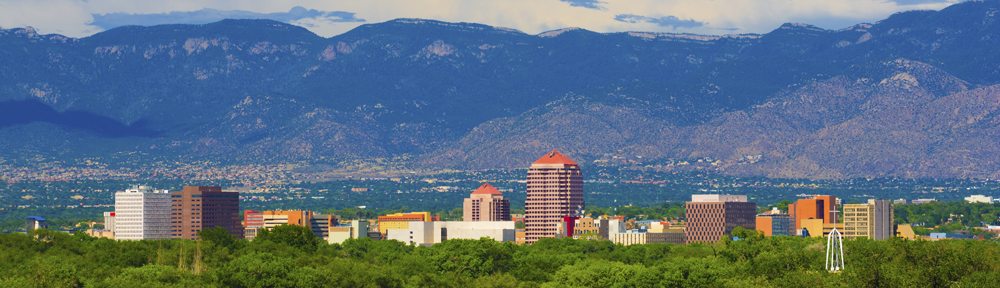
Huffington Post Article: “What Happens When A Troubled Police Department Refuses To Reform?; In Albuquerque, they’ve been getting away with it.”

On October 23, 2017, the online news agency Huffington Post published an article on the Albuquerque Police Department as part of its “Listen To America” Huffpost Road Trip.

(https://www.huffingtonpost.com/entry/albuquerque-police-reform_us_59e8cd84e4b06b440e4467f1?ncid=engmodushpmg00000003)

The article was written by Hufington Post reporter Nick Wing in conjunction with local reporter Dennis Domrzalki with the Alb Free Press.

Huffington Post reporter Nick Wing came to Albuquerque for a few days in September to do research and interview people.

I spent two hours interviewing with the Huffington post reporter Nick Wing and gave him my observations and commentary on what has happened to the Albuquerque Police Department since 2005..

Not at all surprising is that Mayor Berry declined to comment or give his thoughts for the article.

I have no doubt we will not have true police reform until the entire command staff is replaced.

Following is the full Huffington Post article published on October 23, 2017:

What Happens When A Troubled Police Department Refuses To Reform?
In Albuquerque, they’ve been getting away with it.

By Nick Wing and Dennis Domrzalski
10/23/2017 05:00 am ET Updated Oct 23, 2017

ALBUQUERQUE ― Early on the morning of Aug. 24, 2016, two Albuquerque police officers responded to a 911 call at an apartment complex on the city’s west side. Inside, they found the remains of fourth-grader Victoria Martens wrapped in a smoldering blanket.

She had been given alcohol and methamphetamine before she was sexually assaulted, strangled, stabbed and then dismembered. It was her 10th birthday.

Victoria’s mother, Michelle, her mother’s boyfriend and the boyfriend’s cousin were arrested at the scene and charged in the girl’s murder. Only later did it come to light that New Mexico’s Children, Youth and Families Department had forwarded a complaint related to Victoria Martens to the Albuquerque Police Department five months before her death.

Victoria had told a family friend that her mother’s boyfriend had tried to kiss her ― a different man than the one charged in the girl’s death ― and the friend called CYFD.

The police received the referral, but did not follow up. When a reporter from the Albuquerque Journal, the city’s morning newspaper, inquired about it, two APD spokespeople said officers had interviewed Victoria and her mother but found no cause for further investigation. In reality, they had ignored the referral entirely.

If they’d actually looked into it, they might have learned that Michelle Martens had previously trawled the internet looking for men to engage in sexual acts with her children.

A subsequent civilian oversight board investigation found that the APD officials had lied to the press and to the public about the case ― and once they were caught in their lie, Police Chief Gorden Eden rejected the board’s recommendation that one of his officers be suspended for 80 hours for violating the public’s trust.

The handling of the Martens case fit a broader pattern of troubling behavior among APDcommand staff.

The department has been under a reform agreement with the Department of Justice since 2014, after an investigation following a string of controversial police killings found the department had violated the U.S. Constitution and demonstrated “patterns of excessive force.”

The DOJ agreement called for changes to the department’s policies on use of force, training and transparency, as well ongoing review by civilian panels and an independent monitor.

But the APD has repeatedly failed to comply with reforms.

A court-appointed independent monitor, James Ginger, has filed five reports with the judge overseeing the case, each one ripping APD for its obstruction. The most recent report, filed in May, accused APD of being in “deliberate noncompliance.”

“There seems to be no one person, unit, or group with responsibility and command authority to ‘make change happen,’” wrote Ginger.

Federal consent decrees and civilian oversight are often held up as strong tools to get misbehaving police departments to right ship. But Albuquerque’s experience shows the agreements can be toothless and fragile ― they don’t work without the cooperation of the police and, perhaps more important, city government.

It’s been more than three years since the agreement was signed, and oversight officials and community activists say the department’s leaders remain accountable to no one.

Albuquerque police officers observe a protest in March 2014, just weeks before the U.S. Department of Justice released a scathing report about the department’s unconstitutional practices.

On a Tuesday morning in early September, members of Albuquerque’s Police Oversight Board gathered in the basement of a municipal building downtown to review a docket of APD cases.

When the session moved to cases from APD’s Critical Incident Review Team, an internal unit created under the settlement agreement to examine serious uses of force, the board identified a recurring problem: The video evidence CIRT had been sharing was often disorganized and inconsistently labeled, making it nearly impossible to navigate to relevant segments of footage.

Complications like this have become par for the course, said Joanne Fine, chair of the board. “Every obstacle they can put in our way, they did,” she said in an interview after the meeting.

Fine retired in 2013 from United Way, where she served as a chief communications officer, and has been volunteering with the oversight board since 2015. Her attitude toward the reform process has changed in the last two years.

“We were trying to figure out a way to collaborate with APD, to cooperate with them, before we realized the dysfunction,” she said.

Fine devotes about 20 hours a week to the work, she said. For other board members, which include a former pastor, retired scientist and a diverse cast of community activists, it has become a full-time job without pay.

APD may occasionally give lip service to the oversight board, but the department doesn’t genuinely acknowledge the mandate of civilian oversight, said Ed Harness, executive director of the Civilian Police Oversight Agency, the investigative arm of the POB that reviews officer-involved shootings and complaints against officers.

“We look at this consent decree and the department as if they’re going through the stages of grief,” Harness said. “The command staff is still in that phase of denial, and they haven’t moved on to acceptance. So that’s where the resistance is. They deny that there are any problems, they deny that there were ever problems, and they don’t feel that change is necessary.”

Asked for comment, APD emailed a statement from a city attorney, who maintained that Albuquerque and its police department remain committed to reform.

We look at this consent decree and the department as if they’re going through the stages of grief. The command staff is still in that phase of denial.Ed Harness, executive director of the Civilian Police Oversight Agency.

Consent decrees can change the behavior of police departments, said Harness, a former Milwaukee police officer. But much of the necessary change is cultural, and it can be difficult to enforce a transformation when defiance has become so deeply entrenched.

Critics say APD’s culture of intransigence starts at the top. Chief Eden came to APD in February 2014, two months before the DOJ released the findings of its investigation into the department’s practices.

Eden replaced Ray Schultz, who had faced calls to resign amid the probe, with the intent that he would lead the department through the reform process.

The investigation specifically called out APD’s SWAT team and another, since-disbanded tactical unit, concluding that the officers assigned to the elite squads had been responsible for more than a third of the department’s shootings since 2010.

Weeks after that review, Eden promoted a former SWAT commander, Bob Huntsman, to be his second in command. Huntsman had left the APD in 2012, before some of the unit’s most controversial killings, but activists said his leadership had enabled SWAT’s rogue behavior.

They saw his selection as an immediate sign of hostility toward the reform effort.

Huntsman’s role at APD has only grown since his return, while Eden’s has withered. He “essentially runs” APD today, said Harness.

Under Eden and Huntsman’s watch, there appears to have been little effort to challenge the culture at APD.

Many say the current mindset dates back to August 2005, when a mentally ill man went on a shooting spree that left two of the department’s officers and three others dead. The department began to take on a more militarized ethos after the tragedy, laying the groundwork for an increase in officer-involved shootings, said Pete Dinelli, a former city councilor and prosecutor and frequent critic of the APD.

“We shifted from community-based policing, where we had a fully staffed department that did a lot of community outreach and emphasized a proactive approach to law enforcement,” said Dinelli. “We started recruiting a far more aggressive type of police officer. And with that, there was an emphasis placed on defensive tactics on behalf of the police officer.”

Under the department’s current leadership, Dinelli has little hope that reform will truly take root. And he says it’s not just Huntsman and Eden who have to go.

“It’s a paramilitary organization with a definite chain of command in place,” he said. “Most of the officers that are in command staff have been there for a number of years. They don’t want to respond to civilians. They don’t want to be told what to do.”

Meaningful reform would require APD to recruit and train a new generation of rank-and-file officers, Dinelli said.

In theory, the DOJ or the monitor, James Ginger, could call for sanctions on the department, including criminal contempt-of-court charges, fines, removal of leaders, or even a complete takeover, an unprecedented action for a federal judge.

Jonathan Smith, a former Justice Department official in the Obama administration who helped negotiate the Albuquerque agreement, said he understands the impatience but urged activists to stay actively involved in the process and to let it play out.

“These police departments get broken over a long period of time, cultures get developed over a long period of time, and changing police culture takes a long period of time,” Smith said. (The Department of Justice said it would not comment on pending litigation.)

Gutting the department would certainly be a drastic departure from the current approach.

“We only can make recommendations; we cannot impose anything,” Harness said. “We have to have the support of the public and of the citizens of Albuquerque to get things done. We have to have them engaged, and we have to have them be responsive and hold the department accountable.”

It’s not clear that the general public would support a broader overhaul. Crime rates have been on the rise in Albuquerque over the past few years, and some residents ― especially those in wealthier, whiter neighborhoods ― see reform as a secondary issue, one that only makes it harder for cops to protect them and their property.

“If you go to community meetings, for the most part you’ll find a much larger group that supports whatever the police do and a small minority that wants to see the police change,” said Bill Kass, a member of the POB. “They’re hardly a silent majority. They’re effectively a supportive majority, so that does give cops some cover.”

Law enforcement officials around the country have made similar arguments that addressing civil rights violations in a department would interfere with legitimate police functions. U.S. Attorney General Jeff Sessions has expressed disdain for federal consent decrees and the idea of police reform more broadly, drawing pushback from activists who say that the efforts benefit civilians and cops alike.

Although Albuquerque’s consent decree is a court-ordered agreement, meaning Sessions can’t unilaterally roll it back, his tone doesn’t make the process any easier.

“I believe the Trump administration and Jeff Sessions are going to do whatever they can to gut any further civil rights investigations of police misconduct,” Dinelli said. “Over the next four years, as long as Trump and Sessions are in office, we won’t see another consent decree.”

That sort of antagonism has broader implications for police reform in Albuquerque and nationwide.

“You’re losing the hammer and you’re sending a message to jurisdictions that we’re not really serious about this,” said William Yeomans, a 24-year veteran of the Justice Department’s Civil Rights Division and a former acting assistant attorney general under President George W. Bush.

“Decrees work best when folks at the top make it clear that they mean business, that the decree will be carried out,” added Yeomans. “If they don’t, and there’s any wiggle room, people are going to tend back on the way they have traditionally done things.”

You’re losing the hammer and you’re sending a message to jurisdictions that we’re not really serious about this.William Yeomans, former acting assistant attorney general under George W. Bush

Over the course of a consent decree, police will eventually get the message, Smith said.

“If you tell a cop, ‘Here’s a new policy,’ they’ll roll their eyes and go back to doing it the way they’ve done it, until they’ve been held accountable again and again and again,” he said.

Shaun Willoughby, president of the Albuquerque Police Officers Association, the union that represents rank-and-file officers, says that cops on the street want the reform effort to succeed, but they’re frustrated by the complexity and lack of consistency in implementing some policies.

Many beat cops ― some already skeptical of the push for more transparency and accountability ― see an inefficient system of red tape that keeps them off street while they fill out paperwork for the various oversight authorities.

Willoughby said his experience with the process has been chaotic and inconsistent. Every consent decree is different, and everyone involved in Albuquerque’s campaign has, in effect, been participating in a big experiment, Willoughby said. And unless everyone reaches agreement on how to move forward, the process will fail.

“When we started this there was not a book out there called ‘Reforming Your Police Department With The DOJ For Idiots,’” Willoughby said. “I don’t think there has been ill-intent, but it is evident to me that this is not going to work.”

Downtown Albuquerque at night. The most recent federal monitor’s report found APD to be 47 percent in operational compliance with the consent decree. For a judge to consider lifting the decree, it must be 95 percent for two years.

City leadership has done little to signal that reform is a priority. Mayor Richard Berry and the nine city councilors have remained mostly silent on the issue.

During a meeting with Ginger in early 2016, council members asked him who was ultimately responsible for the reform effort. His response: the City Council.

Even after Ginger’s five negative reports about APD’s stonewalling, there have been no calls from City Hall for Eden to be fired and no formal reprimands ― even when APD lied to the public about the Martens case.

Berry, the city’s first Republican mayor in over 30 years, has been similarly indifferent. But after two terms, he isn’t running for re-election, and a new mayor will be sworn in on Dec. 1. Both candidates in the runoff election slated for mid-November have said they’ll fire Eden and go full speed ahead on reform.

Berry did not respond to a HuffPost request to comment on reform of the police department.

Under the DOJ consent decree, the Albuquerque Police Department must be found to be in 95 percent operational compliance for two years before the judge can consider declaring the work complete. The monitor’s last report found just 47 percent operational compliance.

Meanwhile, Albuquerque taxpayers are on the hook not just for the cost of the protracted reform effort but also for the large settlements that continue to arise as a result of police misconduct.

The city has already shelled out nearly $3 million to pay for salaries and audits associated with the reform process, according to officials, and will likely be on the hook for millions more before all is said and done. In 2017 alone, Albuquerque added an additional $3 million to its budget to bolster the fund that covers out-of-court settlements, many of which are related to APD.

But city officials say everything is going according to schedule.

“When the City and Department of Justice began this process, they set an extremely ambitious timeline for themselves, one of the most ambitious in the nation,” Albuquerque City Attorney Jessica Hernandez, who represents the city and APD in court, said in an email. “The City has made tremendous progress over the last three years. As the City continues those efforts, both the Department and community must remember that we are focused on ensuring reform is implemented correctly as opposed to merely quickly. As the Independent Monitor has said, ‘This is a marathon, not a sprint.’”

Activists say if the city doesn’t force its police department to change, it’s not going to. For now, however, the will for swifter action may not be there.

“It seems like citizens are sort of resigned to the fact that there’s always going to be pay-to-play, that you’re always going to have a pretty fierce police force with no accountability,” said Silvio Dell’Angela, a retired Air Force officer and Vietnam veteran who’s been actively involved in the reform process. “People don’t dare to threaten the status quo, even when cops shoot people.”

Hell Freezing Over

As the old saying goes “when hell freezes over” and it sure does look like the devil is throwing snowballs in hell, at least in the race for Albuquerque Mayor.

On November 10, 2017 the Albuquerque Journal published its endorsement in the Albuquerque Mayor’s race.

(See November 10, 2017 Albuquerque Journal, page A8, “A new direction; Keller’s leadership, experience needed”)

https://www.abqjournal.com/1090641/kellers-leadership-experience-needed.html

Two months ago, the Albuquerque Journal did a double endorsement as to who should be in a runoff for Mayor of Albuquerque, endorsing one Republican and one Democrat and endorsing Republican Dan Lewis and Democrat Brian Colon out of a field of eight after 10 months of a campaign.

The day before their endorsement, the Albuquerque Journal did the traditional glowing profiles of both candidates.

Now, with the passage of almost six weeks and just three days before the November 14, 2017 runoff election, the Albuquerque Journal begrudgingly endorses Tim Keller with a few backhanded criticisms regarding public finance, in-kind donations and ethics complaints filed by Republican operatives.

The banner head line for the Albuquerque Journal endorsement “A new direction; Keller’s leadership, experience needed” was no doubt historical in its reversal of a previous endorsement of another candidate.

The Albuquerque Journal endorsement says in part:

“Confronted with high crime, stagnant population growth and a Legislature not inclined to support many Duke City issues, Albuquerque needs a mayor who has shown leadership and the ability to unite.

It needs a mayor who can forge partnerships — with its police department, the court system, the District Attorney’s Office, the business community, the U.S. Department of Justice and lawmakers — to attack and subdue the crime that has become an intolerable problem.

Tim Keller, a former state senator and now the state auditor, has earned a reputation for being able to pull divergent interests together for the common good.

He has shown he favors transparency in government, and his experience as auditor would prove valuable to keeping the city on positive financial footing.

For those reasons, the Journal recommends voters choose Keller as the city’s next mayor.”

Damn, I sure wish I could have seen the Journal Editors turn blue as they wrote their editorial choking on all the egg on their face.

The Journal usually publishes their endorsements on a Sunday which has the largest readership.

I suspect the difference is the Journal will also be publishing their poll in the Mayor’s race on Sunday.

The editors probably know the results of the poll they will be publishing this Sunday in the race for Mayor.

I predict the Journal poll will show that Mr. Keller has a substantial lead over Mr. Lewis and that Keller has a lead approaching 63% or more to Dan Lewis having 36% or less.

I cannot help but wonder if the Albuquerque Journal has changed its party affiliation to Republican.

City’s Conduct “Stupid Is As Stupid Does”

To quote Forrest Gump, “Stupid is as stupid does.”

It has been reported that APD Assistant Chief Robert Huntsman secretly turned on his lapel camera to record Federal Court Monitor James Ginger when he was having a heated discussion with City Attorney Jessica Hernandez during a March of 2016 confidential meeting.

https://www.abqreport.com/single-post/2017/11/02/Master-Spy-Huntsman

One day before the November 1, 2017 release of the Federal Monitor’s sixth report, the City Attorney’s Office filed a motion challenging the impartiality of the Federal Monitor and citing the recording.

The Motion attached affidavits from Chief Eden and Assistant Chief Huntsman also claiming that the Federal Monitor was also hostile towards APD.

The City has now filed a motion with the federal court challenging the impartiality of the Federal Monitor and even demanding an evidentiary hearing on the matter.

I suspect that the motion is the final poke in the eye to the Federal Monitor and the Federal Court before December 1, 2017 when a new mayor will be sworn in.

The filing of the motion should blow up in the City’s face.

City Attorney Jessica Hernandez, Chief Gordon Eden and Assistant Chief Robert Huntsman should all be fined and sanctioned by the court for the clandestine recording of a federal court official during confidential discussions and meetings.

The city of Albuquerque, Albuquerque Police Department (APD) and Assistant Chief Robert Huntsman showed their absolute contempt for the Federal Court and authority over the Albuquerque Police Department by recording Federal Monitor James Ginger without his consent or knowledge.

The Federal Monitor Ginger is an officer of the court that reports directly to the Judge and represents the Judge and for that reason the City and APD have no authority over him.

Federal Monitor James Ginger has said repeatedly that the Federal Judge is his boss and superior and all he can do is report and audit and make recommendations to the Court.

The recording by Huntsman of the conversation no doubt is a violation of the consent decree and a violation of the Federal Rules of Civil Procedure.

City Attorney Jessica Hernandez is a licensed attorney and also an officer of the court and could never record or authorize a cop to record any Federal judge.

Chief Eden condoning such recording is unethical at best.

Huntsman, Eden and Hernandez should all be sanction and fined for the underhanded recording of a court official without his knowledge.

The clown car known as the Albuquerque City Council appear to also be getting in the act by introducing a resolution that calls for and audit be performed on the Federal Monitor and his team for not spending enough time in Albuquerque.

On November 1, 2017 the Federal Monitor filed his sixth progress report with the Federal Judge and as expected was again highly critical of APD finding a “culture of accountability” markedly absent from APD.

A Federal Court hearing now scheduled for November 16, 2017 at 9:00 am for the monitor to present his report.

The Federal Court should go ahead and hear the City’s motion and use it as an opportunity to place City Attorney Jessica Hernandez, Chief Eden and Assistant Chief Huntsman under oath and sanction them for their conduct as they depart the city on December 1, 2017 when a new Mayor takes office.

The Mayor elect should attend the November 16, 2017 federal court hearing in order to signal complete support for the Federal Court approved settlement as well as the reforms called for under the settlement.

Following is the blog report posted by Dennis Domrzalski on the federal monitor’s sixth report.

Monitor: APD Trending Into Disorder
Dennis Domrzalski

Stiffened Resistance to Reform
Substandard Training
Carefully Thought-Out Resistance

“A culture of accountability is markedly absent at” the Albuquerque Police Department, even three years into the DOJ-mandated reform process, the independent monitor in the reform effort said Wednesday.

And APD’s ability to track and properly deal with use-of-force cases is trending into disorder, the monitor, James Ginger, said in his sixth report on the reform effort to U.S. District Court Judge Robert Brack. Ginger’s report, which covers the period between February and July of this year, was filed with Brack on Wednesday morning, the day after the city filed a court document claiming that Ginger was biased against APD.

The report also found that APD’s training processes are “substandard,” that its training academy appear to be too easy and that there is a “stiffened resistance” among APD’s command staff to writing policies that comply with the settlement agreement. In fact, the command staff has worked to weaken previously approved policies and has engaged in a “carefully thought-out resistance to the requirements of the CASA [Court Approved Settlement Agreement],” the report said.

Ginger also ripped Assistant Police Chief Robert Huntsman for not even knowing that the department’s internal units had a backlog of use-of-force cases to be investigated.

“As of this reporting period, we consider APD’s force management system to be in a severe state of entropy, exhibiting problems that extend well beyond supervision and involve issues of leadership, command reliability, and critical systems support mechanisms such as FIT, CIRT, the Force Review Board, and administrative support mechanisms,” Ginger’s report said.

“Command and Control continues to need substantial improvement; integrated developmental systems for training, supervision, discipline and follow-up process development have not been addressed, and, in the monitor’s professional opinion, based on six-decades of experience in law enforcement on the local and national level, a culture of accountability is markedly absent at APD.”

Ginger’s main summary said this:

“We continue to note pervasive lapses in processes related to use-of-force oversight at the Area Command-level, and at the force-review and response mechanisms within the administrative processes of APD. In short, even after hundreds of man-hours of consultation, reports, recommendations and repeated (sometimes intense) conversations with APD leadership over a two-year period, APD continues to fall seriously short of CASA requirements relating to management and supervision—particularly regarding use of force-related issues. Arguably, some of these lapses can be attributed to staffing issues.

“Nonetheless, performance on tasks outlined in these sections of the CASA remain out of compliance, despite the monitoring team’s two years of intensive consultation, documentation, and suggestion. We found problematic performance in supervisory training regarding response to use of force, computerized systems designed to ‘flag’ problematic officer behavior, internal ‘oversight’ mechanisms relating to use of force, management of force-review functions, and over-arching leadership of the department related to uses of force in-field practices, supervision, training, oversight, and leadership. Considering that use of force is one of the main areas of focus of the CASA, issues encountered this reporting period related to uses of force identification, classification, investigation, assessment, findings development and remediation are troublesome.”

Here’s what the report said about Huntsman:

“We learned in May 2017, during our work for IMR-6, that APD was reporting only those cases (serious uses of force) that were closed, not all cases that were reported. That shielded the fact that there were numerous cases pending and those cases left significant gaps in the data. It also raised serious questions as to why cases were pending for such extended periods of time. Even more troubling, we found that even the Chair of APD’s Force Review Board (an assistant chief of police) [Huntsman] claimed ignorance of this discrepancy!

“To find that, at this late date, the chair of the Force Review Board was unaware of this ‘backlog’ is more than puzzling. It is extremely troublesome, and reflects a significant lack of awareness and focus on use of force issues at APD.”

Here are some other excerpts from Ginger’s report:

Substandard training

“Training processes, however, continue to exhibit problems and issues. We have noted since the early days the APD’s tendency to “shortcut” accepted training practices and cycles, and have devoted hundreds of team-hours to reviewing and critiquing (directly to APD Academy managers) what we found to be substandard practices in training development, documentation, and evaluation. Despite the work product provided by the monitor to APD regarding training, we still find training product that fails to meet nationally accepted practice, and/or monitor-communicated standards.”

Easy academy classes, or coaching

“We also note that testing at the APD academy routinely show unusually high mean scores (well above 95 percent) which indicates to us either remarkably easy assessment tools or coaching. While one would expect high marks from professional training (and while the acceptable ‘pass rate’ articulated in the monitor’s training assessment methodology requires that greater than 95 percent of those tested ‘pass,’ an average score of 95-plus percent is a statistically worrisome outcome, potentially indicating an overly easy testing mechanism. If 95% of those who took the test ‘passed’ (e.g., a 70 or above) that would be one matter, but if the average score is 95 that is a different, and suspect ‘outcome.'”

Stiffened resistance

“One of the more serious deficiencies we noted at APD in our IMR-5 report was ‘Assessment of citizen-police interactions to ensure that policing practice conforms to policy.’ We noted during monitoring team interactions with APD during the IMR-6 reporting period, a stiffened resistance to crafting policy that would lead to compliance with the CASA. The monitor found that, on several occasions, he simply had to refuse APD-proposed changes to policy that in the monitor’s opinion, would not comply with the requirements of the CASA. In other instances, APD attempted to revise previously approved policies in ways designed carefully to weaken previously approved policy versions. We can only describe these attempts as carefully thought-out resistance to the requirements of the CASA.”

Compliance

The report said that APD is in 53 percent operational compliance with the settlement agreement. Operational compliance means “that 95 percent of the time, field personnel either perform tasks as required by the CASA, or that, when they fail, supervisory personnel note and correct in-field behavior that is not compliant with the requirements of the CASA,” the report said.

APD must hit an operational compliance mark of 95 percent and stay there for two years before the DOJ can even consider leaving town, according to the settlement agreement.

In Ginger’s last report, which was filed in early May, APD hit an operational compliance rate of 47 percent.

Ginger said that the most difficult times lay ahead for APD in terms of reaching a 95 percent operational compliance rate.

“The easy work is done,” the report said. “Much remains to be accomplished, and it is some of the most difficult work in policing.”

Show Me The Money For The Runoff!

Below is the Albuquerque Journal article that appeared October 21, 2017 on page C-1 of the Metro / New Mexico section.

Typical Journal giving the headline to the Republican when the Democrat has more money raised. In 17 days, Tim Keller is given $125,000 in public finance, Tim Keller’s Measured Finance committee raises another $110,000, and Dan Lewis raises $200,000 in private funds. You can expect a lot more to be raised and a lot more negative ads.

The donations are the usual suspects.

https://www.abqjournal.com/1080936/lewis-raises-nearly-200k-for-mayoral-runoff.html

Lewis raises nearly $200K for mayoral runoff
By Martin Salazar / Journal Staff Writer
Friday, October 20th, 2017 at 6:14pm

ALBUQUERQUE, N.M. — City Councilor Dan Lewis has raised nearly $200,000 since advancing to Albuquerque’s mayoral runoff, while State Auditor Tim Keller has received just over $125,000 in city funds to run his campaign, according to the latest round of campaign finance reports filed Friday afternoon.
The runoff between Lewis and Keller is Nov. 14, although early voting begins Wednesday.

Dan Lewis

Most of the money raised by Lewis, a Republican, has come from local companies and business owners, although several political action committees have also contributed to his campaign, including ABQ Coalition for a Healthy Economy, which gave Lewis’ campaign $5,192. That was one of the groups fighting the proposed mandatory paid sick leave ordinance, which was defeated on Oct. 3.

“We hit our goal — exactly where we planned to be,” Lewis told the Journal.

His report shows that he spent $90,000 — mostly on television ad buys — and had about $110,000 in his campaign war chest as of Thursday.

Keller — a Democrat who received city funds because he qualified to run as a publicly financed candidate — had cash on hand of close to $126,000.

Tim Keller

The political action committee backing Keller’s mayoral run, meanwhile, has raised close to $90,000 since the Oct. 3 election. About a third of that came from unions, although OLÉ, one of the groups backing the sick leave ordinance contributed .

“There’s a real choice to be made, and people are excited for Nov. 14,” said Neri Holguin, chairwoman of ABQ Forward Together. “Albuquerque can choose between more of the Berry administration or real change for our city.”

Make Albuquerque Safe, the Santolina-backed political action committee opposing Keller, reported just $3,500 in contributions and a negative closing balance. The $3,500 contribution was from Western Albuquerque Land Holdings — owner of 21 square miles of land covered by the Santolina Master Plan west of Albuquerque.

Cynthia Borrego, one of the City Council District 5 candidates, reported receiving a little more than $15,000 in city funds for her runoff campaign. Her opponent, Robert Aragon, had not filed his campaign finance report as of press time, according to the city clerk’s website.

Top contributors to Lewis’ campaign include: John Bode Jr. and John Bode Sr., of Bode Aviation Inc., who each contributed $5,000; Michael Castro of Shepards Properties, $5,192; Toby Garcia of Garcia Honda, $5,192; Rebecca Weh, of CSI Aviation, $5,000; Chris Archuleta of Superior Ambulance, $5,000; Mary Merrell of Amcare Inc., $5,000; Thomas Tinnin of Tinnin Investments Inc., $5,000; Dorothy and Larry Rainosek of Frontier Restaurant who gave a combined $6,000; Walking by Faith, $5,000; ABQ Coalition for a Healthy Economy, $5,192; Debbie Harms, of NAI Maestas & Ward, $5,192; Michael Merrell of Amcare Inc., $5,000; New Mexico Restaurant Investors Inc., $5,192; Jalapeno Corporation/Harvey Yates, $5,000; Steven Maestas, with Maestas Development Group, $5,000; Dale Armstrong of TLC Plumbing, $5,100; New Mexico NAIOP PAC, $5,192; Allen Weh of CSI Aviation, $5,000 and Victory Jury of Summit Electric Supply, $5,000.

Top contributors to ABQ Forward Together include: Southwest Regional Council of Carpenters, $20,000; OLÉ, $7,000; AFSCME, $5,000; Ed Garcia of Garcia Honda, $5,000; Julian Garcia of Automundo de Garcia, $5,000; and IBEW PAC Voluntary Fund, $5,000.

Help Sustain Independent Journalism

Dennis Domrzalski, the former Editor of the ALB Free Press has now struck out on his own and has started and independent news web page call ALB Reports.

Dennis is one of the better news reporters that I have ever dealt with over many years.

I encourage everyone to read ABQ Report as a source of coverage and news in Albuquerque that will covers stories the Albuquerque Journal and the local TV news stations will not cover.

Starting an independent web page is not easy, but it can be done.

ABQ Reports is fully functional now.

You may see some of my blog articles appear from time to time.

I want to make it clear that all my articles that have appeared in the Alb Free Press and hopefully now in ALB Reports are free of charge on my part.

My political blog www.PeteDinelli.com is my hobby and it does not generate any income.

We need independent news sources in Albuquerque and I am confident ALB Reports can deliver.

I encourage everyone to put www.abqreport.com on their desk top for easy access and contribute if you can.

Following is a statement from Dennis:

“I’ve been a reporter, writer and editor for 37 years.
I’m dedicated to honest, fair and hard-hitting reporting.
I’m not conservative or liberal, but am just a reporter who tries to get to the truth at any given point in time.
I don’t believe in pulling punches or being a lap dog because that serves no one.
A free and aggressive press is essential to human liberty. That’s why the Founding Fathers put a free press in the Constitution.
So on this site you’ll get a variety of news, fearless opinion, analysis, humor, satire and commentary. It’s kind of like a free-for-all. My motto is “Without fear and without favor.”
But good journalism takes time and money, so I hope you will contribute what you can to these efforts by clicking on the “Donate” button above.
I could use your help.
Thanks, Dennis Domrzalski.”

Driving The Streets Of Albuquerque Not Safe

The Albuquerque Journal did a front-page story on the dramatic decline in the number of DWI seizures and the revenues from those seizures.

(See October 18,2017 Albuquerque Journal, Page A-1, City’s DWI vehicle seizures plummet; Revenue from controversial program now about $600K, compared with $1.8 M in 201)

https://www.abqjournal.com/1079281/albuquerques-dwi-vehicle-seizures-plummet.html

In a nutshell, the number of DWI vehicle seizures by the city has gone from 1,976 generating $1.81 million in 2010 to less than half the seizures of 778 generating $598,000.

The Journal reports that number of DWI cases filed in Metro Court has gone from, 4,219 in 2013 to 2,397 in 2016.

The DWI vehicle forfeiture program is very controversial to say the least and is the subject of a federal lawsuit seeking to put an end to the program.

All the candidates who ran for Mayor have said they would get rid of the program, which would be a mistake.

Many people argue that the program should not be generating money for the city.

Notwithstanding, the biggest benefit of the program is getting vehicles out of the hands of repeat DWI offenders and off our streets.

A vehicle driven by a drunk becomes a weapon endangering lives.

But the number of DWI arrests and vehicle seizures is only part of our problem.

Simply put, it is not safe to drive the streets of Albuquerque.

The statistics from the Bernalillo County Metro Court are alarming and reveal just how bad things are with the Albuquerque Police Department (APD) being unable to patrol our streets, get drunks off the road, make DWI arrests and issue traffic citations and prosecute cases.

THE WHOLE STORY

In 2008, there were 633 felony DWI arraignments and the number steadily declined each year to 104 in 2015.

In 2008, there were 6,538 DWI/DUI misdemeanor arraignments and the number steadily declined each year to 2,942 in 2015.

In 2008, there were 84,527 traffic court arraignments and the number steadily declined each year to 31,163 in 2015.

(Source: http://www.nmcourts.gov/reports-and-policies.aspx)

According to the City of Albuquerque 2017 budget, the Albuquerque Police Department made more than 2,200 DWI arrests a few years ago.

In contrast, APD made only made 775 DWI arrests in the first six months of the current budget year.

In otherwords, DWI arrests are down around 30 percent.

A decade ago, APD was making more than 5,000 DWI arrests a year.

The Bernalillo County Metropolitan court handles cases for virtually all law enforcement agencies that make arrests in Bernalillo County, including the Albuquerque Police Department (APD), the Bernalillo County Sheriff’s Department (BCSO) and the New Mexico State Police.

The largest percentage of cases arraigned in the Bernalillo County Metropolitan court is for APD cases.

In 2009, there were 746 people arraigned for felony DWI and that number dropped to a mere 104 in 2015.

In 2008, there were 6,538 people arraigned for misdemeanor DWI and in 2015 that number dropped by close to 60% to 2,942.

First, second and third DWI offense convictions are misdemeanors, and depending on the number of the conviction, carry penalties of between 6 months to 3 years license revocation, 90 to 364 days in jail, $500 to $1,000 fine, up to 5 years’ probation, and may include other mandatory penalties such as alcohol evaluation, DWI school, community service, treatment, and ignition interlock for 2 years.

Fourth, fifth, sixth, seventh or subsequent DWI convictions are felonies and depending on the conviction number, carry penalties of lifetime license revocation, 6 months mandatory prison time up to 3 years in prison, up to a $5,000 fine, mandatory alcohol evaluation, and lifetime interlock.

Aggravated DWI is where a person’s breath alcohol test is above a .16 BAC (breathalyzer), or there is a refusal to take the BAC test or if bodily injury while driving while intoxicated is caused, with mandatory jail time of 2 days for the first offense, 4 days in jail for second offense and 60 days in jail for the third offense.

The silence by the press and anti-DWI advocates is deafening given the serious drop in DWI arraignments and convictions.

DRAMATIC DECLINE IN TRAFFIC ARRAIGNMENT CASES

In 2006, as a Deputy City Attorney, I was tasked with implementing the Traffic Court Arraignment Program where Assistant City Attorneys and paralegals were hired and assigned to the Bernalillo County Metropolitan Court to negotiate plea agreements in traffic cases at the time of arraignments.

A Metropolitan Judge is assigned on a rotating basis to approve the plea agreements negotiated, and on any given day as many as 500 cases can be negotiated, resolved and approved by the Court.

When a person is stopped and issued traffic citations, the citing sworn officer determines if the driver will contest the citations and if the driver wants to contest the citations an arraignment date and time is immediately scheduled.

The Metropolitan Traffic arraignment program streamlined the process, saves time and money and negates the appearance of police officers at the arraignments.

There are upwards of 170 different traffic violation citations that can be issued by sworn law enforcement.

The most common traffic citations include speeding, reckless driving, careless driving, failing to stop, improper lane change, no registration, no insurance, suspended drivers license, failing to yield, and open container.

Fines for traffic citation carry civil penalties as low as $5.00 to as much as $1,000 in fines.

Failure to have insurance for example is a $1,000 fine.

The average Metropolitan Traffic Court arraignment case results in court fees and fines anywhere from $65 to upwards of $250.

In 2009, there were 86,175 traffic arraignment cases in Metro Court and in 2015 traffic cases dropped to 31,163, or over 55,000 fewer traffic citations.

Fewer cases results in fewer fines and it has a direct fiscal impact on court programs such as DWI education programs.

NEW MEXICO HAS SECOND WORST DRIVERS IN US AND A DRINKING PROBLEM

In November 2015, it was reported that the National Highway Traffic Safety found that New Mexico had the second-worst drivers in the country, according to a car-insurance comparison group.

(For full story see November 27, 2015 Albuquerque Journal article “New Mexico Drivers second worse in the country, https://www.abqjournal.com/682511/new-mexico-drivers-secondworst-in-us.html)

No doubt the Bernalillo County Metropolitan Court statistics contributed significantly to the statistics because it is the largest and busiest court in the state and in the largest city in New Mexico.

The study ranked states based on fatalities per miles driven, speeding, drunken driving, careless driving, and other moving citations per capita, according to the Albuquerque Journal article.

According to the study, New Mexico ranked fifth for the most careless driving cases, 10th for the most drunken driving arrests, 17th in traffic fatalities, 12th for speeding and 16th for other types of citations.

APD STAFFING SHORTAGE

In 2010, the APD traffic unit had more than 34 officers and today there are less than 12.

There is a direct correlation with the dramatic decline in the number of DWI arrests and arraignments and traffic arrangement cases and the severe decline in APD personnel.

The December 11, 2015 Albuquerque Police Department Comprehensive Staffing Assessment and Resource Study prepared by Alexander Weiss for the Department of Justice concluded that APD needs at least 1,000 sworn officers.

The Weiss report concluded that 1,000 sworn police officers were sufficient for Albuquerque provided that APD officers did not respond to certain low priority calls such as minor traffic accidents or false alarm calls.

In 2009, APD had 1,100 police officers with approximately 700 assigned to field services, patrolling our streets over three shifts.

Eight (8) years ago, response times were at 8.5 minutes, below the national average.

In 2009, APD command staff recommended that Albuquerque needed at least 1,200 sworn officers for community based policing and felony prosecutions.

The number of APD sworn officers has fallen from 1,100 officers to 850 over the past seven years.

In 2015, APD has 841 sworn police officers with only 440 assigned to the field services patrolling responding to 69,000 priority one 911 emergency calls a year.

Today, in 2017, APD employs 836 sworn police officers with 430 assigned to the field services, divided into three shifts, to patrol the streets and take Priority 1 calls
It takes an average of 15 minutes to dispatch a police officer to 911 emergency calls, which endangers public safety.

CONCLUSION

Based on review of the Metropolitan Court statistics, DWI arrest and traffic code enforcement are a very low priority of APD, not out of desire, but out of necessity.

With APD field officers responding to over 69,000 priority one calls a year, not to mention thousands of lower priority calls, it is surprising the statistics are not worse at Metropolitan Court.

APD can no longer be proactive with DWI and traffic enforcement.

The net result is that Albuquerque streets are dangerous to drive.