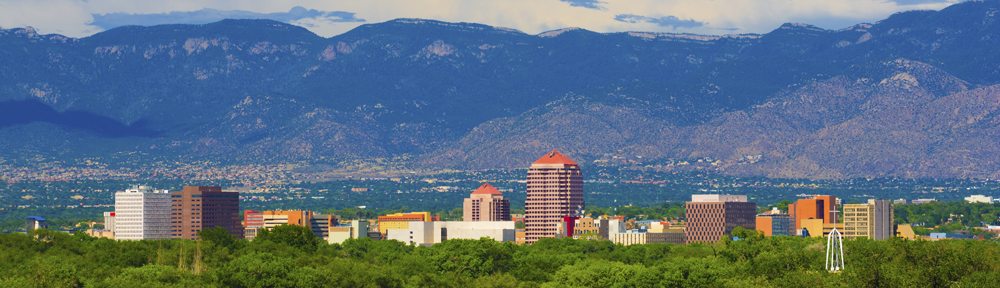
Keller’s Railyard Development Becoming Money Pit; Find An Investor and A Developer

When it comes to government projects, a “money pit” can be loosely defined as a capital improvements project with very little use by the public that consumes an increasingly large amount of taxpayer money more than what was first anticipated resulting in a drain on essential services. Many critics believe that the Rail Runner is a prime example of a money pit where there has been major taxpayer outlay with little benefit to the general public. The disastrous ART Bus project is another example. The Railyard Development will be yet another if it is not done correctly.

In 2007, the city bought the Albuquerque Rail Yards site for $8.5 million. The historic and vacant Albuquerque Rail Yards are within one mile of the Downtown area located south of Downtown between the Barelas and South Broadway neighborhoods. The historical significance of the Rail Yards to Albuquerque in many ways is equal to that of Route 66 Central. Both reflect real milestones in the city’s history, growth, development, commerce, industry and transportation. Both need to be respected and preserved to some extent because of the historical significance to the city.

It was cringe worthy when former Republican Albuquerque Mayor Richard Berry called the ART Bus project “a world class project” and a “game changer” and he and the city council crammed it down the throats of citizens without a public vote. The ART bus project was nothing more than a $130 million-dollar construction project to build a cheesy 9 miles of bus service that has resulted in the destruction and character of historic Route 66.

A truly “world class project” and game changer is the construction and development of facilities or infrastructure that costs billions of dollars of investment in a community, which is what the Albuquerque Railyards Development needs to represent. The 2014 adopted “City Council Rail Yards Master Plan” contains 6 guiding principles intended to serve as a framework to guide the redevelopment of the Rail Yards over many decades. Those City Council enacted principals can be reviewed in the postscript below to this article.

Albuquerque Rail Yards has 18 buildings still standing erected between 1915 and 1925 and include four major maintenance facilities built by the Atchison, Topeka and Santa Fe Railway on 21 acres of land. The Rail Yards have sat vacant and vandalized with broken windows and graffiti for decades. Currently, the area is the location of the seasonal Rail Yards Vegetable and Crafts Market and the Wheels Museum. The Albuquerque Rail yards has been used to film major movie productions and TV shows. Scenes for “Marvels Avengers,” the “Transformers”, “Terminator: Salvation,” Better Call Saul” and the TV hit show “Breaking Bad” have all been filmed at the abandoned and vacant facilities of the rail yards.

RAIL-YARDS MASTER DEVELOPMENT PLAN

On June 16, 2014, the Albuquerque City Council by a unanimous vote of 9 to 0 approved and adopted R-14-23 entitled “Railyards Master Development Plan and Site Development Plan For Subdivision To Provide The Appropriate Policy Framework And Regulations To Guide The Redevelopment Of The Railyard Site”. The Master Development Plan is 73 pages long but with tables, designs and photos it is 224 pages.

The Development plan was prepared by Samitaur Constructs. The “Railyards Master Development Plan and Site Development Plan” is highly detailed and takes great care to identify the historical nature of the Railyards, what affect it will have on the community and identifies what types of development should be considered. You can review the entire Railyards Master Development at this link:

https://www.cabq.gov/council/documents/rail-yard/RYMDP_Section1.pdf

On September 16, 2018 Mayor Tim Keller announced the city had severed its relationship between the city and Samitaur Constructs announcing the city had taken back management and control of the development. The city has upgraded one building, the blacksmith shop, where the Rail Yards Market Place takes place on weekends. Steps are also being taken to activating a second building to accommodate additional vendors and the city has submitted a contamination remediation plan to the State.

LELAND CONSULTING GROUP FINANCIAL REPORT

Leland Consulting Group is a Portland-based development consulting firm that was contracted to study the financial feasibility of redeveloping the Albuquerque Rail Yards. The Leland Consulting Group has determined that it will cost the city between $50 million and $80 million in infrastructure, environmental remediation and structural renovations to develop the property.

The city has completed an environmental study of the site and has submitted a voluntary remediation plan to the state. The city is moving forward with demolition of small non-historic structures for site improvements. The city has also submitted a state capital request for $15 million to support rail yard environmental remediation and site improvements.

The Leland report suggests 3 different levels of development of varying levels of density. The report notes redevelopment will occur over many years, making it impossible to predict the exact mix that would work. All the levels of redevelopment call for “adaptive reuse” of buildings on the property’s north side, which the report calls the Rail Yards’ “front door.” Proposed uses include Central New Mexico Community College’s film center, the existing Rail Yards Market, and new retail, restaurants and commercial tenants and residential homes.

The Leland draft report recommended 10,000 to 20,000 square feet of retail space in the Rail Yards over the next decade. According to the report, the focus should be on food and beverage tenants, vendors related to film or rail travel, existing area businesses looking to expand or “small, local vendors that build on the Rail Yards’ unique, historic and gritty character.”

The Leland development report suggests using large existing buildings near the Rail Yards’ center. The Boiler Shop and the Machine Shop alone has nearly 4 acres of enclosed floor space. There are facilities that would require renovation for concerts, festivals, special events, film productions and even team sporting events. Two scenarios suggest renovating and remodeling existing buildings to create 110,000 to 200,000 square feet of employment space. The Leland report suggests that is more space than likely needed over the next decade.

Housing is also recommended in the report. The report’s various scenarios include 65 to 160 mixed-income housing units near the Rail Yards’ southern end.

DEVELOPMENT PROPOSALS

The 3 separate development proposals to be considered are : low density development, medium density development and a high-density development. The Leland Report projects $50 million will be needed for the low-density development, $55 million preparation work for the medium density and $80 million for high density development. Leland is recommending that the city select the medium density development. The report does caution that the $55 million to $80 million estimates are strictly preliminary.

The medium density development would require $55 million for utilities, landscaping, cleaning up contamination and making improvements to the deteriorating structures on the property. It has been determined that the ground contamination cleanup is not as serious as was originally thought and will be less costly because the rail yards were once used for steam locomotive repair and not diesel or gas engine repair.

There is no commercial electrical grid service on the site which may require extensive investment or even a separate electrical generating facility. It has also been reported that there are options dealing with the removal asbestos and lead paint contamination that are available, such as not removing the lead paint but “encapsulating” it.

According to the financial analysis:

“As a conservative starting point, LCG recommends viewing these as costs [of $55 million to $80 million] that are likely to be borne by the City … These costs associated with ‘horizontal’ development (site preparation, transportation, utilities) will be necessary in order to set the stage for ‘vertical’ development (i.e., building improvements and new building construction, which are not shown).”

In other words, Leland is suggesting the taxpayer money be used for the $55 million to $80 million site preparation. In comparison, the ART Bus project was $130 million to build infrastructure and platforms up and down central.

The consultant’s estimates do not include the many other possible expenses, or hidden costs, associated with structural retrofits of two of the buildings “where evidence of past fire(s) were observed, which could affect the structure,” and the foundation retrofits and floor resurfacing in some of the buildings that are 100 years old. According to the report a more thorough “property and building conditions assessment” is required.

OTHER SOURCES OF DEVELOPMENT FUNDING IDENTIFIED

The Leland financial analysis report delves into potential funding sources that could be used to fund the Railyard Development but does so with a major caution when it says:

“Most of the funding sources … are subject to a political decision-making and allocation process; the Rail Yards site and vision will need to compete with other projects on the basis of its potential to advance the community’s economic development, equity and place making goals.”

In other words, the project has the potential of becoming a “political football”.

The Leland financial report identifies other revenue sources that could be used to fund the development. Chief among those revenue source would be a tax increment development district, also known as TIDD, for the area and possibly some adjacent areas. Under a TIDD most of the new gross receipts and property tax created by the development could be used to pay the infrastructure costs. Two major examples of successful TIDDs in Albuquerque include the Commons Uptown Shops Development as well as the Winrock Redevelopment project both on Louisiana and North of the Freeway.

According to the Leland Report:

“There is a compelling case for [a] TIDD at the Rail Yards, given the extent of necessary improvements, without which employment, commercial and housing development are unlikely to occur [however a TIDD requires at least 50% of the affected property owners to give the OK and that there are no existing TIDDs in Downtown Albuquerque]” With respect to the Railyards, the historical Barelas, South Broadway and San Jose neighborhoods will therefore have to give their blessing on a TIDD and no doubt will not if gentrification poses a major threat to those communities.”

During the 2019 legislative session, the legislature allocated $7.5 million in capital funding for the Rail Yards. On the November 5, 2019 election ballot, $5.5 million is general obligation bonds is being asked to be approved by voters for the Rail Yards by City voters. City Officials also report that there is $2 million left from previous bond elections and the city is also seeking federal for grants available for blighted areas.

The Leland report proposes $5.2 million in “philanthropic” funds with no substantive elaboration. The Leland market analysis report noted a recent report by the Urban Land Institute “that indicates other western metro areas are more likely to attract outside development and investment dollars than Albuquerque.”

The report suggests another $14.5 million from the state and other mechanisms, such as $5 million in public funds through the Local Economic Development Act (LDEA).

The big problem is that the City and the State are sorely lacking in local major investors, wealthy entrepreneurs, philanthropists and wealthy individuals and corporations having the financial ability and commitment to make major capital investments that will be required for the Railyard Development.

CITY’S RESPONSE TO FINANCIAL REPORT

Chief Operating Officer Lawrence Rael in reacting to the financial report had this to say:

“[The Leland financial report is an] estimate intended to help us plan. … The planning process is ongoing and involves many groups. As we gather input from the community and from the Rail Yards Advisory Board, we will refine the plan and the numbers will come into more focus … This is a once-in-a-generation opportunity to create an economic and neighborhood catalyst in the heart of our city. … We will continue to seek funding in partnership with the State, County, and private sector to keep moving forward on this project.”

Rael added that a TIDD “may be considered” and said that the city will explore funding options and said the city has begun the recommended property and building conditions assessment.

https://www.abqjournal.com/1359516/rail-yards-site-prep-could-cost-city-50m-to-80m-million.html

COMMENTARY AND ANALYSIS

Chief Administrative Officer Lawrence Rael was 100% correct when he said:

“This is a once-in-a-generation opportunity to create an economic and neighborhood catalyst in the heart of our city. … We will continue to seek funding in partnership with the State, County, and private sector to keep moving forward on this project.”

Much greater emphasis needs to be placed on the private sector. The city needs to find a major developer and investor who knows what it is doing and will to invest in the city.

SUCCESSFUL CITIES AT REVITALIZATION

Successful cities that have transformed blighted and struggling older areas of their cities have been Tulsa, Oklahoma, Oklahoma City, Oklahoma, Denver, Colorado, Phoenix and Scottsdale, Arizona. El Paso, Texas has dramatically transformed its downtown area. The way each one of these cities did it was with a massive infusion of capital and building large capital projects costing billions of dollars.

Some of the best examples of billion-dollar investments are the building of the BOK Center in downtown Tulsa, the Chesapeake Arena in Oklahoma City, the municipal railway running from the outskirts of Denver and through downtown Denver, Colorado or the River Area in downtown Scottsdale, Arizona. In Tulsa the BOK Center sparked hundreds of millions of dollars of redevelopment in adjoining neighborhoods.

In Oklahoma City, the Chesapeake Arena and adjoining Bricktown continue to expand. Previously blighted areas are being filled in with business developments, new housing, recreational facilities, and even cultural amenities. A key component has also been law enforcement to make people feel safe enough to move into those areas as they were being redeveloped. A key involvement to most if not all was seeking voter approval of the projects. Tulsa and Oklahoma City have been so successful that voters continue to approve new ones.

What is ill advised is for anyone to think the Rail Yard redevelopment can all be done with local talent and local and state investment tax dollars. It is laughable when the Leland report proposes $5.2 million in “philanthropic” funds making it obvious they do not know what a very poor state New Mexico really is not to mention Albuquerque being in the same position. The established Albuquerque business and development community and the accompanying construction industry tend to suckle at the tit of city government for projects without making any financial investment of their own. Such massive amounts of capital, usually in the billions of dollars, is needed to build large capital projects that could be built on the Railyards.

VOTER CYNICISM

The city faces the prospect that voters in November will say NO to the $13 million in capital improvements bonds for the Rail Yards development. Given the voters mistrust of elected officials because of the ART Bus project, the defeat of the APS tax levy in February and Mayor Tim Keller’s signing a tax increase last year breaking a campaign promise to put tax increases on the ballot, no one will be surprised if the ity capital improvement bonds (CIP) are rejected by the voters.

The blunt truth is that the City Hall and the State do not have the financial ability to undertake a cleanup and a massive investment and make capital improvements in the billions of dollars to revitalize Downtown Albuquerque. City Hall and the State do not have an understanding nor the business and investment experience background or the “savvy” in the private sector of what it’s going take to get the project done.

The 2014 adopted “City Council Rail Yards Master Plan” contains 6 guiding principles intended to serve as a framework to guide the redevelopment of the Rail Yards. The Rail Yards development in all likely cannot be done on the “cheap” and the city needs to recognize this fact. A $55 million to $80 million preparation work is probably on the cheap.

Architecture and historic rehabilitation to maintain the “integrity” of the site as a whole, with individual structures being rehabilitated will cost millions more. Given the magnitude of the development, the final price tag will probably approach $1 Billion. The Master Plan for the Railyards requires that the development complements all adopted plans for surrounding areas, including the Barelas, South Broadway and San Jose neighborhoods. This is critical to avoid gentrification of these very historical neighborhoods.

The city needs to solicit and recruit a major developer and investor with a proven track record of commercial, residential and historical preservation willing to enter a partnership with the city and make a financial commitment to the development. A major source of funding and private investment needs to be identified that recognizes this fact.

Otherwise the Railyards development will be “money pit” to taxpayers destroying yet another historical gem of the city, the way ART destroyed historical Route 66 in the central corridor.

_____________________

POSTSCRIPT

The 2014 adopted “City Council Rail Yards Master Plan” contains 6 guiding principles intended to serve as a framework to guide the redevelopment of the Rail Yards over many decades. Following are the 6 guiding principles quoted verbatim without editing:

GUIDING PRINCIPLE #1: JOB GENERATION, ECONOMIC DEVELOPMENT & ECONOMIC VIABILITY

The Rail Yards, once an economic pillar for the community, is envisioned to become a hub of economic activity again. The Master Plan provides a framework for renewed economic and business success for the Project Area and is sufficiently flexible to accommodate a variety of potential future economic uses and opportunities. The Plan also provides opportunities to generate quality, living-wage and high-wage jobs and programs that will link those jobs with community residents. The Master Plan recognizes that the success of the Project Area is directly related to the financial feasibility of the overall mix of uses that is ultimately developed. Implementation of the Master Plan should prioritize uses that are financially self-sustaining and, preferably, revenue-generating and minimize the City’s exposure to and obligation for direct costs and subsidies.

GUIDING PRINCIPLE #2: HOUSING INTEGRATING HOUSING :

Housing Integrating housing into the Rail Yards redevelopment of the site is important for three reasons: 1. To ensure the availability of affordable housing in the community; 2. To minimize possible displacement of people as a result of redevelopment; and 3. To create a true mixed-use environment and a constant presence on the site, which will increase the overall vibrancy and safety of the site. The Master Plan supports construction of the required Workforce Housing and includes opportunities for additional affordable and market rate housing. The development of housing at the Rail Yards will be coordinated with the City’s ongoing efforts to rehabilitate existing housing in the surrounding neighborhoods.

GUIDING PRINCIPLE #3: COMMUNITY CONNECTIVITY

The Master Plan complements all adopted plans for surrounding areas, including the Barelas, South Broadway and San Jose neighborhoods. The Plan supports current and planned economic activity in the Downtown area and encourages connections with existing attractions in the area—such as the Albuquerque Zoo and BioPark, Tingley Beach, Rio Grande State Park, the National Hispanic Cultural Center, the South Broadway Cultural Center, Old Town and its museums, Downtown Albuquerque and its amenities, the Alvarado Transportation Center, the Historic 4th Street Corridor, local sports venues, the Albuquerque Sunport, and others. The Plan reinforces the City’s transit goals and objectives, and supports pedestrian, bicycle, auto and public transportation to and from the site.

GUIDING PRINCIPLE #4: LAND USES

The Master Plan encourages new development on the Rail Yards site that balances new economic and design approaches with protection of the integrity and history of the Rail Yards and the surrounding residential communities. The Plan complements the goals in other adopted plans that cover or affect the Rail Yards site.

GUIDING PRINCIPLE #5: ARCHITECTURE AND HISTORIC REHABILITATION

The Master Plan recognizes the significant value of the existing Rail Yards historic resources, i.e. buildings and structures, to a local, state and national audience. The fundamental approach to site development will be to maintain the “integrity” of the site as a whole, with individual structures being rehabilitated and adaptively re-used for modern and functional purposes, in consultation with the New Mexico Society of Historical Preservation Office (SHPO).

GUIDING PRINCIPLE #6: ART AND CULTURE

The Master Plan encourages opportunities for promoting the art, history and culture of the site, the community and the region. The Plan sets aside space for a museum that celebrates the history of transportation, particularly rail transportation. Commercial and residential tenants, local community members, and visitors from near and far will be attracted by heightened aesthetics, comfortable, quality amenities, and a unique cultural vibrancy.

So What’s In The Name BURQUE? Over $300,000 And Counting!

According to a Channel 4 News report, the city has spent more than $312,000 dollars on Mayor Tim Keller’s “One Albuquerque” campaign and re branding the city as BURQUE since he took office on December 1, 2017.

Many city departments, including the police and fire departments, have been buying “One Albuquerque” merchandise with the new logo. The purchases have included small items such as pens, T Shirts, chapstick, swimsuits, 604 draw string bags, 4,700 tote bags.

The City spent over $53,000 on the “One Albuquerque Logo” letter sculpture placed in Civic Plaza that rearranges the letters in the city’s name to reflect the slang name “BURQUE”. The sculpture was strongly criticized by the blind community as not complying with “Americans With Disabilities” (ADA) federal law. The city has since moved the sculpture and has added large planters around part of it to restrict access to it to avoid injuries and people stumbling over it. It has been reported the sculpture will be move to major city events at the cost of $5,000 each time it is moved.

Carlos Contreras, the Director of Marketing and Innovation for Albuquerque, said that the $312,000 price tag is trivial when it’s spread out across departments by saying:

“There are near two dozen departments here at the city so when you look at a 300 hundred-thousand-dollar price tag, the way that’s chopped up across departments would be, you know, do the math it’d be incremental. [The re-branding campaign increases tourism and promotes inclusive atmosphere.] That’s the biggest aim for One Albuquerque, [it is] saying, ‘Look, community, we’re here. … Here are some issues that we’re all confronting. Here are some ways you can get engaged and involved and if you have an idea please bring that to the table too.”

The full Channel 4 report can be viewed here:

https://www.kob.com/albuquerque-news/one-albuquerque-campaign-cost-the-city-more-than-300000/5479252/?cat=500

WHAT’S IN A NAME?

In 2012, KOAT-TV and KRQE News 13 reported that New Mexico prison officials stated that “The Burquenos” was the most dominant prison gang behind bars threatening to spill over into the community. The “Burquenos”, also known as “Burque Boys” began when members of different Albuquerque street gangs banded together behind bars. According to prison officials, the Burquenos or Burque Boys get tattoos of Albuquerque’s skyline, the old Albuquerque Dukes baseball team logo, the Zia sun symbol and even the University of New Mexico’s Lobo logo. According to law enforcement, the Lobo paw print is suppose to reflect a felonious act or assault.

https://www.abqjournal.com/84711/new-n-m-prison-gang-worries-officials.html

As recently as April 10, 2019, the noun “Burqueno” was defined by the “Urban Dictionary” as follows:

“A member of a loosely organized clique or gang in New Mexico prisons known as the Burquenos. Requisites for membership in the group include:

1) former residence in, or another connection to, the city of Albuquerque, New Mexico and

2) willingness to support the group’s interests above those of all others especially during violent confrontations.

Gang iconography includes tattoos of a wolf paw-print when refers to the mascot and team-name of the University of New Mexico, the Lobo. The tattoo is most commonly placed on the members neck. The group was formed during the 1990’s as a way to offer members protection from the dominant prison gang of the time …. “

https://www.urbandictionary.com/define.php?term=Burquenos

2018 CITY QUALITY OF LIFE SURVEY

Every year, the City of Albuquerque does a Quality of Life Survey. Last year was the first time the survey asked residents their “overall feelings about the term BURQUE to describe the city of Albuquerque.” The results found city residents evenly divided as follows:

28% have an unfavorable opinion.
28% have a favorable opinion.
35% felt neutral about using it.
9% stated they did not know or would not say how they felt.

According to the survey, the nickname for Albuqerqueans is less favorable in the northeast heights where the demographic is more Anglo and more favorable amongst people who live in the UNM area, the North Valley, downtown and the west side.

For a full Channel 4 Report see:

https://www.kob.com/albuquerque-news/survey-city-split-on-the-term-burque/5176054/

COMMENTARY AND ANALYSIS

Nicknames for major United States cities are extremely common. City nicknames are intended to convey a positive image and message about a city and used in tourism and economic development promotions for a community. City nicknames often convey a message of pride and how a city and its people view their city. Usually, a nickname for a city is a source of pride and brings to mind an exact city without even mentioning the city’s name at all such as “The Big Apple”, “City of Angels”, “The Windy City”, “The Big Easy”, “The City Different”.

Albuquerque’s nickname of “Duke City” has historical origins. The city was founded in 1706 as a small Spanish settlement on the banks of the Rio Grande. The city has a round, silver logo or “great seal” with a coat of arms image, flags and the city’s founding year 1706 emblazoned on it. Albuquerque was named for the Duke of Alburquerque hence Albuquerque’s nickname, “The Duke City”. The City’s mascot symbol is a “cartoon figure head” with a mustache and bearded man wearing a Spanish armor helmet.

Since being elected in November 2017, Mayor Tim Keller has implemented a public relations and marketing campaign to re brand the city image with his “One ABQ” initiatives and with his new logo and a new nickname. Keller and his marketing director Carlos Contreras has come up with a strained logo that rearranges the letters in the city’s name to reflect the slang name “BURQUE” in red letters with t-shirts and created a web page with slick videos promoting the city. “BURQUE”, pronounced “buurrrrkaaay” by many, including our Mayor at public events, is the slang name for the city used by many locals with great pride to express a certain attitude about themselves and the city.

It’s laughable when Carlos Contreras, the Director of Marketing and Innovation for Albuquerque, says the re-branding promotes an inclusive atmosphere to address issues that we’re all confronting. Mayor Keller and Carlos Contreras either totally ignore or do not really care that “BURQUE” promotes “tribalism”. To both, it probably is no big deal to their age group. To the 55+ age group who put Keller into office, it is a big deal. Burque is cringe worthy to many long time residents, natives and many in law enforcement and to many who do not use it in their everyday conversations. To many “BURQUE” is the city’s nickname used by gang members to promote tribalism, reflects street roughness and slang talk not appropriate to be used in city promotions for tourism, investment and economic development.

If city residents are so divided on the use of BURQUE as reflected in the city’s quality of life survey, using it to promote the city is a mistake, is divisive and not at all inclusive.

NOT THE FIRST TIME A MAYOR DECIDES TO “RE BRAND” CITY

The attempt to re brand and change the promotional name of “Duke City” to “BURQUE” is no doubt considered a smart political promotional advertising move by Mayor Tim Keller and his Director of Marketing. What the media has ignored is that Mayor Tim Keller and his handlers has the city using his 2017 Mayoral campaign logo with his name and the outline of the city backdrop in a circle with his “rust brown” color scheme backdrops on city literature and most city promotions. Keller’s campaign logo replaces the city’s official seal at his press conferences.

The attempts by Mayor Keller to re brand the city image with his own campaign logo and colors scheme should sound very familiar. It was done twice before by Mayor Martin Chavez. City construction billboards used Mayor Chavez’s mayoral campaign re election city photos with purple color hues as a backdrop.

Mayor Martin Chavez first came up with a new city logo that looked like a swimmer whose arms were breaking the water’s surface and the trite slogan “Good for You, Albuquerque!”, with both resulting in public ridicule. Chavez again attempted to re brand the city as “The Q” with the use of bold and distinct stylized font for “Q” in a light blue. The Keller Administration’s purchase of “swag” promotional items to give away such as pens, t- shirts, swimsuits, draw string bags, tote bags and coffee cups is also taken right out of Mayor Chavez’s playbook who also made sure he had his name on everything that had the logo on it.

With Keller’s’ emphasis on “volunteerism”, you would have thought he would have explored people’s opinions on what the city should be referred to in promotional materials and logos. It has never been disclosed as to how and why it was decided to use “burque” nor what the private business sector thinks of its appropriateness to promote the city. It’s Keller’s right as Mayor to change the city’s promotional name and branding for the good of promoting all of Albuquerque. But that does not mean he has the right to try and change a city’s entire identity to reflect the Mayor’s own personal image, campaign logo and self-promotion.

CONCLUSION

Keller should set aside his self-promotion, campaign colors and logo and place a far greater emphasis on historical Route 66, Duke City or the city’s historical roots for city promotional purposes. Attempting to use a slang name that promotes “tribalism” and which to many is cringe worthy is a mistake. We will not be “One Albuquerque” until tribalism is set aside and a nickname is found that is all inclusive.

The Burque sculpture could just as easily been a “One ABQ” sculpture. The slogan “We’re In It Together” would have also been nice.

2020 NM Legislature Needs To Enact Comprehensive Domestic Terrorism And Gun Violence Act

The Federal Bureau of Investigation (FBI) defines a “mass murderer” as someone who “kills four or more people in a single incident, typically in a single location” and not including the killer who takes their own life. There is no federal crime definition or penalty for “mass shooting” as a separate category.

Although there is no official or number as the threshold that distinguishes a mass shooting from other violent crimes involving a firearm, the common approach by the media and law enforcement is to adopt the FBI’s criteria for a mass murderer setting a casualty threshold of 4 fatalities by firearm, excluding the offender or offenders.

The sure number of people murdered and killed in mass shootings during the last four years in the United States is staggering, yet the United States Congress refuses to act. In August there were 38 murdered, 70 injured by AR-style weapons: in El Paso, 22 murdered, 26 injured, in Odessa/Midland, 7 murdered, 22 injured, in Dayton, 9 murdered, 22 injured. It could easily happen in Las Cruces, Albuquerque or Santa Fe, or any city in New Mexico during a public event such as the Balloon Fiesta or the New Mexico State Fair.

A detailed chronology of mass shootings in the United States can be reviewed in the poscript to this article below.

FIRST STEPS IN THE RIGHT DIRECTION

During the 2019 New Mexico legislative session, laws mandating background checks on gun sales and a law prohibiting the possession of guns by convicted domestic abusers passed and were signed into law by Governor Lujan Grisham.

Governor Lujan Grisham’s August 13, 2019 Domestic Terrorism Summit was a success by all accounts. After the summit, major proposals were announced including:

1. Increase hate crime penalties. The criminal penalty for those convicted of hate crimes would be increased. Currently, if a criminal defendant is proved to be motivated by the victim’s race, religion, age, gender or sexual orientation, the jail sentence can be enhanced by one year.

2. Expand the State’s mental health system. This has been a major priority of the Governor given her longstanding positions on mental health over the years.

3. Create a new anti-terrorism law enforcement unit. This no doubt will be the responsibility of the Department of Homeland security to implement and coordinate state wide law enforcement efforts.

4. Improve data-sharing about potential threats. The state Homeland Security and Emergency Management Department will start enrolling all 33 county sheriffs in a data-sharing program so that individuals deemed a potential risk can be flagged and monitored.

5. Extending background checks on private gun sales to sellers of firearms.

COMMENTARY AND ANALYSIS

After so many mass killings, it is difficult to refute that something needs to be done about semi-automatic and automatic guns such as the AR-15, assault style weapons or the type used in all the mass shootings and that are the weapons of choice for mass murderers. It is also clear that the National Rifle Association (NRA) controls congress, especially the Republican Senate and Republican President Donald Trump, who the NRA donated $33 Million to get elected President in 2016.

Congress and Trump do not want, nor are they willing to take any action on gun control. Congress needs to enact reasonable and responsible gun control measures by banning all assault weapons, but it never will happen as long as the Senate is controlled by the Republicans and Republican Trump is President.

Enough already with the United States Congress. With Congress refusing to act, New Mexico on its own must to act before a mass shooting happens here. It’s no longer hoping that such a mass shooting will not occur in New Mexico, but we must start expecting when it will happens at soft targets such as the International Balloon Fiesta, the State Fair or any number of public events.

COMPREHENSIVE DOMESTIC TERRORISM AND GUN VIOLENCE ACT

The 2020 New Mexico Legislature needs to enact a Comprehensive Domestic Terrorism and Gun Violence Act. It needs to include:

1.A Ban in New Mexico the manufacture, sale and distribution to the general public of semi-automatic firearms, AR-15 style rifles, assault weapons, semi-automatic pistols, semi-automatic shotguns and weapons to the general public in New Mexico.

2. Enact “red flag” legislation for a violence restraining order and allow for an “extreme risk protection process” to prohibit an individual deemed by a judge as posing a danger to themselves or others, from the purchasing or possessing firearms or ammunition and allow law local law enforcement to remove firearms and ammunition in the individual’s possession.

3. Prohibit in New Mexico the sale of “ghost guns” parts. Ghost guns are guns that are manufactured and sold in parts without any serial numbers to be assembled by the purchaser and that can be sold to anyone.

4. Require in New Mexico the mandatory purchase of “liability insurance” with each gun sold as is required for all operable vehicles bought and driven in New Mexico.

5. Expand restrictions on firearm possession by or transfer to a person subject to a domestic violence protection order or a person convicted of a domestic violence misdemeanor.

8. Allocate funding to the school systems and higher education institutions to “harden” their facilities with more security doors, security windows, and security measures and alarm systems and security cameras tied directly to law enforcement 911 emergency operations centers.

9. Introduce a Constitutional Amendment repealing the New Mexico Constitutional provision that allows the “open carry” of firearms. This would require a public vote. There is no doubt such action would generate heated discussion given New Mexico’s high percentage of gun ownership for hunting, sport or hobby, but it’s a discussion that should be made.

CONCLUSION

Until congress acts, there will be more mass shootings at soft targets such as schools, movie theaters, malls, department stores, state fairs, festivals and other major public events. The mass shootings will be followed by a cycle of news coverage, more outrage, more candle light vigils, more funerals, more condolences, more pseudo rhetoric demanding action. In the end, nothing will be done by congress with no ban of assault weapons. Comprehensive gun control legislation needs to be enacted by all state legislatures.

Until the US Congress acts, New Mexico needs to do what it can to stop mass shootings by enacting reasonable and responsible gun control legislation because it’s now just a matter of time before it happens in New Mexico.

Let New Mexico be the “gold standard” of responsible gun control legislation in the United States.
_________________________________

POSTSCRIPT

Following is a chronology of the mass shooting in the United States in the last 4 years:

August 30, 2019: Seven people were killed, ages 15 to 58 years old, in Odessa and Midland Texas. A gunman started shooting indiscriminately with an AK-15 style weapon at cars, bringing the number of victims of mass killings by firearms to 53 for the month of August alone.

August 4, 2019: Dayton, Ohio, 9 dead: A gunman killed nine and injured an estimated 27 people near Ned Peppers Bar in the historic Oregon District of Dayton after opening fire with a .223-caliber rifle.

August 3, 2019: El Paso, Texas, 22 dead: A man armed with a rifle went on a rampage at a Walmart popular with Latino shoppers on El Paso’s eastside that left 22 dead.

May 31, 2019: Virginia Beach, Virginia, 12 dead: DeWayne Craddock, 40, a civil engineer for the Public Utilities Department in Virginia Beach, opened fire inside a municipal building adjacent to City Hall, killing 12 people before being fatally shot by police.

February 15, 2019: Aurora, Illinois, 5 dead: Gary Martin, a 45-year-old factory worker in Aurora, Ill. killed five co-workers at the Henry Pratt Co. manufacturing plant in suburban Chicago during a meeting in which he was fired. Martin was killed in a shootout with police.

November 7, 2018: Thousand Oaks, California, 12 dead: A former U.S. Marine burst into the Borderline Bar and Grill in Thousand Oaks on a night when it was jammed with dancing college students, tossed a smoke bomb into the space and proceeded to open fire with a .45-caliber handgun. Twelve died in the attack and 18 were injured. The gunman, Ian David Long, 28, killed himself at the scene.

October 27, 2018: Pittsburgh, Pennsylvania, 11 dead: Robert Bowers, 46, a Pittsburgh truck driver with a history of posting anti-Semitic material on social media, entered the Tree of Life Synagogue in the city’s quiet Squirrel Hill neighborhood and killed 11 people and wounded six others. He was armed with an assault rifle and three handguns and wounded a total of four officers before being shot and taken into custody.

June 28, 2018: Annapolis, Maryland, 5 dead: For years, Jarrod W. Ramos, 38 had obsessively harassed journalists at the Capital Gazette in Annapolis, Md., for publishing a story that outlined the ways in which he had criminally harassed a woman who had rejected his advances. On June 28 , 2018, he burst into the paper’s offices with a 12-gauge shotgun and killed five staffers. Ramos was arrested at the scene.

May 18, 2018: Santa Fe, Texas, 10 dead: They had just picked up their caps and gowns and were days away from graduation, but some of the victims wouldn’t live to claim their diplomas. At 7:30 a.m. on a Friday, a 17-year-old junior named Dimitrios Pagourtzis entered Santa Fe High School, in the suburbs of Houston, and proceeded to kill 10 people and injure 13 morewith a shotgun and a .38 caliber revolver . Pagourtzis was arrested at the scene.

February 14, 2018: Parkland, Florida, 17 dead: Nikolas Cruz, 19, had been expelled from Marjory Stoneman Douglas High School in Parkland, Fla. for disciplinary reasons. He returned to the campus armed with a semiautomatic rifle and killed 17 students and staff members — seven of whom were only 14. In the process, he wounded at least a dozen others, some seriously. The attack surpassed the 1999 Columbine High School shooting as the deadliest shooting at a high school in U.S. history and sparked a national movement known as

November 5, 2017: Sutherland Springs, Texas, 26 dead: Worshipers had just filed in for Sunday services at First Baptist Church in this rural San Antonio suburb when Devin Patrick Kelley, 26, an Air Force veteran with a history of domestic violence, pulled up wearing a bullet-resistant vest and carrying an AR-15-style assault rifle. He killed 26 people ranging from 5 to 72. After being shot in the leg by a bystander, Kelley fled the scene, turned a gun on himself and died.

October 1, 2017: Las Vegas, Nevada, 58 dead: In a meticulously plotted attack, Stephen Paddock, 64, opened fire on spectators at the Route 91 Harvest music festival from his suite on the 32nd story of the Mandalay Bay Resort and Casino. He killed 58 people and wounded more than 500. Investigators later found a cache of 23 weapons in his hotel room, including 14 firearms that had been modified with bump stocks, which allow a shooter to fire more rounds at a rapid pace.

June 5, 2017: Orlando, Florida., 5 dead: After being fired from his job at a Florida awning factory, John Robert Nuemann Jr., 45, a U.S. Army Veteran, returned to the cavernous Orlando manufacturing site with a semi-automatic pistol and killed five people. He then killed himself.

January 6, 2017: Ft. Lauderdale, Florida, 5 dead: Esteban Santiago, 26, a U.S. Army veteran based in Anchorage, who had complained that the government was controlling his mind, drew a gun from his checked baggage at Fort Lauderdale-Hollywood International Airport and proceeded to kill five people and wound eight.

September 23, 2016: Burlington, Washington, 5 dead: The plan had been to ambush moviegoers who had gathered at the Cascade Mall theater in Burlington to watch “The Magnificent Seven.” But Arcan Cetin, a 20-year-old fast-food worker, had to abandon that idea when the theater door he had propped open was discovered by someone and closed shut. Instead, he used the semiautomatic Ruger .22 rifle that he had stolen from his stepfather’s closet to shoot five people at close range inside a Macy’s department store. Cetin was found dead in his jail cell of an apparent suicide.

June 12, 2016: Orlando, Florida , 49 dead: It was Latin Night at the Pulse, a gay dance spot in Orlando, when Omar Mateen, 29, entered the nightclub with an AR-15-style semiautomatic rifle and launched an attack that left 49 people dead and 58 injured. At one point, Mateen took 30 clubgoers as hostages. Just after 5 a.m., a local SWAT team moved in and opened a hole in a wall with an armored vehicle; less than an hour later, Mateen was dead. Among the motives attributed to Mateen were racism and homophobia.

December 2, 2015: San Bernardino, California. 14 dead: Before the massacre happened, it was a holiday potluck for county workers. Government health inspector Syed Rizwan Farook, 28, had attended the event at the Inland Regional Center in San Bernardino with his co-workers. He then left the party and returned with his wife, Tashfeen Malik, 29 — bearing combat rifles and handguns. Together, they killed 14 people and wounded 22 others.

October 1, 2015: Roseburg, Oregon, 9 dead: Christopher Sean Harper-Mercer, 26, entered his Writing class at Umpqua Community College in Roseburg, Oregon, the only the second time the class had met. He began firing and killed 9 people and injured another 9, before killing himself during a gunfight with sheriff’s deputies.

July 16, 2015: Chattanooga, Tennessee, 5 dead: Armed with an assault rifle, Mohammod Youssuf Abdulazeez, 24, opened fire on two military centers more than seven miles apart in Chattanooga, resulting in the deaths of four U.S. Marines and a Navy petty officer. He was finally killed by police.

Speaker Of The House Egolf Makes A Living Raising A Few Eyebrows; Gov. MLG Should Seek Amending Medical Cannabis Law

There are over 76,000 people enrolled statewide in New Mexico’s medical cannabis program which became law in 2007. On August 29, 2019, Santa Fe District Judge Bryan Biedscheid ruled that New Mexico must allow non-residents to participate in its medical cannabis program. According to the court’s ruling the language of the amended medical cannabis statute is clear: “it does not allow the Department of Health to withhold identification cards to qualifying patients who live outside of New Mexico.”

After the court hearing, Judge Biedscheid ruled:

“This statute, plainly and unambiguously, does away with the requirement of residence of the state of New Mexico … Continuing to insist on a showing of residence for eligibility in the program, when that has been taken out by the Legislature, is not appropriate.”

In announcing that the State will appeal the court ruling, Governor Michelle Lujan Grisham strongly criticized the ruling by issuing the following statement:

“We remain of the opinion that New Mexico’s medical cannabis program should not be bulldozed by an out-of-state litigant operating with his own financial interests at heart rather than those of the state’s medical program or of the many New Mexicans who depend upon it … [The ruling] contradicts both the intent of the legislative sponsor and the interpretation of the New Mexico Department of Health, and the state plans to appeal the decision.”

The court ruling centers on amendments made to the medical cannabis law by the 2019 New Mexico Legislature and which Governor Lujan Grisham signed into law. The changes took effect on July 1, 2019. The legislature changed the definition of “qualified patient” by removing a requirement that an enrolled member of the medical cannabis program must be a New Mexico resident.

The Health Department argued that the legislative intent of the change was aimed at providing reciprocity to residents of other states who have valid medical marijuana cards. An example would be a resident of another state who has a medical marijuana card from that state and who travels through or comes to New Mexico for an extended period of time and needs to refill their prescription, they can do so in New Mexico.

You can review other legislative changes to the medical cannabis statute in the postscript below to this article.

COURTROOM ARGUMENTS

Matthew Garcia, general counsel for the Governor’s Office and Thomas Bird, the Health Department’s attorney, argued that the change was not intended to allow non-New Mexico residents to obtain medical marijuana cards, and that such a shift would encourage the transport of marijuana across state lines, which is illegal under both federal and state laws. They further argued that the change on residency was aimed at providing reciprocity to residents of other states with valid medical marijuana cards.
Thomas Bird, the Health Department’s attorney, argued to the court:

“The department is justifiably concerned about that problem because it could threaten the whole program. … This isn’t ‘chicken little,’ this isn’t ‘the sky is falling,’ these are the legal realities of the anomalous relationship between the program and federal law.”

Plaintiffs’ attorney suing the state, who is also the Speaker of the House Brian Egolf, argued that there was “no clear evidence” that the Legislature intended to require New Mexico residency. Egolf argued there is nothing to back up the concern that the change would impede the state’s ability to maintain regulatory control and he told the court:

“There is no evidence offered to support this theory [that] … anyone who’s driving through the state of New Mexico will be able to pull over to the side of the road to get a registry identification card like it’s a Snickers bar … That’s completely wrong.”

Egolf noted that the federal law prohibits U.S. government resources being used for the prosecution or dismantling of any medical cannabis program and New Mexico’s program will not be in jeopardy.

https://www.abqjournal.com/1359894/judge-opens-medical-marijuana-program-to-out-of-state-residents-govs-office-plans-to-appeal.html

COMMENTARY AND ANALYSIS

The State Court ruling came as no surprise to anyone in the legal community given the language, or lack of clarifying language, in the medical cannabis statute. What did come as a surprise and raised more than a few eyebrows in the legal community is that the Plaintiffs’ attorney suing the state is the New Mexico Speaker of the House Brian Egolf, a prominent Santa Fe trial attorney, who also voted for the amendments to the law. Egolf representing the Plaintiff in the case against the State on a law he voted for does indeed raise more than a few questions of “conflict of interest” and the “appearance of impropriety” at least in the court of public perception.

One of the plaintiffs in the case Egolf represents is Duke Rodriguez, the president and CEO of Ultra Health LLC, a prominent licensed medical marijuana producer. Rodriguez is also a former New Mexico Human Services Secretary who now is an Arizona resident. It is likely Mr. Rodriquez knew that hiring the Speaker of the House as his attorney to represent his firm in litigation was an advantage on more than one level when it comes to New Mexico politics.

Ostensibly, the state had no problem with Egolf representing the plaintiff in that Matthew Garcia, general counsel for the Governor and Thomas Bird, the Health Department’s attorney, were not reported by the media objecting to Egolf representing the Plaintiffs and did not ask the Court to remove Egolf from the case for any sort of perceived conflict. Notwithstanding, Egolf should have declined the case or at the very minimum had an associate argue the case for his firm before the court to avoid the public perception that the Speaker Egolf had a conflict.

Egolf has now created a problem for himself in the event the Governor and the legislature seek to amend the law once again to include a residency requirement. Egolf will be forced to decide does he vote to amend that statute to include residency or does he take the position of his client and oppose it? With the new ethics commission in the process of booting up, Egolf should have been a little more cautious in taking the case. Egolf should not be surprised if someone within the Republican party or any potential opponent attempts to make an issue of his actions in the court case.

LEGISLATIVE INTENT

What cannot be dismissed lightly is that Egolf, as an attorney, was representing a plaintiff adverse to the state in a courtroom and argued there was no legislative intent. Egolf argued that there was “no clear evidence” that the Legislature intended to require New Mexico residency for those trying to access the state’s medical cannabis program. Egolf cannot switch off his authority as Speaker of the House by merely walking into a courtroom to argue a case for a client.

When Egolf argued from the court podium on legislation he voted for and that there was no legislative intent, he was essentially testifying as a witness legislator rather than an attorney. The Court should have admonished or cautioned him. The reality is what good is it to piss off the Speaker of the House who has control of the courts budget when you can just ignore what he has to say and make the ruling you want to make, which is what happened.

It is more likely than not that the Court discarded much of what Egolf had to say given that the ruling was based on the clear language, or absent of language taken out, in the statute. It is well settled New Mexico case law that legislative intent is a matter of law and not of fact that must be proven in a court of law. Legislative intent is based strictly on the final language of the statute. It’s the final language of the statute enacted and signed by the governor that embodies the legislatures intent, not arguments made by legislators debating the statute before its enacted. Appellate court decisions have specifically rejected post-hoc affidavits by legislators as not being competent evidence of intent.

GOVERNOR’S CONDEMNATION OF RULING

The Governor’s condemnation of the ruling and the announcement that the State intends to appeal the court’s ruling was an overreaction. An appeal will only benefit the lawyers and would be a waste of time. It is more likely than not that the Court of Appeals and the Supreme Court will uphold the ruling.

The ruling should not be appealed, but should be taken as a recommendation that the New Mexico Legislature should once again amend the statute during the upcoming 2020 session which is within 4 months.

The Governor’s Cannabis Legalization Working Group should submit proposed legislation to include in the definition of “qualified patient” the requirement that an enrolled member of the medical cannabis program must be a New Mexico resident. What the legislature took out can always be put back in along with the 4 options being looked at by the Governor’s Cannabis Legalization Working Group to protect the medical marijuana industry. Those other changes can be viewed in the postscript below.

Expediting legalization of recreational marijuana is one likely result of the Santa Fe District Court ruling.

UPDATES:

ALBUQUERQUE JOURNAL EDITORIAL

On October 1, 2019, the Albuquerque Journal published the below editorial:

HEADLINE: “Did Brian Egolf miss the day in law school where they cover conflicts of interest?

The Santa Fe Democrat currently serves as New Mexico’s Speaker of the House. Egolf, like many of his fellow unpaid New Mexico lawmakers, also has a day job as an attorney. That’s normal for our citizen Legislature and not a problem in and of itself.

Well, not unless a situation arises wherein Egolf’s role as a high-ranking legislator allows him to grease the skids for legislation that ultimately enriches him in his private law practice.

And if Egolf isn’t quite fully immersed in that sticky terrain, he’s at least ankle deep in it.

Consider: Egolf is currently representing medical marijuana magnate Duke Rodriguez in an ongoing lawsuit against the state of New Mexico.

While Rodriguez’s Ultra Health LLC has all but cornered New Mexico’s medical marijuana market, Rodriguez – himself a medical marijuana user – lives in Arizona. He is one of three people who live out of state who sued the state to be allowed to participate in New Mexico’s medical cannabis program.

As Journal reporter Dan Boyd reported Sept. 24, the case took its most recent turn on Sept. 23, when a judge ordered the New Mexico Department of Health to start issuing medical marijuana cards to out-of-state residents. The matter remains in limbo as the state Department of Health plans to ask the judge to reconsider, but it was still a clear, albeit not yet final, victory for Rodriguez’s bottom line – and, presumably, for his high-powered lawyer Egolf.

And therein lies the rub.

Egolf is clearly working his hardest to obtain a certain outcome for his client in the politically fraught world of medical marijuana. He also clearly wields tremendous influence over legislative matters, including laws around medical marijuana. Despite this apparent clash of interests, Egolf hasn’t included Rodriguez’s company on a list of potential conflicts of interest, nor has he recused himself in medical marijuana-related legislative matters.

When Republicans raised the issue back in 2017, Egolf said his work with the medical marijuana industry would not influence his work as a lawmaker. He also pointed out it would be tough to find clients who don’t interact with legislation in some way – a fair point – and, according to a 2017 Journal story, noted that, like other state legislators who are lawyers, he disclosed the law firm he works for and the state agencies he’s represented.

On Egolf’s side of the ledger, New Mexico Ethics Watch backed up his stance that he didn’t need to disclose medical marijuana clients as potential conflicts of interest. And perhaps that’s in line with the letter of the law.

But is that really what’s best for New Mexico? Why should only state agencies be included in lawyers’ disclosures and not private industry?

Perhaps it’s a good topic for New Mexico’s newly minted Ethics Commission to cut its teeth on. Because disclosure norms notwithstanding, having the guy who helps make the rules for an industry also represent that industry in court should raise some eyebrows.

https://www.abqjournal.com/1372801/speakers-work-on-medical-marijuana-suit-raises-concerns.html

SPEAKER OF NEW MEXICO HOUSE BRIAN EGOLF RESPONDS TO JOURNAL

On Sunday, October 6, the Albquerquerq Journal Published Speaker of the House Brian Egolf’s response to its editorial as follows:

Headline: Editorial all (medical pot) smoke, no fire
BY REP. BRIAN EGOLF / SPEAKER OF THE HOUSE, SANTA FE DEMOCRAT
Sunday, October 6th, 2019

Did the Albuquerque Journal Editorial Board miss the day in journalism school where they cover accuracy in reporting, especially in editorials?

The Journal’s Editorial Board should not allow these pages to be weaponized for politically-motivated and unfounded attacks. Yet a recent editorial (Oct. 1) regarding my work as a private lawyer representing a medical cannabis producer did just that. The outrageous nature of the attack against me and my character demands a response.

Political opponents have long muddied the waters in an attempt to discredit me and the entire medical cannabis compassionate-use program. Their arguments are false and have been repeatedly debunked.

At issue is how legislators maintain high ethical standards, prevent conflicts of interest, and ensure that our service does not give us a leg up in our everyday lives. I have studied and scrupulously followed the standards of ethical behavior for legislators during my 11 years of service in the Legislature and have championed the creation of the Ethics Commission to bring true transparency and clear ethical guidance to all public offices. I am confident that my legal work and my legislative service do not present a conflict of interest.

This paper’s Editorial Board takes the position that lawyers cannot serve in the Legislature without creating conflict with every vote, floor speech or bill introduction. This newspaper ignores, however, the law and the rules of ethical conduct for lawyers. It is absurd to think that a lawyer should recuse from a vote every time a client may be affected. For example, if that were the standard, no lawyer-legislator could vote on funding for roads because every client who uses our roadways would be affected.

As legislators, we must hold ourselves to the highest standard of ethics. For attorneys who are also legislators, the Rules of Professional Conduct for attorneys provide additional rules and requirements to ensure that our actions in the courtroom are kept strictly separate from our legislative service. Legislator-lawyers may not refer to our legislative service in the courtroom or take any action that gives the impression that we are using our legislative offices to gain an advantage for a client. I go to great lengths to abide by the spirit and the letter of the law in my courtroom conduct, as witnessed by judges, colleagues and clients.

The legislative process benefits from having people with diverse personal and professional backgrounds as lawmakers. As noted in a recent legal case, attorneys have unique experience to bring to public service. In a 2015 court order, a district court judge explicitly ruled that preventing a legislator from representing their clients in adversarial proceedings would “contravene clear statutory language and create serious disincentives for those most schooled in the law from taking up public service as state representatives.”

As citizen legislators, we must ensure that our behavior is not influenced by the promise of a specific benefit for ourselves or our families. We also must separate our professional lives from our legislative service. It is clear from the record that the medical cannabis legislation in question went through the regular legislative process and was not expedited in any manner. The bill was introduced and modified several times in the Senate and made its way through the process in the House with no particular speed. This record is available plainly on the legislative website, and I invite the public to examine the record for themselves. Unfortunately, the Albuquerque Journal “greased the skids” in its editorial process and thereby ignored facts, the clear record and the law to produce a political hit-job.

https://www.abqjournal.com/1374952/editorial-all-medical-pot-smoke-no-fire.html
_______________________________

POSTSCRIPT

During the 2019 New Mexico Legislative session, the legislature enacted changes to the medical cannabis laws. In April, 2019, Governor Lujan Grisham signed into law the changes made by the legislature to the program and the changes took effect on July 1, 2019.

The other major changes made to the medical cannabis laws are:

1. The law now provides that it is unlawful in most circumstances for an employer to fire or otherwise discipline a worker based on allowable conduct under the state’s medical marijuana program. It is not clear whether this change in the law will affect employers with policies that require drug testing of applicants before they are hired, with a positive test precluding their hiring regardless of whether they have a medical marijuana card.

2. The second major change to the law specifies that employers can still establish policies barring use of medical marijuana on the job or showing up under the influence of the drug and take action against employees who violate the policy. Concern has been raised in the business community that anything that would limit an employer’s ability to enforce their drug-free workplace programs would be problematic.

3. Allowing medical marijuana in schools, under certain circumstances.

4. Extending the length of an approved patient identification card from one year to three years.

5. Mandating that a licensed medical marijuana user cannot be denied an organ transplant on the basis of their participation in the program.

https://www.abqjournal.com/1335093/medical-cannabis-law-changes-may-spark-confusion-ex-business-leaders-concerned-about-enforcing-drugfree-workplace-rules.html

CANNABIS LEGALIZATION WORKING GROUP

On June 28, 2019, Governor Michelle Lujan Grisham announced the creation of a Cannabis Legalization Working Group. The group has held public hearing throughout the state. The Working Group or Task Force is finalizing its recommendations to the governor that will be incorporated into proposed legislation to be introduced in the 2020 legislative session.

There are at least 4 options being looked at by the task for to protect the medical marijuana industry and they are:

1. Establishing a licensing and fee system to provide an incentive for companies that produce marijuana for medical consumers.

2. State regulators could require that a certain amount of a company’s sales be dedicated to patients.

3. New Mexico could also encourage medical consumers to stay in the program by exempting their purchases from the taxes levied on recreational consumers.

4. The State could require providers to reserve certain products with high potency for medical patients only.

https://www.abqjournal.com/1353939/pot-legalization-could-draw-out-of-state-visitors.html

Power In Santa Fe “Intoxicates”; A Former Judge Not Knowing When It’s Time To Resign The State Senate And Move On; Remove As Senate Judiciary Committee Chairman

New Mexico State Senator Richard Martinez, age 66, was first elected to the chamber of the New Mexico State Senate in 2000 representing Senate District 5 which includes the counties of Los Alamos, Rio Arriba, Sandoval and Santa Fe. Martinez is a graduate from the Central New Mexico Technical Vocation Institute. His professional experience includes serving as a Magistrate Judge for 14 years and he is retired from that position and is paid a pension. He served four years as the Rio Arriba County Treasurer and the Senator has also served as the Rio Arriba Democratic Party Chairman and was elected in 2010 to serve as Chairman of the Hispanic Caucus of New Mexico State Legislators

On Friday, June 30, 2019, State Senator Richard Martinez was arrested for suspected drunk driving. Police reported that Martinez admitted to drinking after rear-ending a car in Espanola. A driver told police Martinez rear-ended him at a red light at Paseo de Onate and Fairview Lane in Espanola late at night. An officer said he could smell alcohol coming from Martinez’s car and that when he asked Martinez how much he’s had to drink, Martinez changed his story a few times.

The incident report said the state senator failed field sobriety tests and while being booked into jail, he told officers in part “are you serious,” and refused to take a breath test. According to the incident report, he first said that he had one or two beers. He then said that it might have been more than that then claiming he “actually drank three glasses of wine.”

https://www.krqe.com/news/new-mexico/state-sen-richard-martinez-arrested-for-aggravated-dwi/

When Senator Richard Martinez was first arrested for his DWI, Governor Lujan Grisham did not call for Martinez’s resignation but said no one is above the law and that elected officials should be held to a higher standard. The Governor added the longtime lawmaker should think about his position as chair of the Senate Judiciary Committee as well as the message that the case sends to a community besieged by crime related to alcohol and drugs. She expressed hoped that Martinez “does the right thing.”

https://www.apnews.com/e969ad37a9444f5f8d5b01b0f3faa135

On Friday, August 23, 2019, it was reported that Senator Richard Martinez plans to remain in office and will seek reelection next year. While attending a legislative hearing in Los Alamos, he was asked if he plans to remain in the Legislature and he responded:

“Of course. I have no intention to resign and I’m running for reelection, too.”

https://www.kob.com/albuquerque-news/new-mexico-senator-plans-to-stay-in-office-following-arrest/5468958/?cat=500

https://www.abqjournal.coNEm/1357630/embattled-senator-says-he-wont-resign.html

NEW MEXICO POLITIC’S WITH JOE MONAHAN

Long time political blogger Joe Monahan in his August 16, 2019 blog post had this to say about Senator Richard Martinez defiance:

“ … [I] t’s not certain that Martinez will face a primary challenger.

His district is 65 percent Democratic so he obviously sees an escape route from the humiliating video that has come to define him to the state, even as supporters argue his long record of service should excuse his behavior. But at 66 shouldn’t he know better?

Martinez and his fellow lawmakers have spent countless hours and appropriated millions of dollars to address the state’s chronic DWI problem. His district is home to some of the highest rates of substance abuse in the nation. His refusal to take the high road and resign makes the stench of hypocrisy waft even stronger over him, the legislature and the Democratic Party. Not to mention that he chairs the Senate Judiciary Committee that authors the DWI laws applied to the citizenry.

Martinez’s exaggerated narcissism in the face of disgrace seems not to bother any of them one bit. Will it bother his district enough to generate an able opponent? Or will we see the Governor, who says elected officials like Martinez must be held to a higher standard, give him the pen she uses to sign the next piece of DWI legislation?”

http://joemonahansnewmexico.blogspot.com/

COMMENTARY AND ANALYSIS

As the old saying goes “power is intoxicating”. Political power and influence can become so intoxicating that it often makes one believe that they are above the law and that they should not be held to the same standards as everyone else. Senator Martinez does not even issue any statement of regret nor any sort of an apology to his constituents.

Senator Richard Martinez has now shown just how intoxicated with power he has become when he does not do the right thing, refuses to resign and in the same breath goes on to declare that he is running for reelection. At a bare minimum, Senator Martinez should be removed immediately as the Chairman of the Judiciary Committee.

There is no doubt that former Judge Richard Martinez during his 14 years as a magistrate judge, had many charged with DWI who went before before him. He also knows the that the Code of Judicial Code would have made him resign as a magistrate in that the code makes it clear he was held higher standard and was required to avoid the appearance of impropriety. It is common knowledge that when a person is arrested for the 1st time, it is usually not the first time they have driven drunk.

As a State Senator, he is also held to a higher standard.

Senator Martinez has now plead “not guilty” to the charges and says he is running for another 4-year term. Martinez like everyone else is entitled to the presumption of innocence until proven guilty and due process of law. As a retired magistrate judge, Martinez knows full well how serious the charges are and what the right thing he should do, which is to resign, but he will not.

Given his failure to pass a sobriety test and the video of his statements in the hospital, his due process of law will in all likely result in a conviction or a guilty plea to the charges and he should resign then. If he does not resign, his constituent’s need to sentence him to retirement come election time.

It would be the right thing to do.

Two More Behavioral Health Provider Settlements

On Wednesday August 21, 2019 , the administration of Governor Michelle Lujan Grisham announced it has entered into settlement agreements with 2 more New Mexico behavioral health providers. Originally, there were 15 nonprofit mental illness and drug addiction providers that provided services throughout the state.

The providers had their Medicaid funding frozen in 2013 by the previous Republican Governor based on alleged fraud and over-billing. New Mexico’ system for treating mental illness and drug addiction was seriously undermined by the actions of the previous Republican administration.

The latest settlements bring the number of mental health providers that have settled with the state to 5. The Lujan Grisham administration is moving forward to ending long-running lawsuits that have cost the state millions of dollars. There are still other lawsuits pending.

TWO SETTLEMENTS ANNOUNCED

One of the providers, Team Builders Counseling Services, will receive more than $1.9 million from the state. Team Builders was one of the state’s largest behavioral health providers. It operated in 23 counties and employed upwards of 400 workers. As part of the settlement, the state agreed to allow Team Builders to resume operations in the state and agreed to expedite the process for resumption of providing services.

The second settlement is with Counseling Associates. The state has agreed to pay more than $173,000 in damages.

In announcing the settlements Human Services Secretary David Scrase had this to say:

“New Mexico deserves and needs stability in our behavioral health network. … These settlements reflect a shared commitment to rebuild what was lost.”

https://www.abqjournal.com/1356618/two-more-behavioral-health-providers-settle-claims-against-nm.html

COMMENTARY AND ANALYSIS

Both settlements contain the standard provision found in settlements entered into by state government agencies that “neither the state nor the providers” admit any liability or fault. This no doubt also helped the previous Republican Administration save face by not being force to admit the false and heavy handed approach it took to destroy all the non profits that allowed them to bring in Arizona providers. The settlements reflect good faith negotiations to end the litigation to avoid prolong litigation costing thousands.

There are 6 behavioral health nonprofits that still have pending claims under a consolidated lawsuit in the Santa Fe First Judicial District Court. The State’s Human Services Department and the Risk Management Department are working with the other nonprofit providers that filed lawsuits against New Mexico. There is no doubt that settling these cases is critical to attempt to rebuild the state’s system for treating mental illness and drug addiction.

One of the cruelest things that former Republican Governor “She Who Shall Not Be Named” did was when she ordered an “audit” of mental health services by nonprofits in New Mexico based on questionable information. The audit eventually devastated New Mexico’s behavioral health system.

In June 2013, under the direction of the former Republican Governor, the Human Services Department (HSD) cut off Medicaid funding to 15 behavioral health nonprofits operating in New Mexico. In 2014, more than 160,000 New Mexicans received behavioral health services, with most of those services funded by Medicaid, according to the Human Services Department.

After the audits were completed, the former Republican Administration said that the outside audit showed more than $36 million in over billing, as well as mismanagement and possible fraud. Under the orders of the Republican Governor, Human Services Department agency brought in 5 Arizona providers to take over from New Mexico providers.

In early 2016, following exhaustive investigations, the Attorney General cleared all 15 of the healthcare providers of any wrongdoing and exonerated all of them of fraud. Even though the NM Attorney General found no fraud and cleared the nonprofits of fraud, the damage had been done to the nonprofits. With the Medicaid funding freeze, many of the 15 nonprofits could not continue and just went out of business leaving many patients without a behavioral health service provider. Lawsuits against the state were initiated by the mental health care providers.

Three of the five Arizona providers brought in by the previous Republican Administration in 2013 to replace the New Mexico nonprofits pulled out of the state. New Mexico’s mental health system is still struggling to recover.

https://www.abqjournal.com/749923/third-arizona-behavioral-health-provider-to-pull-out-of-state.html

The former New Mexico Republican Governor never understood the need for mental health services. The mental health care providers were easy targets for her conservative anti government philosophy to freeze Medicaid funding to bring 15 nonprofits to their knees and forcing them out of business. To the former prosecutor, the answer was always increasing penalties and incarceration.

It has never been fully reported on how the 5 Arizona Heath Care providers were selected to replace the New Mexico nonprofits. It has also never been revealed to what extent the former Republican Governor was involved with the selection nor what orders her office gave in the selection of the out of state providers.

What is known is that legacy of Republican Governor “She Who Must Not Be Named” is a legacy of shame when it comes to the destruction of New Mexico’s nonprofit mental health care system. Her political wrath and cost cutting measures affected thousands of New Mexico residents in need of mental and behavioral health care services and she simply did not give a damn.

Governor Michelle Lujan Grisham served as Director of New Mexico’s Agency on Aging under Governors Bruce King, Gary Johnson and Bill Richardson. Governor Richardson elevated the position to the state cabinet. In 2004. Lujan Grisham was appointed as New Mexico Secretary of Health where she was a champion for mental health services. After 8 very long years, New Mexico has a Governor that truly understands the need for effective and critical mental and behavioral health care services.

After 8 very long years, New Mexico has a Governor that truly understands the need for effective and critical mental and behavioral health care services. The process to rebuild the state’s behavioral health care services will be a slow process that no doubt will take years.