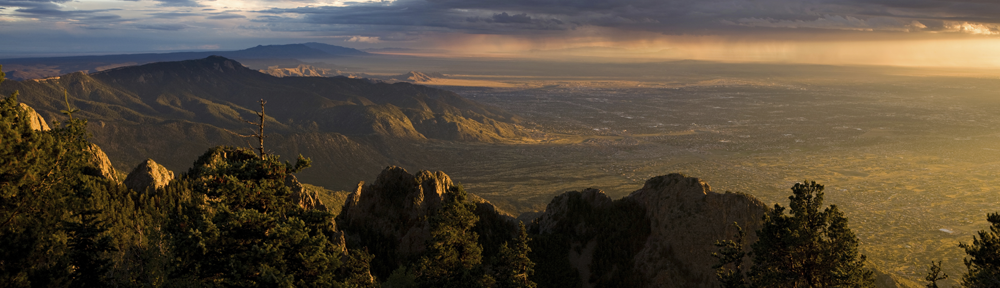
Mayor Keller’s And Councilor Feibelkorn’s New Opt-In Zoning Plan “Sneaky” Rebrand Of Keller’s Failed “Housing Forward ABQ Plan”; Goal Is To Increase Density Through Out Entire City; Adjoining Property Owners Have No Rights To Challenge Neighbors “Opt-In” To Increase Density

It was on October 18, 2022, Mayor Tim Keller announced his “Housing Forward ABQ Plan.” It is a “multifaceted initiative” where Mayor Keller set the goal of the City of Albuquerque being involved with adding 5,000 new housing units across the city by 2025 above and beyond what private industry normally creates each year. According to Mayor  Keller  the city is in a major “housing crisis shortage” and the city needs as many as 20,000 new housing units immediately. However, Keller has never fully identified how the inflated statistics were arrived at and he simply declared a crisis.

KELLER’S “HOUSING FORWARD ABQ PLAN

To add 5,000 new housing, Keller proposed that the City of Albuquerque fund and be involved with the construction of new low-income housing. The strategy included a zoning code “rebalance” to increase population density in established neighborhoods. It included allowing “casitas” which under the zoning code are known as “accessory dwelling” units and “duplex development” on existing housing. Keller’s “Housing Forward ABQ Plan” includes “motel conversions”. 

According to Keller’ “Housing Forward ABQ” plan, the city also  wanted  to convert commercial office space into to residential use. Mayor Keller  initially proposed $5 million to offset developer costs with the aim of transitioning 10 commercial  properties  and creating 1,000 new housing units. However, the Keller Administration announced early on that the conversion office space plan was a heavy lift for the city and the city at the time backed off on its efforts to acquire commercial office buildings to be converted into residential use.

CASITA’S IN, DUPLEX DEVELOPMENT OUT

Mayor Keller called for what he labelled as “transformative” updates to Albuquerque’s Integrated Development Ordinance (IDO) to carry out his “Housing Forward ABQ”.  Keller wanted to allow different forms of multi-unit housing development on existing residential properties to increase density. The legislation was to allow the construction of 750 square foot casitas and 750 square foot duplex additions on every single existing R-1 residential lot that already has single family house built on it to increase density and to create more “affordable housing” for acquisition or renting. 

City officials said that 68% of the city’s existing housing is single-family detached homes with 120,000 existing residential lots with already built residences.  Keller argued that allowing casita and duplex development on existing housing would double or triple density to 360,000 in established neighborhoods and thereby create more affordable housing for sale or rent.

It was pure Keller nonsense ignoring the high cost of construction to private homeowners and the effect of market forces. Keller’s plan was clearly “overkill” that would destroy the character of established neighborhoods and lead to gentrification. Developers would no doubt purchase existing homes for the development of casitas and duplexes.

The zoning code amendments would have made both casitas and duplex additions “permissive uses”.  Historically, they have always been “conditional uses”.  A “conditional use” requires an application process with the city Planning Department, notice to surrounding property owners and affected neighborhood associations and provides for appeal rights.  A “permissive use” would give the Planning Department exclusive authority to issue permits for construction without notices and hearings and with no appeal process to surrounding property owners. Objecting property owners and neighborhood associations to the permissive casita and duplex uses would be relegated to filing lawsuits to enforce covenants and restrictions.

On June 23, 2023, the Albuquerque City Council voted 5-4 to approve the zoning code changes with amendments made to the Integrated Development Ordinance (IDO) The version of the bill that ultimately passed on a 5-4 vote was amended extensively. The city council voted to allow casita construction as a “permissive use” in all single-family R–1 zone. The city council voted to strike the amendment and to not allow duplexes to be permissively zoned in R–1 zone areas, which make up about two-thirds of the city.

Confidential sources within city hall  have confirmed that since enactment of the amendment to the Integrated Development Ordinance in June 2023 that allows construction of accessory  dwelling units known as “casitas”, only 14 have actually been approved. This is clear evidence that demonstrates the City Council Council and Mayor Tim Keller’s’ Housing Forward Plan to increase density has been a failure.

FEIBELKORN’S NEW LEGISLATION SAME OLD SCAM TO HELP DEVELOPERS

Progressive Democrat Albuquerque City Councilor Tammy Fiebelkorn has introduced R-25-167 at the request of  Mayor Tim Keller.  The resolution is entitled:

ESTABLISHING AN OPT-IN PROCESS FOR LEGISLATIVE ZONING 3 CONVERSIONS FOR PROPERTIES ZONED R-1, R-T, OR R-ML TO INCREASE 4 HOUSING OPTIONS CITYWIDE AND ALLOW MIXED-USE DEVELOPMENT 5 ALONG COLLECTOR AND ARTERIAL STREETS AND WITHIN ESTABLISHED 6 METROPOLITAN REDEVELOPMENT AREAS.

The legislation has been referred to the City Council’s Land Use and Planning Committee that will need to review it, approve or amend it and forward it to the City Council. You can read R-15-187 by first clicking on the below link and then Clicking on R-15-187 in blue as an attachment:

https://cabq.legistar.com/LegislationDetail.aspx?ID=7433993&GUID=C0696A4C-338C-4AE3-97AF-D196597B9547&Options=ID|Text|&Search=R-25-167

R-25-167 directs the Planning Department to establish a process allowing property owners to opt-in to legislative conversions of properties to add zoning capacity for higher-density housing options citywide and mixed-used development along collector and arterial streets.  The process would include public outreach and advertising, analysis, an application to the Environmental Planning Commission for review/recommendation, and transmittal to City Council for final decision.

https://abq-zone.com/ido-updates-2025

“OPT-IN” TO REZONE PROPOSAL

With rents rising in the city, vacancies shrinking, and construction lagging, city housing costs keep climbing. City officials say the opt-in zoning plan aims to add housing options without forcing changes on neighborhoods, which is simply a false narrative seeing as adjoining property owners are simply cut out of the process and are now prohibited from challenging zone applications.

Mayor Keller’s office issued the following statement with the introduction of R-25-167:

“This resolution gives property owners the choice to modify their zoning, increase types of housing options and meet community needs. Flexibility in our housing approaches is a promising path towards reducing our housing deficit and increasing affordability in the Albuquerque market.  We know Albuquerque needs about 20,000 more homes to meet demand, and the City is making steady progress by modernizing outdated zoning rules, investing in affordable housing, and offering construction incentives.”

Currently, residential  zoning covers 27% of the city’s land and 68% of its properties. City officials have said that 68% of the city’s existing housing is single-family detached homes with 120,000 existing residential lots with already built residences. It allows only single-family homes, which city officials say has contributed to exclusionary patterns and limits housing options for lower-income households. The new rezoning process is designed to loosen those restrictions and support more housing development.

Fiebelkorn’s  new city ordinance creates a voluntary rezoning process that would let property owners switch to higher-density zoning if they want to build more housing on their residential  properties, allowing duplexes, townhomes and small apartment buildings in single-family neighborhoods. The plan focuses on corner lots and busy streets to  make  room for more housing. The problem is the application process does not allow  adjoining property owners to  object or challenge the “opt in” application.

The resolution in essence gives the Planning Department very broad authority to increase density in a neighborhood as they ignore adjoining property owner rights and remedies. The resolution requires  the city’s Planning Department to establish  a process and recommend requests, focusing on properties along busy streets and in designated redevelopment areas. Only eligible property owners who apply and agree to participate will have their zoning updated. Residential property owners must complete a participation form confirming eligibility and acknowledging that the new zoning could make existing uses nonconforming.

The city Planning Department would act as the official entity to accept  applications. Residential property desiring to “opt in” for increasing their properties density would be  responsible for providing documents including surveys, site plans or easement agreements and covering costs.  If property owners don’t qualify or disagree with the outcome, they can will be allowed to  request a zoning change through the the city’s zoning code known as the Integrated Development Ordinance (IDO) that regulates land use, building standards and development procedures.

According to the Planning Department, eligible properties can apply to rezone based on their current zoning and location to allow more housing options and mixed uses. Under the new ordinance if passed by the city council, single-family homes zoned R-1 will have several options. Those options include:

  • Corner lots on local streets could be converted to low-density multifamily (R-ML), which would allow duplexes, townhouses, and small apartments, and increase the maximum building height from 26 to 38 feet. Its argued that this would help neighborhoods keep their character while adding housing.
  • R-1 homes along busier collector or arterial roads which are defined as streets that move traffic from neighborhoods to major routes would be allowed to “switch” to mixed-use transit (MX-T), allowing apartments and businesses with buildings up to 30 feet tall. Other R-1 lots may become townhouses (R-T).
  • Townhouses (R-T) on busy streets would be allowed to convert to mixed-use low-intensity (MX-L), focusing on townhouses and apartments but no longer allowing single-family homes or duplexes. Buildings could be built  up to 38 feet  to support more housing and businesses.
  • Low-density multifamily properties (R-ML) could also increase. Corner lots may convert to high-density multifamily (R-MH), while properties on collector or arterial streets could switch to medium-intensity mixed-use (MX-M).
  • The rezoning process would apply to Neighborhood Retail  Properties zoned Neighborhood Retail Commercial (NR-C), Neighborhood Retail Business Park (NR-BP), Neighborhood Retail Light Manufacturing (NR-LM) or Neighborhood Retail General Manufacturing (NR-GM) may convert to high-intensity mixed-use (MX-H), if the change fits within an adopted redevelopment plan.

The goal of R-25-167 is outlined in the resolution as follows:

“The zoning conversions will generally foster communities where residents 8 can live, work, learn, shop, and play because it will allow more housing  options that can bring more residents to areas that already have businesses,  services, and public investments in facilities such as community centers and  libraries. Additional customers will help support additional services for  residential areas. Additional mixed-use zone districts along collector and  arterial streets will allow more non-residential uses where businesses can serve existing residents and have appropriate access by pedestrians, drivers,  and transit users.”

PLANNING DEPARTMENT OUTREACH CAMPAIGN

Upon passage of R-25-167, the Planning Department would launch a 90-day outreach campaign to explain the opt-in zoning process, using emails, Neighborhood Association coordination, a webpage, and ads on radio and local news. The department has allocated $50,000 from its 2026 budget to fund these efforts.

After the outreach period, property owners would have 180 days to submit complete applications. The Planning Department would not move any request forward until all supporting documents are received. Once the application period closes, the Planning Department would have 90 days to submit qualifying zoning conversions to the Environmental Planning Commission, which would review the proposals and make a recommendation.

Once approved by the Environmental Planning Commission, the Planning Department would have 30 days to forward the final Opt In Zoning application to the City Council which has the final say on approval.

Upon introduction of R-25-167, it was  assigned to the City Council’s Land Use, Planning, and Zoning Committee (LUPZ).   R-25-167 has been scheduled for review and discussion by the LUPZ committee on August 13. The LUPZ committee can amend and debate changes before sending it to the full City Council for a vote. The committee will vote to recommend a “pass” or “do not pass” R-25-167. If the resolution does not  advance, the resolution could be delayed or sent back for revisions.

The link to the quoted or relied upon news sources are here:

https://nm.news/2025/06/27/albuquerques-new-opt-in-zoning-plan-aims-to-ease-housing-crunch/?mc_cid=dbfd28ca44&mc_eid=001367acf1

https://citydesk.org/2025/06/27/albuquerques-new-opt-in-zoning-plan-aims-to-ease-housing-crunch/#:~:text=A%20proposed%20resolution%2C%20sponsored%20by,to%20address%20the%20housing%20shortage.

COMMENTARY AND ANALYSIS

Mayor Tim Keller and  City Councilor Tammy Fiebelkorn are refusing  to take “NO” for an answer after the defeat of key  provisions of Keller’s Housing Forward ABQ Plan that would  have allowed duplex development to increase density in established neighborhoods. City Councilor Tammy Feibelkorn’s  new “opt-in zoning plan” as embodied by R-25-167 is nothing more than the same old scam and a sneaky rebranding of Mayor Keller’s failed “Housing Forward ABQ Plan” to help developers and destroy existing neighborhoods by increasing density. They are doing it by simply ignoring adjoining property rights and objections.

Should R-25-167 pass, every single R-1 zoned lot in Albuquerque will be able to be up-zoned to at least R-T.  What this  means is that any single family home along or in the middle of any street, not just  a corner, not just on arterial or collector roads, can have a Townhouse built on it and it will be permissively enabled. Adjacent property owners, residents and neighborhood associations will just have to shut up and accept it, regardless of its visual impact on the character of their neighborhood.  

Once again they are  advocating for increasing the city’s density in established neighborhoods by allowing for mixed use development on single residential homes and allowing  duplexes, townhouses, and small apartments, and increasing the maximum building on the false premise that it will increase affordable housing. It will not. Keller’ and Fiebelkorn have the Field of Dreams zoning philosophy of “if we rezone it, they will build it” discarding the limited resources of residential property owners and the likelihood of invertors on the prowl.

R-25-167 is  pure residential development  nonsense ignoring the high cost of construction to private homeowners and the effect of market forces. R-25-167  plan is clearly “overkill” that will  destroy the character of established neighborhoods and lead to gentrification. It will be developers and investors who will purchase existing homes for the development of  duplexes, townhomes and small apartment buildings in single-family neighborhoods.

Bluntly put, the term “affordable housing” is very misleading. It is a term way too often used by elected officials and politicians to simply declare a crisis with inflated numbers that shows there is not enough housing that allows the poor or low-income people to rent or buy a home and call their own. Housing prices and rental costs never come down. The more appropriate term that should be used is “subsidized” housing where it’s clear what is needed is subsidized funding for those who cannot afford to buy outright or rent and need assistance.

The housing shortage is related to economics, the development community’s inability to keep up with supply and demand and the public’s inability to purchase housing or qualify for housing mortgage loans.  Simply put, Mayor Keller and City Councilor Tammy Feibekorn are using a short-term housing “crunch” to declare it a “housing crisis” in order to again advocate increasing density that will destroy established neighborhoods relying on property owners,  investors and developers to increase density by laxing zoning restrictions.

Under R-25-167 the Planning Department is once again being given broad authority, almost exclusive authority,  to unilaterally make decisions and be damned adjacent property owner rights. The Planning Department has already been given broad authority in other zoning matters, such as casita construction, to exclude the general public from the permissible use application and deny adjacent property owners the right to object and appeal. Such broad powers essentially will require property owners to sue adjoining property owners to enforce covenants and restrictions.

KELLER’S HOUSING FORWARD PLAN AND R-25-167  CATERS TO DEVLOPERS

For decades, investors, developers and construction contractors have objected to sector development plans and zoning restrictions proclaiming they were too burdensome and stifled development. They have wanted a loosening of the zoning laws to allow for developments in virtually all areas of the city and R-25-167  will accomplish this goal.

What really happened with Mayor Tim Keller’s “transformative changes” to  the Integrated Development Ordinance, his  “Housing Forward ABQ” plan is  that Mayor Keller and City Council Tammy Feibelkorn have catered to the development community as they pretended to be experts in housing development and zoning matters. Keller relied on his exaggeration of  the city’s housing crisis and homeless crisis to seek further changes to the city’s zoning code to help the development community and using city funding to do it.

Mayor Tim Keller’s and Councilor Fiebelkorn’s R-25-167  is just another abomination that favors developers and the city’s construction industry over established neighborhoods.

CITY COUNCIL LUPZ  COMMITTEE HEARING

Mayor Keller’s and Councilor Feibelkorn’s  R-25-167 will be heard by the City Council’s Land Use, Planning & Zoning (LUPZ) Committee at 5 p.m. on August 13 in the Vincent E. Griego Chambers in the basement level of City Hall. The five members of the LUPZ committee are:

  • Democrat Tammy Fiebelkorn, Chair
  • Democrat Nichole Rogers
  • Republican Brook Bassan
  • Republican Dan Champine
  • Republican Renée Grout

If the committee approves the ordinance, the full City Council will take them up later this fall.  Residents are encouraged to attend and voice their opinions.

CITY COUNCIL PHONE: (505) 768-3100

CITY COUNCIL AND SUPPORT STAFF  EMAILS

bbassan@cabq.gov

lesanchez@cabq.gov

bmaceachen@cabq.gov

joaquinbaca@cabq.gov

bacajoaquin9@gmail.com

kpena@cabq.gov

cquezada@cabq.gov

dawnmarie@cabq.gov

galvarez@cabq.gov

nrogers@cabq.gov

district6@cabq.gov

tfiebelkorn@cabq.gov

tanyaj@cabq.gov

dchampine@cabq.gov

rgrout@cabq.gov,

rrmiller@cabq.gov,

danlewis@cabq.gov

The link to a related blog article is here:

https://www.petedinelli.com/2023/06/23/city-council-passes-kellers-housing-forward-abq-plan-on-5-4-vote-casitas-in-duplexes-out-jones-flip-flops-again-lame-duck-city-councilors-do-not-give-a-s-what-cons/

Trump Administration Designates Albuquerque Sanctuary Jurisdiction A Second Time; Loss Of Millions In Federal Funding Likely; City Is Immigrant Friendly City, Not Sanctuary City; City Should Initiate Federal Lawsuit Against The Department of Justice, The Department of Homeland Security And Immigration And Customs Enforcement To Enjoin Conduct

On April 28, President Trump signed an Executive Order to enforce federal law with respect to sanctuary jurisdictions to protect their citizens from what he calls “dangerous illegal aliens.”  The Executive Order 14287 is entitled “ Protecting American Communities from Criminal Aliens.” The Executive Order states in part that “some State and local officials . . . continue to use their authority to violate, obstruct, and defy the enforcement of Federal immigration laws” and “[i]t is imperative that the Federal Government restore the enforcement of United States law.”

The Order directs the Attorney General and Secretary of Homeland Security to publish a list of States and local jurisdictions obstructing federal immigration law enforcement and notify each sanctuary jurisdiction of its non-compliance and  providing an opportunity to correct it. Sanctuary jurisdictions that do not comply with federal law may lose federal funding.

The Order directs the Attorney General and Secretary of Homeland Security to pursue all necessary legal remedies and enforcement measures to bring non-compliant jurisdictions into compliance. It instructs the Attorney General and Secretary of Homeland Security to develop mechanisms for proper eligibility verification in sanctuary jurisdictions to prevent illegal aliens from receiving federal public benefits.

Trump’s Executive Order is supposed to ensure illegal aliens are not being favored over American citizens by directing the Attorney General to address state or local laws that unlawfully prioritize aliens. This includes in-state tuition benefits for aliens or criminal sentencing factors that favor aliens.

https://www.whitehouse.gov/fact-sheets/2025/04/fact-sheet-president-donald-j-trump-protects-american-communities-from-criminal-aliens/

ALBUQUERQUE DECLARED SANCTUARY JURISDICTION

On August 5 the United States Justice Department published a list of states, cities, and counties identified as having policies, laws, or regulations that impede enforcement of federal immigration laws. Albuquerque is the only New Mexico municipality on the list but the State of New Mexico is not.

According to the Department of Justice a “sanctuary jurisdiction” generally refers to a state or local government that limits its cooperation with federal immigration authorities, particularly regarding the enforcement of federal immigration laws. There is no a strict legal definition, but these jurisdictions often restrict information sharing about immigration status or refuse to detain individuals based solely on federal immigration detainers.  

“Sanctuary policies impede law enforcement and put American citizens at risk by design. … The Department of Justice will continue bringing litigation against sanctuary jurisdictions and work closely with the Department of Homeland Security to eradicate these harmful policies around the country.”

The following states, cities, and counties have been identified as sanctuary jurisdictions:

STATES:

  • California
  • Colorado
  • Connecticut
  • Delaware
  • District of Columbia
  • Illinois
  • Minnesota
  • Nevada
  • New York
  • Oregon
  • Rhode Island
  • Vermont
  • Washington

COUNTIES:

  • Baltimore County, MD
  • Cook County, IL
  • San Diego County, CA
  • San Francisco County, CA

CITIES:

  • Albuquerque, NM
  • Berkeley, CA
  • Boston, MA
  • Chicago, IL
  • Denver, CO
  • East Lansing, MI
  • Hoboken, NJ
  • Jersey City, NJ
  • Los Angeles, CA
  • New Orleans, LA
  • New York City, NY
  • Newark, NJ
  • Paterson, NJ
  • Philadelphia, PA
  • Portland, OR
  • Rochester, NY
  • Seattle, WA
  • San Francisco City, CA

https://www.kob.com/news/top-news/albuquerque-among-18-us-cities-listed-as-sanctuary-jurisdictions-for-immigration/

https://www.krqe.com/news/albuquerque-metro/feds-pressure-abq-to-end-immigrant-friendly-policies-mayor-keller-says-he-wont-cave/

In recent months, the Justice Department has filed several lawsuits against sanctuary jurisdictions seeking to compel compliance with federal law, including one against New York City on July 24th. Recently, the Mayor of Louisville agreed to revoke their sanctuary policies following a letter from the Justice Department threatening legal action.

The list is not exhaustive and will be updated as federal authorities gather further information. According to the Justice Department the designations were made after a review of documented laws, ordinances, and executive directives by the listed jurisdictions.

The  list of designated Sanctuary Jurisdictions will be reviewed regularly, to include additional jurisdictions and remove jurisdictions that have remediated their policies, practices, and laws. Each state, county, and city will have an opportunity to respond to its placement on the list. The Department of Justice further stated the federal government will assist any jurisdiction that desires to be taken off this list to identify and eliminate their sanctuary policies, so they no longer stand in opposition to federal immigration enforcement.

https://www.justice.gov/opa/pr/justice-department-publishes-list-sanctuary-jurisdictions

President Donald Trump has said in speeches that he would approve the arrest of government officials who would prevent federal law enforcement from doing immigration enforcement. It is unclear if the Keller administration could be among the first arrested.

GOVERNOR AND CITY OFFICIALS REACT

Democrat Governor Michelle Lujan Grisham said the listing of Sanctuary Jurisdictions and threatening to withhold  funding  is just another way for the Trump administration to overstep its authority.   Michael Coleman, spokesperson for the governor, said this in a statement:

“The Trump administration’s designation of Albuquerque as a sanctuary city invites the same kind of federal overreach we’ve seen play out disastrously in cities like Los Angeles … Governor  Lujan Grisham fundamentally opposes this administration’s approach to indiscriminate detention and deportation. The question now is how the City of Albuquerque plans to manage this situation. Those questions should be directed to the mayor’s office. The Lujan Grisham administration will continue fighting unconstitutional federal overreach in court. But right now, what Albuquerque needs most is for APD to focus on real crime in real neighborhoods across the city — not to get pulled into immigration enforcement battles that distract from public safety.”

Albuquerque city officials had mixed reactions to the city being named the only city in the state to make the list of sanctuary jurisdictions.

Democrat Mayor Tim Keller said this:

“I’m not going to be intimidated by any of this rhetoric coming from the White House, and I think they know that because they tried to do this in their first term and didn’t work. And so, for us it’s a tired show and we’re not going to cave. … Albuquerque is a welcoming city, and where crime is now actually going down in every category this year. … So we are proving that we are safer and stronger when residents trust law enforcement enough to report crimes, send their kids to school, and seek services without fear. [My]  recent executive order supports both our immigrant community, while ensuring APD can focus on public safety, not federal immigration enforcement.”

Not surprising, Republican City Councilors had a different reaction to the news that the city was identified as a sanctuary jurisdiction.

Republican City Councilor Renee Grout, who represents the far Southeast Heights and foothills, said that while she is pleased the city of Albuquerque welcomes people from around the world, the city won’t “be a sanctuary for criminals.” Grout said this:

“It’s unfortunate that the mayor is willing to forfeit federal funding for housing and social services to engage in this political game. … Public safety should come first, and it should involve every tool at our disposal, including welcoming help from federal law enforcement.”

Republican City Councilors Dan Lewis and Dan Champine joined Grout in releasing a joint statement that pledged to “eliminate criminal sanctuary provisions.”

“If a resolution comes before the Council to codify orders that interfere with federal law enforcement’s pursuit of criminals, we will introduce an amendment requiring that federal authorities be given access to the Prisoner Booking Center — the location all criminals are taken when arrested.” 

The link to a relied upon or quoted news source is here:

https://www.abqjournal.com/news/article_c5d034eb-8230-4b51-b134-09cf3531ef8d.html#tncms-source=home-featured-7-block

SANCTUARY JURISDICTION CHARACTERISTICS

According to the U.S. Department of Justice,  the list of  Sanctuary Jurisdictions is  based on actions and policies that materially impede enforcement of federal immigration statutes and regulations.  Sanctuary Jurisdiction characteristics include the following:

  1. Public Declarations: Cities, states, or counties that publicly declare themselves a sanctuary jurisdiction or equivalent, with the intent to undermine federal immigration enforcement.
  2. Laws, Ordinances, Executive Directives: Cities, states, or counties that have laws, ordinances, regulations, resolutions, policies, or other formalized practices that obstruct or limit local law enforcement cooperation with U.S. Immigration and Customs Enforcement (ICE).
  3. Restrictions on Information Sharing: Cities, states, or counties that limit whether and how local agencies share information about immigration status of detainees with federal authorities.
  4. Funding Restrictions: Cities, states, or counties that prohibit local funds or resources from being used to support federal immigration enforcement efforts.
  5. Non-cooperation with Federal Immigration Enforcement: Cities, states, or counties that provide training to city employees and police on enforcing sanctuary policies and declining to respond to ICE requests for information.
  6. Limits on ICE Detainers: Cities, states, or counties that refuse to honor ICE detainer requests unless there is a warrant signed by a judge.
  7. Jail Access Restrictions: Cities, states, or counties that restrict ICE agents’ ability to interview detainees absent detainee consent.
  8. Immigrant Community Affairs Offices: Cities, states, or counties that create dedicated offices to engage and advise illegal alien communities on evading federal law enforcement officers.
  9. Federal Benefit Programs: Cities, states, or counties that circumvent federal laws prohibiting the provision of federal benefits to illegal aliens and provide them with access to benefits, including health care assistance, legal aid, food and housing assistance, and other subsidies. This includes cities, states, or counties that establish stand-alone benefit programs or equivalents.

The link to the quoted or relied upon news source is here:

https://www.justice.gov/ag/us-sanctuary-jurisdiction-list-following-executive-order-14287-protecting-american-communities?utm_medium=email&utm_source=govdelivery

NOT THE FIRST TIME FOR ALBUQUERQUE

“The United Stated Department of Justice (USDOJ) list follows a U.S. Department of Homeland Security list published last May of sanctuary jurisdictions that included 23 of New Mexico’s 33 counties, along with the City of Albuquerque and the City of Santa Fe. That list followed President Donald Trump’s executive order in April requiring such a list. The DHS list prompted confusion from some jurisdictions and outcry from local sheriffs, and was subsequently taken off line within a few days. “

The links to the quoted or relied upon news sources are here:

https://sourcenm.com/briefs/feds-list-albuquerque-as-nms-sole-sanctuary-jurisdiction/

https://abqraw.com/post/trump-administration-marks-albuquerque-as-a-sanctuary-jurisdiction/

$68 MILLION IN FEDERAL AID AT STAKE

Now that the Trump Administration has again labeled Albuquerque a sanctuary city, the city is at risk of  losing more than $68 million in federal funding, roughly 5% of the city’s annual budget. The potential loss of funding includes:

  • $26 million for the Sunport and Double Eagle airports
  • $11 million for housing programs
  • $8 million for public transit
  • $6 million for the Albuquerque Police Department

The link to a quoted or relied upon news source is here:

https://www.koat.com/article/mayoral-candidates-divided-on-albuquerques-immigrant-friendly-status-amid-federal-funding-threats/64707080

MAYOR TIM KELLER SIGNS EXECUTIVE ORDER IN RESPONSE TO ICE ARREST OF VENEZUELAN MAN

On July 22 Mayor Tim Keller signed an executive order that has the goal to  protect immigrant rights amid reports of increased U.S. Immigration and Customs Enforcement raids in Albuquerque. Keller’s Executive Order was prompted by the July 7 an altercation between U.S. Immigration and Customs Enforcement (ICE) agents detaining and tasing a Venezuelan man by the name of Deivi Jose Molina-Pena inside the Albuquerque Walmart located at 2550 Coors Blvd. NW. The video taken of the incident reveals three ICE agents, two of whom are masked, subdued Deivi Jose Molina-Pena with a Taser. The man can be heard screaming on the video. At one point the man falls backwards to the ground and hits his head.

A female customer filmed the July 7 incident and posted the video the same day on FACEBOOK. The video of the incident went viral, drew national media attention and amassed huge numbers of online views, along with comments expressing shock at the violent nature of an unarmed man’s arrest. It turns out  Deivi Jose Molina-Pena arrived in the United States legally under Temporary Protected Status two years ago from Venezuela and he was employed as a Spanish-speaking “deliverista” for Spark Driver, a delivery service for Walmart.

A protest occurred on Sunday, July 20  which drew at least a hundred anti-ICE demonstrators to the front doors of the retail store off Coors Boulevard NW and I-40. Protesters appeared outside the Walmart where the incident occurred to protest the arrest and yelling “Burque Over Billionaires.” Organizers of the protest said they have not been able to locate Deivi Jose  Molina-Pena.

CONTENTS OF KELLER’S  EXECUTIVE ORDER

The executive order consists of both new and preexisting directives. Some of the executive orders are being criticized for being unenforceable. Keller said that his motivation for the executive order started in June during Los Angeles’ ICE raids and subsequent protests, and continued when a social media clip showed ICE agents tasing and detaining Deivi Jose Molina-Pena inside a west side Walmart.

“The directives contained in Keller’s Executive Order conform with the City Council 2001 resolution and the 2018 amendments that declares the city to be an “Immigrant-Friendly City”. The Executive Order forbids city personnel from working with ICE except when required by a court order. City personnel have been forbidden to share information about immigration status, except when presented with a court order, since the 2018 resolution.

Other directives expand on the “Immigrant-Friendly City” resolution. The order requires the city attorney to routinely file Freedom of Information Act (FOIA) requests about ICE activities within the city. It mandates the city’s child wellbeing officer, and the Office of Equity and Inclusion develop “trauma-informed” training for all city departments that work with children impacted by immigration enforcement, including those who have been separated from their parents. The order additionally warns that anyone caught impersonating an ICE agent will be prosecuted “to the highest degree allowable.”

A few items contained in Keller’s Executive Order conflict with one another, especially where ICE and the Albuquerque Police Department overlap. While the executive order states that ICE agents “must not disrupt the wellbeing of City public spaces through violent or harmful detainment actions,” it also states that “the Albuquerque Police Department cannot legally interfere with ICE activity.”

One of the provisions in the executive order is that it aims to prosecute people impersonating law enforcement. It also reiterates that Immigration and Customs Enforcement must clearly identify its officers and avoid harmful or disruptive tactics in public spaces. However, when asked to clarify this part of the directive, an Albuquerque Police Department spokesperson said that the executive order does not address masks, which are a policy for ICE to determine.

The order does instruct APD to verify the identity of suspected ICE agents if asked to by a member of the public. The public can report suspected ICE raids to APD’s non-emergency line, (505) 242-2677, for verification.”

The link to the quoted news source is here:

https://www.abqjournal.com/news/article_d698f3d9-2c89-4aae-9007-f97417c1443d.html#tncms-source=home-featured-7-block

KEY PROVISIONS OF KELLERS EXECUTIVE ORDER

Following are the key provisions of Mayor Keller’s Executive Order to protect immigrant rights:

Protection of Immigration Due Process

  • Reaffirms that no City department, agency, or employee shall use City resources to assist in federal civil immigration enforcement, including raids, detentions, or information-sharing, unless legally required.

Implementation and Oversight

  • Designates the Office of Equity and Inclusion (OEI) to lead implementation.
  • Directs the Immigrant and Refugee Affairs (OIRA) Steering Committee to gather community feedback and coordinate support services with legal providers, schools, and non-profits.
  • Requires all departments to designate liaisons and report progress to the Mayor.

Transparency in City Services

  • Prohibits City staff from supporting secret ICE activity in public facilities.
  • Requires departments to report any ICE activity at City facilities to the Mayor’s Office and OEI.
  • Allows APD to confirm ICE activity only when requested by the public.
  • Commits to prosecuting individuals who impersonate law enforcement to defraud or harm residents.

Transparency in Federal Immigration Enforcement

  • Directs the City Attorney to file regular Freedom of Information Act (FOIA) requests to DHS and ICE and share findings with the public and City departments.
  • Reiterates that ICE must clearly identify its officers and avoid harmful or disruptive detainment tactics in public spaces.

Protection of Children, Including Migrant Youth

  • Instructs all departments serving youth to develop trauma-informed protocols to support children affected by immigration enforcement.

Support for Working Families

  • Directs departments to identify services and assistance for families impacted by federal actions, particularly related to housing, healthcare, employment, and education.
  • Expands virtual access to services to support safe interaction with government systems.

In a statement, Mayor Keller said this of his Executive Order:

“From day one, I made it clear that we will not be intimidated by harmful federal policies—and we’ve never wavered from our commitment to civil rights and public safety. … This Executive Order makes it clear that we will not stand by silently as our neighbors and friends are living in fear, and we will protect due process for all people living in our City. Albuquerque is a community rooted in diversity and strength, and we will not use our resources to support raids, detentions, or information-sharing that we are not legally required to do.”

https://www.cabq.gov/mayor/news/mayor-keller-issues-executive-order-to-protect-immigrant-rights-in-albuquerque-city-councilors-plan-legislation-to-further-codify-immigrant-protections

APD CLARIFIES NEW  COOPERATING POLICY WITH ICE

The  Albuquerque Police Department (APD) issued a statement clarifying the city’s efforts to deal with ICE enforcement actions within  the city saying the federal officials have agreed to share more information with police about immigration operations in the city. According to a statement issued by APD, the public can call 242-COPS, which is APD’s non-emergency number, to inquire about “a specific presence in the city and whether that is an ICE operation.”

APD spokesman Gilbert Gallegos said this in the statement.

“Our dispatchers can call ICE and verify whether that is the case, and the dispatcher can relay that verification to the caller. … We will not know or pass along any operational details to members of the public. … The process is similar to that used in SWAT activations in the city.”

APD Chief Harold Medina said in a statement that he has communicated with Homeland Security Investigations, which oversees ICE, about public concerns. Medina said this:

“While APD does not enforce federal immigration laws, [I] emphasized to federal law enforcement leaders that there must be more transparency around their operations in Albuquerque … As a result, federal officials have agreed to share information with APD when people have questions about operations.”

Medina also said that federal agents must wear markings identifying themselves as law enforcement officials and said this:

“APD is not in the business of immigration enforcement. At the same time, I want to keep lines of communication open to avoid misunderstandings. We want the community to be safe and trust that we are looking out for them.”

Chief Harold Medina said it doesn’t matter if the resident is a legal citizen or not. He says when they break the law, they’ll be sought out by APD.

“At the end of the day, if someone is a criminal, I don’t care if they were born in Albuquerque or another country. Criminals, people breaking the law, endanger our citizens in Albuquerque—regardless, citizens or not—should be in jail.”

IMMIGRANT FRIENDLY CITY VERSUS SANCTUARY CITY

For the last 23 years, Albuquerque has had a hands-off approach to immigration enforcement by officially labeling itself “immigrant-friendly” city and limiting local police cooperation with Immigration and Customs Enforcement. APD does not enforce immigration laws nor detain people for ICE without a warrant.

It was in 2001, long before Trump was President and Keller was Mayor, that the Albuquerque City Council declared the city to be an “Immigrant-Friendly City” by City Council ordinance. The ordinance was originally sponsored by former Republican City Councilor Hess Yntema who represented the South East Heights area, including the International District that has the highest concentration of immigrants. Councilor Yntema’s wife is also naturalized citizen of the United States. The ordinance provides that the City of Albuquerque “welcomes and encourages immigrants to live, work and study in Albuquerque and to participate in community affairs, and recognizes immigrants for their important contributions to our culture and economy.”

In 2018, the Albuquerque City Council passed amendments to the original ordinance affirming the city was an “immigrant-friendly city,” again carefully avoiding the term “sanctuary city.”  The 2018 legislation was sponsored by Albuquerque City Councilor Klarissa Peña. Then City Councilor Pat Davis asked to co-author the measure and Peña allowed it. Davis said this:

“We were really clear about being sure that we didn’t use sanctuary language. …We wanted to ensure transparency and cooperation, but also protect vulnerable residents.”

“Sanctuary City requires local government to essentially shield the undocumented from federal authorities and federal arrests. “Immigrant Friendly” cities on the other hand enact policies that are favorable to undocumented people to allow them city services like all other residents and its local law enforcement personnel do not make arrests for violations of federal immigration laws and only make arrests of undocumented people for violations of local ordinances and state laws. 

Albuquerque does allow the sharing of arrest records of municipal and state violations with federal immigration agents. However, the city does not compile any information on immigration status of suspects and prohibits Immigration and Customs Enforcement (ICE) from using municipal facilities or resources. This balance distinguishes the city’s approach from more overt sanctuary city policies.

The Office of Immigrant and Refugee Affairs manages the Immigrant Friendly City Resolution. It requires city departments to review policies for compliance and report back to the council. Key provisions as reported by the online news agency City Desk include:

  • City entities cannot collect citizenship or immigration status unless required by law for federal or state program eligibility or city employment.
  • City employees must keep personal information confidential unless needed to provide services, comply with public records requests, or required by law. Personal information includes Social Security numbers, birth details, addresses, sexual orientation, disability status, religion and national origin.
  • City resources cannot be used to aid immigration investigations or detentions based on immigration status.
  • Federal immigration agents cannot access non-public city areas, such as the Prisoner Transport Center, without a judicial warrant.
  • Everyone in Albuquerque has the right to city services with respect and dignity, regardless of race, disability, national origin, gender identity, religion, sex, sexual orientation, ethnicity, economic or immigration status.”

COMMENTARY AND ANALYSIS

There is very little doubt that what prompted the Trump Administration to classify Albuquerque as a Sanctuary Jurisdiction for a second time was Mayor Tim Keller’s July 22 executive order in response to the July 7 altercation between U.S. Immigration and Customs Enforcement (ICE) agents detaining and tasing  Deivi Jose Molina-Pena. The incident garnered national attention and it is more likely than not that ICE or Homeland Security briefed the White House on the incident and demanded that Albuquerque be placed on the “sanctuary jurisdiction” list.

The blunt truth is that Mayor Tim Keller did not declare the city to be a Sanctuary City with his Executive Order. Simply put, he does not have the authority to do so even if he wanted to. It is the City Council, the legislative and policy body of city that has such exclusive authority to do so and that is binding on the city. The city of Albuquerque is not and has never been a sanctuary city and is in fact an Immigrant Friendly city as decreed by the City Council’s 2001 resolution and 2018 amendments declaring the city to be an Immigrant Friendly City. The directives contained in Keller’s Executive Order conform with the City Council 2001 resolution and the 2018 amendments that declares the city to be an “Immigrant-Friendly City”.

The Albuquerque Police Department’s (APD) new announced policy where federal officials have agreed to share more information with APD about immigration operations in the city should pretty much gut any argument that the city is obstructing or interfering  with  ICE operations. The city is in fact cooperating and not interfering with ICE operations. APD Chief Harold Medina made it clear he has communicated with Homeland Security Investigations, which oversees ICE, about public concerns. What Medina said is again worth noting:

“While APD does not enforce federal immigration laws, [I] emphasized to federal law enforcement leaders that there must be more transparency around their operations in Albuquerque … As a result, federal officials have agreed to share information with APD when people have questions about operations.”

The Keller Administration and the Albuquerque City Council need to challenge in no uncertain terms the Trump Administration’s classification of Albuquerque as a Sanctuary Jurisdiction by initiating a Federal lawsuit against the Department of Justice, the Department of Homeland Security and  Immigration and Customs Enforcement (ICE) to enjoin them from classifying Albuquerque as a Sanctuary City and enjoin the Trump Administration from withholding federal funding base on their false finding that Albuquerque is a sanctuary city.

The federal lawsuit should  seek federal court orders to enjoin the Department of Justice, the Department of Homeland Security and Immigration and Customs Enforcement (ICE) from the manner and methods they are using to arrest and detain people. ICE agents wearing masks, tactical vests and armed without identifying themselves to apprehend and arrest people without arrest warrants is as shocking and authoritarian and as fascist as it gets. It’s what happens in countries like Russia and North Korea. It should not be tolerated nor be happening in a democracy such as ours. It’s an affront to our constitutional rights, civil rights and due process of law guaranteed to all, including undocumented immigrants.

With any luck, the new policy approved by Homeland Security to disclose ICE enforcement actions to APD along with Keller’s Executive order will help reduce the inevitable havoc on the community as a direct result of ICE enforcement actions. ICE should take the damn masks off, identify themselves, secure warrants and follow due process of law.

Links to related articles are here:

Immigration and Customs Enforcement (ICE) Arrest Of Venezuelan Man In Country Legally Leads To Mayor Keller Signing Executive Order To Protect Immigrant Rights; Keller Engages In Political Plagiarism Of Opponent Alexander M.M. Uballez Advocacy To Protect Immigrant Rights; ICE Should Take The Damn Masks Off, Identify Self And Secure Warrants

Stakes Are High To Answer Trump’s Question: Is Albuquerque A “Sanctuary City” Or “Immigrant Friendly City”; Sanctuary City Becomes Issue In 2025 Mayor’s Race; 7 Out Of 11 Candidates Respond To KOAT TV 7 Line Of Questioning On Issue


Mayor Keller Seeks To Relax Safe Outdoor Space Rules To Allow 100 Smaller Safe Outdoor Spaces And Accommodate 1,000 Homeless To Camp; Keller “Double Downs” On His Failed Safe Out Door Spaces Policy Despite Spending Over $200 Million On His Gateway Integrated System

Under the City’s Zoning laws collectively known as the Integrated Development Ordinance (IDO), “Safe Outdoor Spaces” are organized, managed homeless encampments. It was Mayor Tim Keller who initially proposed the idea of “Safe Outdoor Spaces” in his 2022-2023 city budget requesting $750,000 in funding to set up Safe Outdoor Spaces in vacant dirt lots across the city  with an additional $200,000 for developing other sanctioned encampment programs.

On June 6, 2022, despite significant public outcry opposing Safe Outdoor Spaces, the Albuquerque City Council enacted the legislation authorizing Safe Out Door Spaces passing it on a 5 to 4 vote. On December 5, 2022, after strong public opposition to Safe Outdoor Spaces and one City Councilor withdrawing support, the City Council  voted 5 to 4 to remove all references to Safe Outdoor Spaces within the IDO and attempted to outlaw the land use, but Mayor Tim Keller vetoed the legislation.

The “Safe Outdoor Spaces” legislation  passed allows for  2 homeless encampments in all 9 city council districts with 40 designated spaces for tents. They will allow upwards of 50 people, require hand washing stations, toilets and showers, require a management plan, 6 foot fencing and dedicated space for social service providers to offer food, mental and physical health services. Although the Integrated Development Ordinance (IDO) amendment sets a limit of two in each of the city’s 9 council districts, the cap does not apply to those hosted by religious institutions.

A map prepared by the city detailing where “Safe Outdoor Space” zoning would be allowed for encampments reveals numerous areas in each of the 9 City Council districts that abut or are in walking distance to many residential areas. Upwards of 15% of the city would allow for “Safe Outdoor Spaces” as a “permissive use” or  as a “conditional use”.

Under the law, once such permissive uses are approved and granted by the city, they become vested property rights and cannot be rescinded by the city council. There is no requirement of landownership, meaning someone could seek a special use for a safe outdoor space and then turn around and lease their undeveloped open space property to whoever can afford to pay.

A city map reveals a large concentration of eligible open space areas where Safe Outdoor Spaces are allowed that lies between San Pedro and the railroad tracks, north of Menaul to the city’s northern boundary. The map reveals that the encampments could be put at next to the Big-I, the northeast heights, and on the west side not far from homes. The map does not account for religious institutions that may want to use their properties for living lots or safe outdoor spaces.

The Safe Outdoors Spaces program is  intended to let community members, businesses and churches help those experiencing homelessness outside their doors by giving them a place to sleep off the streets and on private property.

TRUMP’S EXECUTIVE ORDER

It was on July 24, 2025  President Donald Trump signed an Executive Order that seeks to overhaul the way cities and communities across the United State manage homelessness. The  Executive Order requires cities to take a far more aggressive approach to homelessness, mental illness and drug use. The Executive Order seeks to have  cities break up homeless encampments and institutionalize the unhoused who suffer from mental disorders or addiction through the civil mental health commitment process. The Executive Order seeks to eliminate all federal  funding for safe outdoor spaces and harm reduction programs, claiming that they promote drug use and “deprioritize accountability.

The link to read Trump’s July 24, 2025 Executive Order is here:

https://www.whitehouse.gov/presidential-actions/2025/07/ending-crime-and-disorder-on-americas-streets/

NEW MEXICO AND ALBUQUERQUE’S HOMELESS NUMBERS

According to the federal Housing and Urban Development’s 2024 Annual Homelessness Assessment Report Statewide, 4,631 people were counted in 2024 as homeless which is a 20.5% jump from the year before and the highest number ever recorded.

According to the New Mexico Coalition to End Homelessness annual Point-in-Time count Albuquerque’s homelessness crisis has hit record levels, with 2,740 people experiencing homelessness in January 2024, including 1,231 living unsheltered. According to surveys, upwards of 75% of those counted decline and refuse city services and city shelter.

REDUCING  OPERATION COSTS

On June 28, 2025 Mayor Tim Keller held a news conference to announce efforts to make major changes to the city’s Integrated Development Ordinance governing Safe Outdoor Spaces. Mayor Keller wants to ease costly rules that have stalled efforts to open more Safe Outdoor Spaces in Albuquerque, saying churches and nonprofits should be able to create legal encampments without facing major financial barriers.

With more than 2,700 people experiencing homelessness in Albuquerque, Keller wants to ease the requirements to expand the program. The proposed changes could reshape how the city responds to the  homelessness over and above the shelters and programs provided by the city. The new legislation to amend the Integrated Development Ordinance is sponsored by progressive Democrat City Councilor Nichole Rogers at the request of the Mayor Tim Keller. Rogers represents District 6 in the South East area of the city which includes the International District and it has  a high concentration of unhoused. Mayor Tim Keller said he is “working with Councilor Nicole Rogers to … make some tweaks” to the legislation.

NEW CREATION CHURCH SAFE OUTDOOR SPACE

As of April, 2025, New Creation Church on Zuni, is the only safe outdoor space approved by the city in the three years since the City Council authorized Safe Outdoor Spaces. Every other site was denied or  applicants withdrew their applications.

In 2020, during the global pandemic, members of the New Creation Church saw an increase of people experiencing homelessness outside their doorsteps. In April 2025, the church became the first safe outdoor space approved by the city and open it in the International District. Pastor Jesse Harden said this:

“We tried to do it on our own for a little bit, thinking ignorance is bliss, right? We’re like, hey, let’s just do it ourselves, not knowing that there was laws and ordinances and things like that. We had to kind of go through the hoops, and it was a really long, painful process, a lot of paperwork, a lot of site plans and ordinances and trying to figure out all of that.”

Since opening in April, the New Creation site has served 11 people. It has space for up to 10 residents, including couples who can share tents. Pastor Harden said seven people currently live at the site. Harden said this:

“That number kind of shifts back and forth. … There’s several people on the waiting list that are being interviewed, going through the process to take those empty spaces right now.”

Residents have built what Harden called “a beautiful community,” planting flower beds, sharing meals, and supporting each other’s progress toward stability. Pastor Jesse Harden said this:

“We need as many solutions as there are people, right? Not everyone is going to go into a shelter not everyone obviously has family or friends to have a couch for.”

The link to a relied upon and quoted news source is here:

https://citydesk.org/2025/07/29/keller-seeks-to-cut-red-tape-for-safe-outdoor-spaces/

“BARRIERS” TO SAFE OUT DOOR SPACES

Pastor Jesse Harden of New Creation Church said current rules are the biggest barrier to opening more Safe Outdoor Spaces. The current ordinance requires 24/7 security, permanent showers and space for service providers, pushing security costs alone over $104,000 a year. Harden said this:

“I think the 24/7 security is probably the most significant obstacle to getting things started. It’s our highest expense. If you pay someone minimum wage to be there 24/7, it’s over $100,000 a year. So that, right there, eliminates 99% of people who try to do it.”

“Quirky Books” is a used bookstore off of Central. The stores owner Gillam Kerley attempted and failed to set up a Safe Outdoor Space.  About 15 people camp each night in 10 tents in the store’s parking lot. After receiving complaints from one local business and other callers, the city gave Kerley a choice: clear out the encampment in two weeks or pay a $1,500 fine for ordinance violations. Kerley paid the fee.

Kerley said that for his business, the requirements to operate a safe space are too expensive and labor intensive. Kerley said this:

“Someone who is simply providing a place for people to camp shouldn’t be required to be a complete wraparound social services provider.”

The link to the relied upon or quoted news source is here:

https://www.abqjournal.com/news/article_af17fe14-4eba-4639-b18c-b5f1203f2ee0.html

KELLER WANTS 100 SAFE OUTDOOR SPACES ALL OVER CITY TO ACCOMMODATE 1,000 HOMELESS

Mayor Tim Keller wants to see more safe outdoor spaces throughout the city to help the unhoused. With more than 2,700 people experiencing homelessness in Albuquerque, Keller says he wants to ease the requirements to expand the Safe Outdoor Spaces program with the goal of  increasing  the number. The proposed changes could reshape how the city responds to record-level homelessness. Mayor Tim Keller for his part said this:

“We’ve over-regulated it such that it doesn’t even work. These rules are in our own way, and we owe it to folks [to make it easier]. The government should make life easier for people—both on the street and people who want to help—not make it harder.”

Mayor Keller said smaller Safe Outdoor Spaces locations will make a big difference and said the city needs to “scale up” by allowing smaller encampments all over the city. Keller said there are individuals either who are not ready for traditional shelters or can’t find available housing. Keller said to meet the need, the city may need as many as 100 smaller Safe Outdoor Spaces.  Keller said there are many who would accept a Safe Outdoor Space and who have already turned down traditional shelters.  Keller said this:

“This kind of option could make a huge difference on our streets. … It’s always worth it to help 10 people. …  [Helping] even 10 people makes a huge difference in their lives and that’s never lost on me. … We think there’s at least 1,000 people on the street who would say yes to a Safe Outdoor Space and who currently say no to the Gateway system. … If you do the math, we’d need around 100 Safe Outdoor Spaces. … That’s a lot, but if each one shelters 15 or 20 people, the numbers add up fast.”

KELLER’S PROPOSED CHANGES

Mayor Keller is proposing four major changes to the Integrated Development Ordinance governing Safe Outdoor Spaces to make them more affordable and practical for churches, nonprofits and others. The four changes are:

FIRST:  This change would ease the rule requiring 24/7 on-site security. Currently, sites must always have someone on duty.  It’s a cost that eliminates 99% of people who establish safe outdoor spaces on their property. The proposed change would allow flexible security plans based on each site’s needs, especially for smaller communities where residents already look out for one another. Weekday business hours would be allowed for security, though one person must always remain on-call in case of complaints or emergencies.

SECOND: This change would drop the rule requiring on-site showers 24/7. Keller said that doesn’t make sense for small sites with just 10 people, where showers often go unused. Instead, mobile trailers could rotate between locations throughout the week. Keller said this

“The current law makes you basically have a shower 24/7 on the site. If you only have ten people at a site, the showers aren’t going 24/7. There are different ways to problem solve around and to have a temporary trailer that comes on different days a week.  … If you’re, like living outside, you can typically find a shelter area, other than a day like today, where you can have those consultations and provide services. You don’t necessarily need dedicated space that’s then empty the rest of the time.”

THIRD: This change would eliminate the requirement for a dedicated space for service providers. Keller said many services can be handled off-site or as needed, and paying for a room that rarely gets used doesn’t make sense.  Safe Outdoor Spaces would be allowed to offer a minimum of three social services, which can include peer support or recovery groups, connecting residents with housing resources or offering GED assistance or adult education.

FOURTH: This change would establish $100 application fees and $50 renewal fees, with permits lasting 12 months before requiring renewal. Sites would also be required to participate in a “Good Neighbor Program” with nearby property owners.

Mayor Keller said the updates would cut costs, reduce red tape and open the door for more churches and nonprofits to help.

KELLER’S  MULTIFACETED APPROACH TO DEAL WITH HOMELESS

Since becoming Mayor in 2027, Tim Keller has made dealing with the homeless a top tier priority. Mayor Keller’s City budgets for the years 2021 to 2024 reflect the Keller administration has spent a staggering $200,000,000, or upwards of $60 Million a year, to operate shelters and provide homeless services. One major problem is that surveys and counts of the homeless reveal upwards of 75% refuse and decline city shelter and services.

Under Keller, the city is taking a multifaceted, all-in approach to get more people into houses and off the streets. The city’s Metro Homelessness Initiative has the goal to provide the unhoused staying at shelters with the opportunity of employment. The city has also overhauled  its voucher program and improving collaboration with the nonprofits that do the work.

The city will have a total of 5 centers to deal with the homeless that is intended to be operated as an integrated system:

  • The Gibson Gateway Shelter
  • The Gateway West Shelter
  • The Family Gateway Shelter
  • The Youth Homeless Shelter
  • The Recovery Shelter

The Gateway Center which is the former Lovelace Hospital on Gibson is the largest investment the city has ever made in health and homelessness with the goal of providing immediate help and a pathway into housing.  The Gateway West shelter is the old westside jail  being reshaped with no barriers to entry and wraparound services.  The city is adding the Youth Gateway a Recovery Gateway, and the Family Gateway has already helped get 1,200 into permanent housing. The Recovery Gateway is for the unhoused who are struggling with drug abuse. The Family Gateway is a reworked hotel to house more than 50 families a night.

Links to quoted or relied upon news sources are here:

https://www.abqjournal.com/news/article_af17fe14-4eba-4639-b18c-b5f1203f2ee0.html

https://citydesk.org/2025/07/29/keller-seeks-to-cut-red-tape-for-safe-outdoor-spaces/

https://www.koat.com/article/albuquerque-mayor-aims-to-expand-safe-outdoor-spaces-for-homeless-community/65533777

https://www.krqe.com/video/ordinance-would-relax-rules-for-safe-outdoor-spaces-in-albuquerque/10931336/

https://www.youtube.com/watch?v=nE0UNStctTI

https://www.youtube.com/watch?v=nE0UNStctTI

COMMENTARY AND ANALYSIS

Mayor Tim Keller is seeking a third four-year term with the election to be held in 3 months on November 4, 2025. Notwithstanding it being an election year, Mayor Keller is resurrecting one of the most controversial and divisive issues dealt with by the city council in the last 3 years and which has angered the voting public in the past and will do so again. It will likely remind voters of Keller’s failures as Mayor.

RECALLING CONTROVERSY

It was on June 6, 2022 that the City Council enacted a series of amendments updating the Integrated Development Ordinance (IDO). One of the amendments was for “Safe Outdoor Spaces.” The legislation passed on a 5 to 4 vote. Voting YES to allow Safe Outdoor Spaces were 3 councilors who did not seek reelection. Voting YES were former city councilor Democrats Isaac Benton, Pat Davis and Republican Trudy Jones and Democrat Tammy Feibelkorn and Republican Brook Basan. The four city Councilors voting NO were Republicans Dan Lewis, Renee Grout and Democrats Louis Sanchez and Klarissa Pena.  Mayor Tim Keller signed off on the legislation making it law.

After tremendous public anger and objections to Safe Ourdoor Spaces, Republican City Councilor Brook Bassan, who had voted “YES” and previously voiced support for safe outdoor spaces, did an about face and changed her mind. On June 22, 2022 just a few weeks after helping pass the Safe Outdoor Space amendment, Bassan introduced legislation to repeal the IDO amendment and she introduced two bills. One bill introduced would stop the city from accepting or approving safe outdoor space applications and the other would have  eliminated  safe outdoor spaces  from the zoning code altogether.

After being repeatedly confronted at neighborhood association meetings and functions by angry constituents, Bassan issued a formal apology to her constituents saying after her initial support of Safe Outdoor Spaces she had serious doubts. She went so far as to say that the city was not ready to implement them and that they would not provide the type of relief she initially hoped. Bassan said this:

“Even though many are in support of safe outdoor spaces, way more are saying they don’t want them. … [Going forward with them] doesn’t feel right.”

Albuquerque City Councilor Louis Sanchez is considered by city hall watchers as  the “swing vote” on the City Council, with the council divided with 5 Democrats and 4 Republicans. A swing vote is the deciding vote when council splits 4 to 4 on the council.  There is a good chance that Keller’s elimination of Safe Outdoor Space regulation will result in a split vote of 4 to 4.

Sanchez along with former Albuquerque City Councilor Trudy Jones sponsored rules and regulations that were to govern the operation of Safe Outdoor Spaces. Sanchez said this about Keller’s now proposal to repeal of Safe Outdoor Space regulations:

 “I firmly oppose any repeal of these regulations because they are essential for safeguarding both the surrounding neighborhoods and the residents living in Safe Outdoor Spaces. Without clear rules and oversight, these sites risk becoming unmanaged encampments that create more problems than they solve. I believe  these regulations provide structure, accountability, and security, ensuring Safe Outdoor Spaces remain transitional, well-supervised, and focused on connecting residents to permanent housing and services. Public safety must come first, not just for those living nearby, but for the individuals using these spaces who deserve a safe, orderly environment that helps them get back on their feet.”

It is truly surprising that Mayor Tim Keller is advocating for more Safe Out Door Spaces and getting rid of the limitations and  regulations on them in an election year. Perhaps voters will wake up and realize just how out of touch Keller really is on the issue. Keller’s proposed  Safe Out Door Space legislation is a prime example of an elected official who refuses to learn from their own mistakes and who ignores what the public wants, demands and expects.

REVISITING “KELLERVILLE”

Mayor Tim Keller has always had an affinity for and has allowed and even condoned the unhoused to camp wherever they want and for as long as they want without enforcing vagrancy laws and prohibitions on outdoor camping on city or private property.  Keller’s acquiescence and indifference to where the homeless camp has been an absolute disaster for the city. Corondo Park is the best example of Keller’s failed policies in dealing with homeless encampments.

Tim Keller was sworn in as Mayor on December 1, 2017.  Up and until August 18, 2022, Keller allowed Coronado Park to become a de facto city sanctioned homeless encampment. Critics even called Coronado Park “Kellerville”.

For a full 5 year period, the Coronado Park evolved and eventually became 100% occupied by the homeless over the strong objections of surrounding property owners and businesses who pleaded with Keller to shut down the park.

With no rules, regulations on occupancy and no structure, the park degenerated into a “no man’s” land and a magnet for crime. At its height of occupancy, Coronado Park had well  upwards of 125 to 150  unhoused camping at the park with no sanitation. Conditions became so bad at the park that every two weeks city crews were sent into the park, the unhoused were vacated and the park was cleaned only to allow the unhoused to return the very next day.

On  August 18, 2022, the City of Albuquerque closed Coronado Park because it had become a de facto city sanctioned homeless encampment with the city evicting up to 125 unhoused who camped there nightly.  During a press conference announcing its closure, Mayor Keller called the park “the most dangerous place in the state of New Mexico” even though he had the biggest hand in creating the cesspool of crime known as Coronado Park. Keller said it was imperative to close the park even without a fully formed plan for how to do it. He took no responsibility for what happened to the park yet he took credit for solving a problem he allowed to fester.

The city cited numerous reasons for closure of the park including lack of sanitation posing a severe health risks, overall damage to the park and extensive drug trafficking and violent crime, including rapes and murders at the park having reached crisis proportions. The city was spending upwards of $50,000 a month to clean up Coronado  Park. The city park had an extensive history lawlessness including drug use, violence, murder, rape and mental health issues.

In 2020, there were 3 homicides at Coronado Park. In 2019, a disabled woman was raped, and in 2018 there was a murder. APD reported that it was dispatched to the park 651 times in 2021 and 312 times  in 2022. There had been 16 stabbings at the park in 2 years.  In 2023, APD had seized from the park 4,500 fentanyl pills, more than 5 pounds of methamphetamine, 24 grams of heroin and 29 grams of cocaine. APD also found $10,000 in cash. All the seized drugs were tied to a single bust that occurred at a nearby motel, not the park, though an APD spokeswoman said the suspect was “mainly doing all their distributions [at the park].”

https://www.koat.com/article/coronado-park-closed-homeless/40724118

SAFE OUT DOOR SPACES PRETEXT TO TRANSORMING CITY INTO SHANTY TOWN

Keller’s proposal to increase the number of Safe Outdoor Spaces and eliminate restrictions on them reflects a Mayor who has learned absolutely nothing from his failures as he only doubles down on his failure. Keller’s original legislation to allow two Safe Out Door spaces in each of the 9 city council districts has been an absolute failure with only one established. After doing nothing for 3 years in getting more established, Keller wants to get rid of the rules and regulations and is calling for 100 Safe Out Door spaces scattered throughout the city to accommodate1,000 homeless.

A major rationale for imposing the original restrictions on Safe Outdoor Spaces  and limiting the number was to ensure that there would never be another “Coronado Park”. Instead, Keller wants “mini Coronado parks” throughout the city dotting the neighborhoods and landscape that residents will have to endure.

The Safe Outdoor Space restrictions are intended to limit the proliferation of homeless encampments in virtually every nook and cranny of the city. The restrictions are designed to prohibit and prevent illegal activity, such as drug use, with criminal activity and even violent crime being a major problem within the unhoused community.

Safe Outdoor Spaces and Coronado Park are Mayor Keller’s symbols and legacy of failure as the city deals its most vulnerable population, the homeless. If Keller had a lick of sense, he would abandon his efforts to establish Safe Outdoor Spaces and acknowledge that there is very little to no public support for such homeless tent encampments.

The homeless crisis will not be solved by the city, but it can and must be managed. Safe Outdoor Spaces represent a very temporary place to pitch a tent, relieve oneself, bathe and sleep at night with rules that will not likely be followed. Safe Outdoor Spaces are not the answer to the homeless crisis. The answer is to provide the support services, including food and permanent lodging, and mental health care needed to allow the homeless to turn their lives around, become productive self-sufficient citizens, no longer dependent on relatives or others.

“Safe Outdoor Spaces” represent  disaster for the city. They will destroy neighborhoods, make the city a magnet for the homeless and destroy the city’s efforts to manage the homeless through housing. If the City Council allows an increase in the number Safe Outdoor Spaces and allows the  reduction or eliminations of regulations for “safe outdoor spaces”, it will be a major setback for the city and its current policy of seeking permanent shelter and housing as the solution to the homeless crisis.

CITY COUNCIL COMMITTEE HEARING

Mayor Keller’s  proposed zoning changes reducing restrictions on Safe Outdoor Spaces will be heard by the City Council’s Land Use, Planning & Zoning Committee at 5 p.m. on August 13 in the Vincent E. Griego Chambers in the basement level of City Hall.  The five members of the LUPZ committee are:

  • Democrat Tammy Fiebelkorn, Chair
  • Democrat Nichole Rogers
  • Republican Brook Bassan
  • Republican Dan Champine
  • Republican Renée Grout

If the committee approves the amendments, the full City Council will take them up later this fall.  Residents are encouraged to attend and voice their opinions.

CITY COUNCIL PHONE: (505) 768-3100

CITY COUNCIL AND SUPPORT STAFF  EMAILS

bbassan@cabq.gov

lesanchez@cabq.gov

bmaceachen@cabq.gov

joaquinbaca@cabq.gov

bacajoaquin9@gmail.com

kpena@cabq.gov

cquezada@cabq.gov

dawnmarie@cabq.gov

galvarez@cabq.gov

nrogers@cabq.gov

district6@cabq.gov

tfiebelkorn@cabq.gov

tanyaj@cabq.gov

dchampine@cabq.gov

rgrout@cabq.gov,

rrmiller@cabq.gov,

danlewis@cabq.gov

Gov. MLG Likely To Call Special Session In August Or September To Deal With Cuts In States Health Care Funding Caused By Trump’s “Big Beautiful Bill”; Privately Run Immigration Detention Facilities, Crime Legislation May Be On Governor’s Call; “One Big Beautiful Bill” Should Make People Puke; Special Session Should Deal Strictly With Damage Control Caused By Trump’s “One Big Ugly Bill”

On Wednesday, July 30, Holly Agajanian, Governor Michelle Lujan Grisham’s Chief General Counsel, told members of the legislative Courts, Corrections and Justice Committee that the Governor is considering late August or early September for the Special Session. While facing questions about crime, Agajanian told the committee “The governor will most likely, definitely call a special session mainly to address the budget.” She said no final decision has been made as to the date nor the legislative agenda.

The Governor’s Office has not yet set a specific date for a special session this year, though the Governor has signaled on several occasions she was considering calling lawmakers back to Santa Fe this year. The governor has hinted in the past few  months of calling a special session, but her last special session in the summer of 2024 was a bust after lawmakers refused to debate any of her crime bills. Her own party argued the bills were rushed.

The primary motivation for calling a special session is reacting to the severe cuts in federal funding to the state with the enactment of President Trump’s One Big Beautiful Bill  which is expected to reduce funding across many state programs. Agajanian said this as to what would be addressed in a Special Session:

“Things involving the Big Beautiful Bill, ways to reinforce our health care system, our SNAP system, other topics like that.’

Agajanian said the enacted federal budget bill is projected to lead to more than 90,000 New Mexico residents losing their health care coverage which would be the primary focus of the special session. The New Mexico Health Care Authority, which runs the state’s Medicaid program, indicated more than 250,000 state residents could face new co-pays and increased administrative hurdles to remain enrolled, while citing an estimated $478 million budget hit to the state. The special session could also include steps to reinforce a food assistance program that provides benefits to roughly 460,000 New Mexicans.

Agajanian said the Governor is considering adding other issues to the special session agenda for lawmakers’ consideration, including bills dealing with felons in possession of guns and the state’s definition of danger to one’s self and others. Legislation banning New Mexico local governments from entering into contracts with federal agencies to detain immigrants for civil violations could also be in the special session mix.

The governor’s office later confirmed the topics that would be discussed during the special session could be:

  • Immigration ICE detention centers in the state
  • Reinforcing programs like SNAP and Medicaid
  • Tougher sentences for felons possessing guns

The governor’s office said there could be three crime bills discussed at the special session. They would address felons in possession of guns, the state’s definition of danger to oneself and others, and allow courts outside of the district court to do competency hearings. The Governor’s Spokesperson Michael Coleman said this:

“The governor is likely to call a special session, possibly in late summer or early fall, but a final determination has not been made. …  If there is a special session, the governor will ask lawmakers to address federal budget cuts, increase penalties for felons in possession, update our outdated definitions of danger to self and others, make a small adjustment to the criminal competency bill that passed in the last session and ban local governments from contracting with federal agencies to detain immigrants for civil violations. This is not necessarily an exhaustive list for a special session call, but it reflects the governor’s current concerns.” 

Agajanian told the legislative committee that legislation dealing with juvenile crime and reform of the juvenile justice system and firearm restrictions is expected to be delayed until the 30-day session that starts in January. Agajanian said this:

“Those are going to be bills we want to make sure we have plenty of time and consensus on. ”

It was on July 15, Bernalillo County District Attorney Sam Bregman, flanked by police chiefs from Farmington, Española, Las Cruces, the New Mexico Department of Public Safety and the Bernalillo County Sheriff’s Office held a press conference in Albuquerque to address what they all  characterized as a “juvenile crime crisis”. Once again they asked the New Mexico legislature to enact major reforms to the state’s juvenile justice system as embodied in the Children’s Code.

BANNING OF ICE DETENTION FACILITIES

Legislation banning New Mexico local governments from entering into contracts with federal agencies to detain immigrants for civil violations could also be on the governor’s agenda for  the special session. New Mexico currently has three private detention centers located  in Torrance, Cibola and Otero counties that operate via intergovernmental service agreements between local counties and the federal Immigration and Customs Enforcement, or ICE. Legislation targeting private immigration detention centers passed the state House on a 35-25 vote during this year’s 60-day session, but stalled in a Senate committee.

The governor’s chief general counsel said that the governor is open to bringing a bill forward that could potentially ban ICE detention centers from the state. Agajanian said this:

“[The] Governor is willing to have a bill on the call that would ban the presence of immigration facilities in the state of New Mexico. … That is not something that we have previously had come up to her desk before, and I know there’s been a lot of back and forth on it, and I do believe that she is at this point ready to put a bill like that on the call.”

Democrat State Senator Antoinette Sedillo Lopez, (D) Albuquerque, praised the governor’s office for considering the banning of ICE detention facilities and said this:

“I am really happy the governor is open to banning detention centers. … I’ve had the opportunity to talk to and had a chance to talk to the lawyers that go in there. I think the government should not be complicit with detaining people, like this way, especially New Mexico’s government. What happens is because the detention centers contract with the counties, they don’t have to go through the review process. So, the federal government has a built-in review process and contracting with the counties allows them to evade that process.”

Democrat State Senator Joseph Cervantes, D-Las Cruces, the chairman of the Courts, Corrections and Justice Committee, said he’s opposed a de facto ban on private immigration detention facilities in past years.   Cervantes said  he’s trying to organize a committee tour of the Otero County Processing Center in Chaparral next month. Cervantes said this:

“If we shut down the New Mexico beds, they’re just going to send them somewhere else. ”

Republican Senator Crystal Brantley, R-Elephant Butte, criticized the governor’s plan to add immigrant detention facilities to the special session agenda.  She said  crime and child welfare should be higher priorities. Senator Brantly said this in a statement:

New Mexico is under a clear and present danger from within our own state lines. Look at our headlines from CYFD, to the Young Park massacre, to UNM this past weekend.  [W]e have deeply rooted issues and yet here we are again talking about Trump. Our president has taken illegal immigration to the lowest numbers ever, but here we are finding a way to use taxpayer dollars to pick a fight with the administration for cheap political points. Meanwhile, we’re leaving serious bipartisan juvenile justice reform efforts out in the cold. … I’m deeply upset yet not surprised that this is shaping up to be another special session of hot air.”

JUVENILE CRIME

Juvenile crime is also being considered by Govenor Lujan Grisham for the special session. This comes as the issue is in the spotlight again after the recent shooting at the University of New Mexico, where an 18-year-old killed a 14-year-old on campus. Agajanian said the governor plans to address the issue in the 30-day session in January, where a full consensus can take place.

When asked by New Mexico Democrat Representative  Cynthia Borrego how to stop the sale of black-market guns being sold to minors out of the backs of trunks and cars, Agajanian reiterated that there wasn’t a straightforward answer. Borrego said this:

“I think probably everybody can agree that stopping the sales from a trunk, those sales, those illegal sales out of trunk, that we want to put a stop to.  If there was a way to actually solve that problem, I think we probably would’ve figured that out by now. Always willing to listen, right? That’s the big-ticket item right there. How do you stop that from happening to begin with?”

REACTION TO CONVENING SPECIAL SESSION

Republican State Senator Jim Townsend (R-Artesia) said he would be up for going back to the Roundhouse if bills are well-thought out and ready.  Townsend said this:

“Quite frankly, if we don’t come in prepared, it will be no more productive than the last special session that we had, which was an absolute waste of everybody’s time and state taxpayer dollars.”

Democratic State Senator George Muñoz (D-Gallup), the leader of the powerful Legislative Finance Committee that’s in charge of the state’s finances, worries a special session may be premature. Muñoz said this:

“I don’t know what the plan is, but what we’re seeing is there’s time to react to this, and the slower we react, the better we’re going to be at it. ”

Democratic Party of New Mexico Chairwoman Sara Attleson said she welcomes the possibility of a special session and said this:

“We’re concerned about SNAP and Medicaid and the cuts that could likely happen in New Mexico.”

Republicans say if a session happens, they want results from what they say are the real problems facing New Mexico. Republican Party of New Mexico Chairwoman Amy Barela said this:

“Why are we standing aside from each other and playing political theater instead of addressing the problems?”

Barela boldly proclaimed the policies within the “Big, Beautiful Bill” can help address the state’s crime and housing problems without so much as offering any proof of the claim and sticking pathetically  to national Republican talking points.

Other Republicans said a special session should focus on other ways to improve lives. Republican Rep. Elaine Sena Cortez said this:

“We are demanding real action, not political distraction. … If we have a special, then let’s focus on what matters. What matters is health care. What matters is education. What matters is the juvenile violent crime.”

GOVERNOR MLG SPECIAL SESSION HISTORY

When a proclamation is officially issued, the special session would be the seventh such session called by Lujan Grisham since she took office in 2019. Under the state Constitution, special sessions can last for up to 30 days in New Mexico and their agendas are set by the governor.

Last year, the governor called lawmakers back to Santa Fe for a crime-focused special session. But the Democratic-controlled Legislature largely rejected the governor’s agenda and adjourned after just five hours.

That prompted Lujan Grisham to say the Legislature should be “embarrassed,” though lawmakers subsequently approved some crime-related measures sought by the governor during this year’s session.

Links to relied upon or quotes news sources are here:

https://www.abqjournal.com/news/article_2f3be06b-bb07-4129-b7d4-2121847d4785.html

https://www.koat.com/article/what-topics-would-be-discussed-for-potential-fall-special-session/65568614

https://www.krqe.com/news/politics-government/new-mexico-governor-most-likely-definitely-to-call-special-session/

https://www.kob.com/new-mexico/ice-detention-facilities-and-big-beautiful-bill-response-planned-for-potential-special-legislative-session/?utm_source=Sailthru&utm_medium=onsite&utm_campaign=recommended

https://www.kob.com/new-mexico/new-mexico-governor-growing-more-eager-to-call-special-session/

COMMENTARY AND ANALYSIS

Simply put, President Trump’s and the Republican passage of his “Big Beautiful Bill” should make any sane person vomit. More than 90,000 New Mexico residents are expected to lose their health care coverage and upwards of 460,000 New Mexicans are on federal food assistance programs which will be cut all thanks to the Republican enacted “Big Beautiful Bill”.

If the Governor wants to avoid the embarrassment of what happened in the summer  of 2024 special session, the special session she now wants to call needs to be very short and sweet and needs to deal strictly with the budget crisis brought on by Trump’s and the Republican’s passage of his “Big Beautiful Bill”. Legislation dealing  with the banning of  immigration detention facilities, felons in possession of guns, the state’s definition of danger to oneself and others  and allowing  courts outside of the district court to do competency hearings are just too complicated for a special session. All  will no doubt be hot points of contention better suited for the upcoming 2026 legislative session.

Before the Governor convenes a Special Session, she needs to make damn sure that there is absolutely no doubt that she has the votes to pass whatever she and the legislature can come to an agreement on, without zero Republican support if necessary, to deal with the financial crisis brought on by Trump’s and the Republicans “Big Ugly Bill.”

Trump’s Executive Order Seeks To Overhaul The Way Cities And States Manage Homelessness; Trump’s Interference Will Exacerbate Problems; Executive Order Enforceability Highly Questionable; POSTSCRIPT: Candidates For Mayor Speak Out On Trump’s Executive Order

On July 24 President Donald Trump signed an Executive Order that seeks to overhaul the way  cities and communities all across the United State manage homelessness. The  Executive Order requires cities to take a far more aggressive  approach to homelessness, mental illness and drug use. The link to read Trump’s July 24, 2025 Executive Order is here:

https://www.whitehouse.gov/presidential-actions/2025/07/ending-crime-and-disorder-on-americas-streets/

In conjunction with President Trump signing the Executive Order, the White House issued the following Fact Sheet entitled “President Donald J. Trump Takes Action To End Crime and Disorder On American Streets”:

“ENDING VAGRANCY AND RESTORING ORDER: Today, President Donald J. Trump signed an Executive Order to restore order to American cities and remove vagrant individuals from our streets, redirecting federal resources toward programs that tackle substance abuse and returning to the acute necessity of civil commitment.

  • The Order directs the Attorney General to reverse judicial precedents and end consent decrees that limit State and local governments’ ability to commit individuals on the streets who are a risk to themselves or others.
  • The Order requires the Attorney General to work with the Secretary of Health and Human Services, Secretary of Housing and Urban Development, and the Secretary of Transportation to prioritize grants for states and municipalities that enforce prohibitions on open illicit drug use, urban camping and loitering, and urban squatting, and track the location of sex offenders.
  • The Order redirects funding to ensure that individuals camping on streets and causing public disorder and that are suffering from serious mental illness or addiction are moved into treatment centers, assisted outpatient treatment, or other facilities.
  • The Order ensures discretionary grants for substance use disorder prevention, treatment, and recovery do not fund drug injection sites or illicit drug use.
  • The Order stops sex offenders who receive homelessness assistance from being housed with children and allows programs to exclusively house women and children.

 ENSURING AMERICANS FEEL SAFE IN THEIR OWN CITIES AND TOWNS: President Trump is taking a new approach focused on protecting public safety because surrendering our cities and citizens to disorder and fear is neither compassionate to the homeless nor to other citizens. 

  • The number of individuals living on the streets in the United States on a single night during the last year of the Biden administration—274,224 —was the highest ever recorded.
  • The overwhelming majority of these individuals are addicted to drugs, have a mental health disorder, or both.
  • Federal and state governments have spent tens of billions of dollars on failed programs that address homelessness but not its root causes, leaving other citizens vulnerable to public safety threats.
  • Shifting these individuals into long-term institutional settings for humane treatment is the most proven way to restore public order. 

MAKING AMERICA SAFE AGAIN: President Trump is committed to ending homelessness across America. 

  • In 2023, President Trump said: “We will use every tool, lever, and authority to get the homeless off our streets. We want to take care of them, but they have to be off our streets.”
  • In March 2025, President Trump signed an Executive Order to beautify Washington D.C., directing the National Park Service to clear all homeless encampments and graffiti on Federal lands.
  • In May 2025, President Trump signed an Executive Order establishing the National Center for Warrior Independence, a place where homeless veterans can go to receive the care, benefits, and services to which they are entitled.
  • As part of First Lady Melania Trump’s BE BEST Initiative, the Department of Housing and Urban Development announced a $1.8 million dollar investment to prevent homelessness among young Americans aging out of the foster care system.

The link to review the White House Fact sheet is here:

https://www.whitehouse.gov/fact-sheets/2025/07/fact-sheet-president-donald-j-trump-takes-action-to-end-crime-and-disorder-on-americas-streets/

NATIONAL HOMELESS COUNT

The Executive Order  states  the number of homeless living on the streets in a single night in the U.S. peaked under the Biden Administration and contends that the majority “are addicted to drugs, have a mental health condition, or both.”  According to the U.S. Interagency Council on Homelessness, there has been an 18% increase from the prior year.  Of those, about 36% were unsheltered, meaning they were living on the streets, in vehicles, or in encampments, according to the Department of Housing and Urban Development’s Point-In-Time count. Overall, experts believe there are more than 771,000 homeless in America, up from an average of 550,000 pre-pandemic.

CITY’S HOMELESS COUNT

According to the New Mexico Coalition to End Homelessness and the most recent Point In Time count,   the city of Albuquerque has an estimated 2,740  persons determined to be experiencing homelessness in Albuquerque is 2,740 reported in 3 categories:

  • Emergency Shelters: 1,289
  • Transitional Housing: 220
  • Unsheltered: 1,231

The link to review the entire 62-page 2024 PIT report is here:

https://www.nmceh.org/_files/ugd/ad7ad8_4e2a2906787e4ca19853b9c7945a4dc9

CITY’S MULTIFACETED APPROACH TO DEAL WITH HOMELESS

City budgets for the years 2021 to 2024 reflect the Keller administration has spent a staggering $200,000,000, or upwards of $60 Million a year, to operate shelters and provide homeless services.

The city is taking a multifaceted, all-in approach to get more people into houses and off the streets. The city’s Metro Homelessness Initiative has the goal to provide the unhoused staying at shelters with the opportunity of employment. The city has also overhauled  its voucher program and improving collaboration with the nonprofits that do the work.

The city will have a total of 5 centers to deal with the homeless that is intended to be operated as an integrated system:

  • The Gibson Gateway Shelter
  • The Gateway West Shelter
  • The Family Gateway Shelter
  • The Youth Homeless Shelter
  • The Recovery Shelter

The Gateway Center which is the former Lovelace Hospital on Gibson is the largest investment the city has ever made in health and homelessness with the goal of providing immediate help and a pathway into housing. The Gateway West shelter is the old westside jail  being reshaped with no barriers to entry and wraparound services.  The city is adding the Youth Gateway a Recovery Gateway, and the Family Gateway has already helped get 1,200 into permanent housing. The Recovery Gateway is for the unhoused who are struggling with drug abuse.  The Family Gateway is a reworked hotel to house more than 50 families a night.

EXECUTIVE ORDER SPECIFICS

Trump’s Executive Order calls on U.S. Attorney General Pam Bondi to redirect federal funding into programs that enforce prohibitions on homeless encampments and “open illicit drug use.” It takes aim at harm-reduction and safe-space programs that are intended to prevent diseases, overdoses and reduce violence for people who struggle with substance abuse and homelessness.

Trump said people living in homeless encampments should be directed to facilities for treatment of mental health problems and addiction. He did not mention any plans to expand treatment centers or provide long-term housing.

The Executive Order calls for changes to make it easier for states and cities to remove outdoor encampments and get people into mental health or addiction treatment. The Executive Order proclaims:

“Endemic vagrancy, disorderly behavior, sudden confrontations, and violent attacks have made our cities unsafe.”

The Executive Order seeks to shift federal funding away from longtime policies that seek to get homeless people into housing first, and then offer treatment. Instead, it calls for prioritizing money for programs that require sobriety and treatment, and for cities that enforce homeless camping bans.

The Executive Order directs the departments of Health and Human Services, Housing and Urban Development, and Transportation to assess federal grant programs and prioritize places that actively crack down on illicit drug use, urban camping and loitering, and urban squatting “to the maximum extent permitted by law.”

The Executive Order requires interagency work on grants for states to enforce prohibitions on open illicit drug use, urban camping, loitering and squatting, and to track sex offenders. It requires redirecting funds to ensure people sleeping on streets and causing public disorder, and suffering from serious mental illness or addiction, are moved to facilities like treatment centers.

The Executive Order requires that discretionary grants for substance use prevention, treatment and recovery do not go toward funding “drug injection sites or illicit drug use,” and it aims to stop sex offenders who receive homelessness assistance from being housed with children and allows programs to house women and children exclusively.

The Executive Order is described as an effort “to restore order to American cities and remove vagrant individuals from our streets” in the fact sheet. It aims to redirect federal funds toward tackling substance abuse and the necessity of civil commitment.

CIVIL COMMITMENT OF HOMELESS WHO POSE RISK TO SELVES AND OTHERS

Trump’s order  calls for a more vigorous use of the civil commitment process to direct people with mental health and substance abuse problems into treatment facilities. According to the White House,  increased use of civil commitment would ensure that people with mental illness “who pose risks to themselves or the public” are committed to “appropriate facilities for appropriate periods of time.”

Civil behavioral health commitment, also called  involuntary commitment, allows a judge to commit someone into treatment for mental illness against their wishes. The order directs Attorney General Bondi to end legal barriers that would encourage civil commitment of people with mental illness “who pose a risk to themselves or the public.” The Executive order states:

“Shifting homeless individuals into long-term institutional settings for humane treatment through the appropriate use of civil commitment will restore public order.”

REACTION TO EXECUTIVE ORDER

Critics of Trump’s Executive Order said the sweeping nature of the order does nothing to solve homelessness and could make it worse. Critics of the order say it criminalizes homelessness and punishes people for being poor or mentally ill. Maria Martinez Sanchez, legal director for the ACLU of New Mexico said this:

“Our initial response was probably outrage. … When you put people in jail, you are making things so much worse, and that’s essentially what this executive order is begging states to do.”

Sanchez said the order prioritizes law enforcement over proven housing-based solutions and she said this:

“It expands the use of police to respond to homelessness and law enforcement. It prioritizes funding for states that treat homelessness as a crime.”

The National Coalition for the Homeless condemned the Executive Order, saying it would undermine legal protections for homeless and mentally ill individuals. The group said the Trump administration has “a concerning record of disregarding civil rights and due process” and warned that it would worsen the homelessness crisis.

The National Homelessness Law Center said the order combined with budget cuts for housing and healthcare, will increase homelessness. Jesse Rabinowitz with the National Homelessness Law Center said this:

“This executive order is forcing people to choose between compassionate data driven approaches like housing, or treating it like a crime to have a mental illness or be homeless. Forced treatment is unethical, ineffective, and illegal… these actions will push more people into homelessness and divert resources away from those in need.”

Ann Oliva with the National Alliance to End Homelessness said this in a statement:

“Institutionalizing people with mental illness, including those experiencing homelessness, is not a dignified, safe, or evidence-based way to serve people’s needs.”

Other groups said the order risks criminalizing homelessness by pushing people off the streets without guaranteed housing, worsening the crisis.

Many experts see the origin of the U.S. homelessness crisis in the closure of psychiatric hospitals in the 1960s and 1970s in favor of community care. Advocates say this shift was never fully funded or effectively implemented, leaving many people with serious mental illness without care or housing.

Other contributing causes to homelessness are a severe shortage of affordable housing, rising poverty and cuts to public housing assistance programs, experts say. Trump’s order gives preference in federal grant-making to cities that enforce bans on public camping, drug use and squatting. It also blocks funding for supervised drug-use sites.

Trump’s Executive Order calls on the Substance Abuse and Mental Health Services Administration to defund addiction programs that include “harm reduction.” This will disrupt frontline health care programs that work to reduce overdoses from fentanyl and other street drugs.

Addiction experts consider harm reduction, including programs that provide clean needles and other paraphernalia, to be an essential part of helping people survive addiction. Trump’s order repeats the claim that such programs encourage drug use, an argument disproven by years of research, including by federal scientists at the Centers for Disease Control and Prevention.

In New Mexico, advocates for the homeless said Trump’s Executive Order will be impossible to implement in New Mexico because  treatment facilities and shelter beds are in short supply. Monet Silva, executive director of the New Mexico Coalition to End Homelessness said this:

“We don’t have a strong enough behavioral health system to accommodate something like what (Trump) is talking about. ”

In a statement released, The National Homelessness Law Center called the order a return to “backwards, expensive and ineffective policies” that expand the use of law enforcement and institutionalization to respond to homelessness and said this:

“This Executive Order is rooted in outdated, racist myths about homelessness and will undoubtedly make homelessness worse.”

A spokesperson for Mayor Tim Keller’s office said this in a statement

“City staff will thoroughly review the executive order to determine its specific impacts and how the City intends to protect our unhoused population.”

STRAIGHT OUT OF THE PAGES OF PROJECT 2025

Project 2025 is a proposed presidential transition project and consists of a series of detailed policy proposals put together by hundreds of high-profile conservatives. Those proposals are laid out in a roughly 900-page book entitled “Mandate for Leadership, The Conservative Promise.”  Project 2025 was written by at least 144 people who worked for Trump’s first administration or his campaign.

Project 2025’s policy proposals are dramatic and sweeping and include a  wide range of topics from foreign affairs,  to public  education, to health care, to law enforcement and to immigration. Project 2025 proposes enforcing laws that make it illegal to mail abortion pills over state lines, criminalizing pornography and eliminating the Department of Education. The project also advocates a sweeping elimination of environmental regulations and a crackdown on programs to boost diversity in the workplace, which the project argues are broadly illegal.

Trump Conservatives have  spent years envisioning how to concentrate power in Presidency  and impose a decidedly ultra rightward shift across the United States Government and society itself. The project calls for a broad expansion in presidential power by boosting the number of political appointees and increasing the president’s authority over the Justice Department and the military.

Over the past few years as homelessness rates have steadily risen to record levels there has  been a growing conservative backlash and Trump’s Executive Order reflects the conservative agenda. Devon Kurtz with the conservative Cicero Institute, which has been lobbying for many of the items in the order said “This is a huge step.”  Kurtz contends that the housing first strategy made homelessness worse by not doing enough for those who need treatment.

Trump’s order calls for ending support for Housing First policies that don’t promote “treatment, recovery, and self-sufficiency.” Kurtz said this:

“This is really that crucial safety net at the bottom to make sure that [homeless people] don’t continue to fall through the cracks and die on the street.”

The conservative agenda Project 2025 also called for ending housing first. Earlier this year, the Trump administration gutted the U.S. Interagency Council on Homelessness which was the small agency that had coordinated homeless policy across the government and had been an advocate for housing first policies.

QUESTIONABLE IF EXECUTIVE ORDER LEGALLY ENFOCEABLE

With no clear legal precedent and multiple constitutional issues raised, how Trump’s Executive Order will be implemented or whether it can be enforced is uncertain.

Legal experts say the order could face significant challenges in court. KOAT legal analyst John Day said there are questions about how much legal authority an executive order carries and whether it can compel cities to comply. Day said this:

“The issue is going to be: is it enforceable? What does an executive order carry? What sort of weight does it carry? … [The Executive Order] will possibly violate the HIPAA rights, the medical privacy rights of homeless people. … There’s a lot of concern about medical privacy issues, about due process issues. It’s going to require governments to keep track and get information on homeless people.”

Links to quoted or relied upon news sources are here:

https://www.abqjournal.com/news/article_5f2e7177-313e-40a5-a881-6df4f72fae93.html#tncms-source=home-featured-7-block

https://www.koat.com/article/trump-signs-executive-order-on-homelessness/65545025

https://www.npr.org/2025/07/24/nx-s1-5479139/trump-homelessness-executive-order-civil-commitment-camping

https://www.reuters.com/world/us/trump-orders-crackdown-homeless-encampments-nationwide-2025-07-25/

https://thehill.com/homenews/administration/5418729-trump-executive-order-homeless-drug-use-streets/

https://apnews.com/article/trump-order-homelessness-san-francisco-de0beeb87672c8884ab56319c82da055

https://www.usatoday.com/story/news/politics/2025/07/24/trump-homeless-people-streets-order-housing/85358060007/

RECALLING THE TOTAL DESTRUCTION  OF NON-PROFIT MENTAL HEALTH CARE PROGRAMS BY GOVERNOR SUSANA MARTINEZ

One of the cruelest things that Republican Governor Susana Martinez did as governor was order an “audit” of mental health services by nonprofits in New Mexico which devastated New Mexico’s behavioral health system. In 2014, more than 160,000 New Mexicans received behavioral health services with most of those services funded by Medicaid according to the Human Services Department at the time.

In June 2013, under the direction of Governor Martinez, the Human Services Department cut off Medicaid funding to 15 behavioral health nonprofits operating in New Mexico. The Martinez Administration said that the outside audit showed more than $36 million in overbilling, as well as mismanagement and possible fraud. The audit was false. The Martinez Human Services Department agency brought in the 5 Arizona providers to take over.

In early 2016, at least 13 of the 15 nonprofits that were shut down were exonerated of fraud by New Mexico Attorney General Hector Balderas. Even though AG Balderas found no fraud and cleared the nonprofits of fraud the damage had been done to the nonprofits and many just went out of business. Lawsuits ensued and the Governor Lujan Grisham Administration was stuck settling most of the cases out of court to the tune of millions of taxpayer dollars.

Three of the five Arizona providers brought in by Governor Susana Martinez’s administration in 2013 to replace the New Mexico nonprofits pulled up stakes in the state and the states mental health system never fully recovered.

The freezing of Medicaid funding to 15 providers over false fraud and overbilling accusations and intentionally gutting the state’s mental health care system can only be described as cruel and vicious conduct by a political hack in the form of Republican Governor Susana Martinez.  The state is still  playing  catch up to fill the void to provide mental health care services to those who desperately need them.

https://www.abqjournal.com/749923/third-arizona-behavioral-health-provider-to-pull-out-of-state.html

BEHAVIORAL HEALTH REFORM PACKAGE

During the  60-day 2025  New Mexico legislative session, New Mexico lawmakers dealt  with the issue of court-supervised treatment for people with mental illness. The 2025  legislature enacted what is  referred to as the Behavioral Health Reform Package. Lawmakers earmarked more than $555 million to fund an overhaul the state’s system for mental health and substance abuse treatment programs.

Under the enacted Behavioral Health Reform Package, a new mental health care model placed the State Judiciary in charge of planning while leaving the state Health Care Authority largely in charge of overseeing funding. This is a significant change from the former system which largely fell under the Governor’s executive branch jurisdiction. The legislation enacted increases accountability by requiring regional plans outlining priorities for providing mental health and substance abuse treatment. The new  trust fund will provide annual funding to support the regional plans, which would largely be overseen by the state’s judiciary.

The legislation signed by the governor took effect June 20, the date specified by state law for legislation approved during this year’s session that does not carry a different effective date.  The spending infusion of $555 million is a key part of a new regional-based approach to behavioral health, after state spending in recent years failed to significantly move the needle.

CHANGES IN COMPETENCY LAWS FOR CIVIL MENTAL HEALTH COMMITEMENTS

During the 2025 legislative session, the New Mexico legislature also enacted the Omnibus Crime Package. The crime package passed by lawmakers  is House Bill 8 and it too contained various criminal laws enacted. It includes provisions dealing with fentanyl trafficking, auto theft and drugged driving (DWI). It also includes outlawing the devices used to convert semi-automatic firearms into fully automatic weapons.

The crime package also made major  changes to how New Mexico handles criminal defendants deemed incompetent to stand trial and adding a dangerousness evaluation in such cases and giving judges more options for treatment programs.  House Bill 4 is the criminal competency legislation which was part of the enacted Bill 8 Omnibus Crime Package. It gives prosecutors more options to involuntarily commit people into a locked psychiatric facility if they are found to be dangerous to themselves or others and unable to stand trial. The courts will now have more options when dealing with suspects who are deemed incompetent to stand trial instead of simply releasing them back on the streets.

Under House Bill 4, when a court determines that a defendant is not competent to proceed in a criminal case the court shall determine if the defendant is dangerous and with a process for evaluating whether criminal defendants are competent to stand trial established. House Bill 4 specifically requires that “competency evaluators” determine whether defendants are dangerous to themselves or others. After a competency hearing, and if a defendant is found not to be competent, a judge then decides whether the defendant poses a threat. Based on that determination, a defendant is either ordered to attend an assisted outpatient treatment program or be sent to the state Behavioral Health Institute in Las Vegas, New Mexico.

State Representative Christine Chandler, sponsor of  House Bill 4, said this:

What we created was a pathway, two pathways. One for those who are seriously ill and potentially dangerous, and the other pathways for individuals who may get treatment and have their issues addressed in a more appropriate way than it has been over the many years.”  

The link to review House Bill 4 is here: https://legiscan.com/NM/text/HB4/2025

COMMENTARY AND ANALYSIS

Trump’s Executive Order that seeks to overhaul the way the cities and communities all across the United State manage the unhoused amount to nothing more than President Trump’s interference with State and Cities efforts to deal with the country’s homeless crisis and with his unfunded federal mandates. Not at all surprising, the interference is being done with vindictiveness from the Trump Administration if the States and cities do not comply with what he wants.

Simply put, the State of New Mexico and the City of Albuquerque are way ahead of the curve and are committed to deal with the homeless crisis without Trump’s power play or his  interference.

Since 2014, the state of New Mexico has had a broken mental health care system. The passage of the Behavioral Health package comes more than a decade after former Republican Governor Susana Martinez gutted New Mexico’s behavioral system in 2013. Enactment of the Behavioral Health Package makes  sweeping changes to the state’s health care system to deal with mental illness and drug abuse was long overdue.

The void to address the mandatory civil commitment of those who are to be danger to themselves, and others are addressed with the enactment of House Bill 4.  House Bill 4 specifically requires that competency evaluators determine whether defendants are dangerous to themselves or others. Under House Bill 4, after a civil competency hearing, and if a defendant is found not to be competent, a judge would then decide whether the defendant poses a threat. Once a person is determined not to be competent and determined to be a threat to themselves and others, the court could order mandatory treatment.

The City of Albuquerque is also making  progress without Washingtons help nor  rump’s interference with the Metro Homelessness Initiative.

In all likelihood it will take at least two years to four years before we can expect the measures taken by the City and State to show any success. Until then, the last thing the City and  New Mexico needs is for Trump to interfere with his Executive Orders that do nothing and will have no real impact.

_______________________________

POSTSCRIPT

On July 30, the online news agency City Desk posted a news article entitled “Albuquerque mayoral candidates split on Trump homelessness order threatening $167M in federal funding” written by Jesse Jones, with nm.news . Jesse Jones is a reporter covering local government and news for nm.news.

Following with the link is the edited article:

HEADLINE “Albuquerque mayoral candidates are sharply divided over President Trump’ Executive Order threatening to cut off federal funding to cities that don’t enforce civil commitment laws for homeless individuals.”

The stakes are high for Albuquerque. The city receives about $92 million a year in federal funding for homeless services, plus another $75.4 million in long-term grants for affordable and transitional housing.

CANDIDATES SUPPORT FEDERAL MANDATE

Several mayoral candidates said they support the order’s push for more enforcement and civil commitment to address homelessness in the city.

Alpana Adair, a write-in candidate and a former hotel HR executive who now works in the film industry, spoke with CityDesk ABQ, said she agrees with Trump’s order and believes “it’s time to take our streets back.”

“We can’t just hand out tents and then turn a blind eye,” Adair said. “It’s not safe, it’s a health hazard, and it’s not humane. Nobody should be living on the street. We have a duty to get them off the street, and they have a duty to pay us back once we get them back on their feet.”

Adair, who lives in the International District, said she often sees homeless encampments near her home and believes the city has little to show for all the money it’s spent. She criticized Health, Housing and Homelessness Director Gilbert Ramirez’s leadership and said Albuquerque deserves to lose federal funding because “we’ve mismanaged it.”

“In business, you have to make a return on your investment,” Adair said. “If people fail in business, they don’t get a second chance. They might get the door, depending on how egregious it is.”

Patrick Sais, a write-in candidate and former state policy analyst and community outreach coordinator, said he backs the executive order but wants the focus to be on support, not punishment.

“I believe in everything that it says there,” Sais said in a phone interview. “Let’s get these people the help that they need. Let’s get him off the street. If they have mental problems, physical problems, get them the help, because putting the band-aid on them doesn’t work.”

He said the city should distinguish between long-term homeless individuals and families displaced by the pandemic. 

“There’s a lot of homeless families out there that need a hand up to get back to living properly,” he said.

Eddie Varela, a retired paramedic and firefighter, said he supports the executive order and regularly visits a homeless encampment to talk with people living there.

“I have been actively studying this situation for two years,” Varela said in a phone interview. “I actually go to the homeless encampment on First Street and I-40 a minimum of twice a week, and I actually talk to the homeless.” 

He said the city’s current strategy is failing, estimating Albuquerque spends $200 million a year on homelessness while the crisis continues to grow. He believes the real number of unhoused residents is closer to 10,000—far higher than official counts.

“The city of Albuquerque is spending $200 million a year on homeless, and the city is failing dramatically,” he said. “We’re having more and more homeless in the city, and that will continue.”

Former Bernalillo County Sheriff Darren White said he “will enforce the laws, including the camping ban,” and follow the U.S. Supreme Court ruling that gives cities authority to clear encampments.

“Albuquerque has incredible resources for those in need, and we will encourage the homeless to take advantage of that help,” White said in a written statement. “However, those who refuse assistance and insist on operating illegal tent encampments — which are essentially open-air drug markets — will be dealt with in accordance with the law.”

City Councilor Louie Sanchez, who has a law enforcement background and pushed to close the Coronado Park encampment, said he strongly supports following the federal order.

“Albuquerque cannot afford to jeopardize $92 million in annual federal funding or the $75.4 million in multi-year grants that support our homelessness programs,” Sanchez said in a written statement. “I would work to ensure compliance with the executive order while also demanding local flexibility in how we implement it.”

He criticized Keller’s record, saying the city has spent “hundreds of millions of dollars with little to show for it.” Sanchez pointed to a rising homeless count, a still-not-fully-open Gateway Center and growing encampments as signs the current strategy isn’t working.

He said the order “aligns closely with what I’ve been saying for years” about focusing on structured intervention instead of allowing open-air camps. He proposed creating a special outreach unit that includes APD’s Crisis Intervention Team, behavioral health clinicians and social workers to help with civil commitment.

“I would end the lawsuits” against the federal requirements, Sanchez said. “Fighting the federal government is costly, politically driven and counterproductive. Compliance keeps federal dollars flowing while giving us leverage to advocate for local solutions.”

CANDIDATE SEEKS MIDDLE GROUND

Mayling Armijo, former Bernalillo County economic development director and deputy county manager for Sandoval County, criticized both the federal order and Keller’s leadership while outlining a local path to compliance.

“Albuquerque should respond with leadership and accountability — something that’s been missing under Mayor Keller,” Armijo said in a written statement. “While I disagree with heavy-handed federal overreach, I believe Albuquerque can meet expectations by enforcing no-sleep zones around schools, parks and public transit while expanding housing and treatment services.”

She said the city’s $92 million in annual federal funding isn’t worth risking but blamed the Keller administration for putting it in jeopardy.

“We also have to be honest about why that funding is at risk. The Keller administration has failed to provide safe, accountable solutions,” she said. “As mayor, I will protect those dollars by taking decisive steps that satisfy federal compliance — without criminalizing homelessness or outsourcing our values.”

Armijo called for a local, outcomes-focused strategy, including safe, sanctioned camping areas with sanitation and mental health services, and more mobile outreach through Albuquerque Community Safety.

“Civil commitment should be used when clinically necessary, not to satisfy a blanket policy from Washington,” she said. “What would help is real investment in mental health outreach, substance abuse recovery and housing — led locally with accountability and urgency.”

CANDIDATE OPPOSES FEDERAL APPROACH

Former U.S. Attorney Alex Uballez criticized the executive order as a misguided policy that won’t improve public safety.

“The President’s directive equates homelessness and crime and, if it’s anything like his other pronouncements, will help fill prisons and his friends’ pocketbooks but won’t make our cities safer or help the people who need it,” Uballez said in a written statement.

Uballez, who served under the Biden administration, said the city needs “an approach that provides both care and consequences,” not one focused solely on enforcement and civil commitment.

“Those of us who live in reality understand that we get safer streets when we focus our enforcement and we expand initiatives that address root causes, treat addiction and end poverty in order to prevent crime,” he said.

MAYOR KELLERS RESPONSE

Keller called the executive order a misguided federal policy that ignores local realities.

“This federal mandate is misguided and ignores the realities on the ground, particularly in New Mexico, where our behavioral health system was dismantled by a previous governor,” Keller said in a statement. “Despite these hurdles, we have made progress with the Gateway System of Care, which helps people connect to housing, behavioral health treatment and other essential services.”

Keller acknowledged ongoing challenges with people who refuse services. 

“The federal mandate also fails to acknowledge that not everyone is willing to accept services. We are working to intervene where we can while addressing public safety concerns,” he said.

The link to the full unedited article is here:

Albuquerque mayoral candidates split on Trump homelessness order threatening $167M in federal funding

Links to related article’s are here:

City Files “Writ Of Superintendent Control” Against State District Judge Who Ruled US Supreme Court Decision On The Unhoused “Flawed”, Does Not Apply To City; US Supreme Court Ruled Outdoor Camping Bans Displacing Homeless Are Legal And Do Not Constitute Cruel And Unusual Punishment Nor Unreasonable Search And Seizure; New Mexico Supreme Court Must Decide Application Of US Supreme Court Ruling

City Has Upwards Of 2,740 Unhoused, Balance Of State Has 1,907 Unhoused; Numbers Should Be Manageable But Only Getting Worse; Survey Includes Data On ABQ’s Efforts To Dismantle Encampments And Personal Belongings Of Unhoused; City Should Enforce Vagrancy Laws

Mayor Tim Keller Creates 5 Separate Gateway Shelters To Deal With “Challenge Of Our Lifetime”; City’s $200 Million Financial Commitment To Unhoused; Keller Embellishes By Doubling Unhoused Numbers As He  Fails To Deal With Those Who Refuse Services And Getting Them Off Streets


City Files “Writ Of Superintendent Control” Against State District Judge Who Ruled US Supreme Court Decision On The Unhoused “Flawed”, Does Not Apply To City; US Supreme Court Ruled Outdoor Camping Bans Displacing Homeless Are Legal And Do Not Constitute Cruel And Unusual Punishment Nor Unreasonable Search And Seizure; New Mexico Supreme Court Must Decide Application Of US Supreme Court Ruling

On March 18, 2024, State District Court Judge Joshua Allison ruled the landmark  United States Supreme Court case of  Grants Pass v. Johnson that gives cities the green light to enforce criminal laws against the homeless for living and sleeping outside on public property does NOT  apply to the City of Albuquerque and it is flawed.” On July 11, the City of Albuquerque filed with the New Mexico Supreme Court  a “Petition for Writ of Superintending Control” against Judge Joshua Allison requesting the New Mexico Supreme court reverse Allison’s ruling to prevent the “proliferation of homeless encampments within the city and other municipalities and towns in New Mexico.

This article in an depth analysis of the case giving a history of the case and where the case now stands.

CLOSURE OF CORONADO PARK AND RESULTING CIVIL RIGHTS CLASS ACTION LAWSUITE AGAINST CITY

It was on  August 18, 2022, the City of Albuquerque closed Coronado Park because it had become a de facto city sanctioned homeless encampment with the city evicting up to 100 unhoused who camped there nightly.  The city cited numerous reasons for closure of the park including lack of sanitation posing a severe health risks, overall damage to the park and extensive drug trafficking and violent crime, including rapes and murders at the park having reached crisis proportions. The city was spending upwards of $50,000 a month to clean up Coronado  Park.

The city park had an extensive history lawlessness including drug use, violence, murder, rape and mental health issues. In 2020, there were 3 homicides at Coronado Park. In 2019, a disabled woman was raped, and in 2018 there was a murder. APD reported that it was dispatched to the park 651 times in 2021 and 312 times  in 2022. There had been 16 stabbings at the park in 2 years.  In 2023, APD had seized from the park 4,500 fentanyl pills, more than 5 pounds of methamphetamine, 24 grams of heroin and 29 grams of cocaine. APD also found $10,000 in cash. All the seized drugs were tied to a single bust that occurred at a nearby motel, not the park, though an APD spokeswoman said the suspect was “mainly doing all their distributions [at the park].”

On December 19, 2022 the American Civil Liberties Union of New Mexico, the NM Center on Law & Poverty, and the law firms of Ives & Flores, PA and Davis Law New Mexico filed a “Class Action Complaint For Violations of Civil Rights and for Declaratory and Injunctive Relief” against the City of Albuquerque on behalf 4 men and 4 women identified to be homeless. All 8, along with upwards of 100 unhoused, were evicted by the city from Coronado Park. Not one of the 8 plaintiffs allege they were charged nor arrested for refusing to leave Coronado Park on the day it was closed nor were they jailed. The lawsuit contends it is unconstitutional to punish or threaten to punish unhoused people for the “crime of being in an outdoor public space when there are inadequate indoor spaces for them to be.”

The Plaintiffs allege they were displaced from Coronado Park when the city closed it and that the city did not provide satisfactory shelter options to them. The city said it did give notice and offered shelter and services, including vouchers.  According to the ACLU the lawsuit was filed to stop the City of Albuquerque from destroying encampments of the unhoused all over the city and preventing the city from seizing and destroying personal property and jailing and fining people for being unhoused.

The lawsuit alleges the city unlawfully seized personal property, denied due process of law, and violated constitutional rights by destroying property and forced all the unhoused at Coronado Park out with nowhere for them to go and with the city not providing shelter for them. The lawsuit sought court orders that required the city to cease and desist enforcement actions to stop the unhoused from camping in public spaces which include public streets, public rights of ways, alleyways, under bridges and city parks unless the city has shelter or housing for them.

STATUTES AND ORDINANCES ENUMERATED

The class action lawsuit against the city specifically enumerates New Mexico Statutes and City Ordinances that have been enacted to protect the general public health, safety, and welfare and to protect the public’s peaceful use and enjoyment of property rights. The lawsuit does not challenge the constitutionality of any of the state statutes nor city ordinances.

The lawsuit makes the very broad allegation that “the  City regularly enforces City ordinances and state laws against unhoused people in a manner that criminalizes their status as homeless … [and] …  Unhoused people who erect tents or makeshift shelters around the City are routinely cited and/or arrested for violations of [the state laws and city ordinances].   Violations of these statutes and ordinances are punished as misdemeanors.”

All the laws cited have been on the books for decades and are applicable and are enforced against all citizens and not just the unhoused. The specific statutes cited in the lawsuit are:

  1. NMSA 1978, Section 30-14-1 (1995), defining criminal trespass on public and private property.
  2. NMSA 1978, Section 30-14-4 (1969), defining wrongful use of property used for a public purpose and owned by the state, its subdivisions, and any religious, charitable, educational, or recreational association.
  3. Albuquerque City Ordinance 12-2-3, defining criminal trespass on public and private property.
  4. Albuquerque City Ordinance 8-2-7-13, prohibiting the placement of items on a sidewalk so as to restrict its free use by pedestrians.
  5. Albuquerque City Ordinance 10-1-1-10, prohibiting being in a park at nighttime when it is closed to public use.
  6. Albuquerque City Ordinance 12-2-7, prohibiting hindering persons passing along any street, sidewalk, or public way.
  7. Albuquerque City Ordinance 5-8-6, prohibiting camping on open space lands and regional preserves.
  8. Albuquerque City Ordinance 10-1-1-3, prohibiting the erection of structures in city parks.

All the above laws are classified as “non-violent crimes” and are misdemeanors. The filing of criminal charges by law enforcement are discretionary when the crime occurs in their presence. The City of Albuquerque and the Albuquerque Police Department have agreed that only citations will be issued, and no arrests will be made for violations of the 8 statutes and city ordinance as part of a court approved settlement in a decades old federal civil rights lawsuit dealing with jail overcrowding.

JUDGE ISSUES PRELIMINARY INJUCTION AGAINST CITY

On September 21, 2023  State District Court Judge Josh Allison entered a Preliminary Injunction against the City of Albuquerque from “enforcing or threatening to enforce” statutes and city ordinance to displace the homeless from public spaces. The preliminary injunction, which limited the circumstances under which the city could require people camping outside to leave or could seize their belongings, went into effect November 1, 2023.

The Court  enjoined the city from seizing and destroying homeless belongings and mandated a warrant and post deprivation hearings regarding personal belongings seized. The injunction required that campers be given a 72-hour notice to vacate and be offered storage for belongings and transportation to a shelter. It also required an opportunity for belongings to later be reclaimed.

Judge Allison issued a preliminary injunction ruling that given a shortage of shelter beds, the city of Albuquerque cannot “punish” homeless people for their “mere presence” on public properties. The injunction, which was later modified, was put in place and restricted how the city can ask people camping on public property to move. The injunction cited both the Eighth Amendment, which prohibits cruel and unusual punishment, and the Fourth Amendment, which prohibits unreasonable search and seizure of the United States Constitution.

Quoting the Preliminary Injunction, Judge Allison made the following 4 major rulings:

  1. CRUEL AND UNUSUAL PUNISHMENT FOR OCCUPYING OUTDOOR PUBLIC SPACES RULINGS

“… [P]unishing a homeless person’s innocent behavior of merely existing in outdoor public spaces when there is insufficient shelter within the City of Albuquerque violates the Eighth Amendment’s prohibition on cruel and unusual punishment. For identical reasons, the City cannot threaten to arrest, cite, or otherwise punish unhoused people for their mere presence in outdoor public spaces in order to forcibly move them from one outdoor public place to another. Those threats of prosecution also criminalize otherwise innocent behavior. …  As long as the homeless plaintiffs do not have a single place where they can lawfully be, the challenged ordinances, as applied to them, effectively punish them for something for which they may not be convicted under the eighth amendment—sleeping, eating and other innocent conduct.”

    2. UNREASONABLE SEARCH AND SEIZURE RULINGS

Article II, Section 10 of the New Mexico Constitution provides that “[t]he people shall be secure in their persons, papers, homes and effects, from unreasonable searches and seizures . . . .” This provision “guarantee[s] that people will not be subjected to unreasonable searches and seizures.”  Thus, a “seizure” occurs when the government deprives a person of (i.e., takes) their property. … However, a seizure also occurs when the government “meaningfully interferes” with a person’s possession of their property; a seizure may be nothing more than a “brief detention of [the person’s] personal effects.”

Simply put, the government cannot seize a person’s property just because that person is in a public space with their property. More is required for a seizure to be lawful. …  [I]t is simply not reasonable for the City to seize the property of homeless people for the sole reason that they are living in outdoor public spaces, and it is even less reasonable that the City would not provide a process for those homeless persons to reclaim their property once it had been seized. … On balance, and without any additional reasons other than the homeless person is living in an outdoor public space when there are inadequate indoor spaces for them to be, the City’s interest is insufficient to allow for the seizure of homeless persons’ property just because they are occupying public spaces. … It is … unreasonable for the City to permanently deprive homeless people of their property solely because they are living in outdoor public spaces, without allowing them the opportunity reclaim that property after it has been seized.

  1. Due Process Rulings

Article II, Section 18 of the New Mexico Constitution provides that “[n]o person shall be deprived of life, liberty or property without due process of law[.]” …At best, the evidence shows that the City has, at times, provided at least some process, but at other times it has provided essentially no process at all. This is especially true with respect to the destruction of homeless persons’ personal property. … In sum, homeless people, just like people with homes, have a right against unreasonable seizures of their unabandoned property, even if that property is left in outdoor public spaces. … [T] the Court concludes that even if the City had complied with the constitutional prohibition against unreasonable seizures (and the evidence shows it has not), principles of constitutional due process require the City “to take reasonable steps to give notice that the property has been taken so the owner can pursue available remedies for its return.” … The City simply is not doing this for some number of homeless people living in Albuquerque.

  1. CITY’S ENCAMPMENT POLICY RULINGS

“The Encampment Policy allows for the City to destroy at least some homeless persons’ items of personal property when the City, in its sole discretion, does not have the capacity to store them. …The evidence … shows that the City has in fact destroyed homeless persons’ property without storing it as the Encampment Policy provides. Thus, the Encampment Policy may provide no actual or constructive notice to a homeless person that the person’s property will be destroyed, and it most certainly provides no opportunity for a homeless person to reclaim property that the City already threw away. … Although the Encampment Policy applies by its own terms to a singular tent or other structure used as a dwelling on outdoor public property, the evidence in the record shows that the City has not applied the notice and storage provisions of Encampment Policy in many situations involving the relocation of just a few homeless people from one outdoor public place to another. The Encampment Policy is not being applied consistently and is therefore insufficient as a matter of law.”

EDITORS NOTE:  A link to a related article is provided in the postscript below. The article is entitled in part “Judge Enjoins City From “Enforcing Or Threatening To Enforce” Laws Against Homeless To Displace Them From Public Spaces, Seizing And Destroying Homeless Belongings Without Warrant, Mandates Post-Deprivation Hearings”. The article provides Judge Allison’s complete finding of Fact and Conclusion of Law rulings against the city as to cruel and unusual punishment, unlawful seizure, procedural due process and injunctions against the city.

In May 2024, the District Court lifted the preliminary injunction pending United States Supreme Court ruling in the case of Grants Pass v. Johnson which was anticipated to impact the case regarding the homelessness and public camping bans. The city said even though the injunction was dropped in May, it has been giving campers appropriate notice and offering resources. The city said it would  continue to send staff to conduct welfare checks at encampment sites and offer a list of services for campers. A trial date was scheduled for August of 2024, but it was vacated as a result of the pending United States Supreme Court case Grants Pass v. Johnson.

US SUPREME COURT CASE GRANTS PASS V. JOHNSON

On June 28, 2024 the United State Supreme Court announced its ruling in the case of Grants Pass v. Johnson where the court held that local laws effectively criminalizing homelessness do not violate the U.S. Constitution and do not constitute cruel and unusual punishment. The link to the Supreme Court opinion is here:

Click to access 23-175_19m2.pdf

The case challenged a municipality’s ability to bar people from sleeping or camping in public areas, such as sidewalks and parks. Local governments wanted to enforce ordinances making it a crime to sleep on public sidewalks, streets and alleyways, camp on public property as a temporary place to live, or camp or park overnight in the city’s parks. The case is strikingly similar in facts and circumstances and laws to the case filed against the City of Albuquerque over the closure of Coronado Park.

The case came from the rural Oregon town of Grants Pass, which appealed a ruling striking down local ordinances that fined people $295 for sleeping outside after tents began crowding public parks. The homeless plaintiffs argued that Grants Pass, a town with just one 138-bed overnight shelter, criminalized them for behavior they couldn’t avoid: sleeping outside when they have nowhere else to go.

The U.S. 9th Circuit Court of Appeals, which has jurisdiction over the nine Western states, ruled in 2018 that such bans violate the Eighth Amendment, which prohibits cruel and unusual punishment, in areas where there aren’t enough shelter beds. Municipalities across the western United States argued the court rulings hampered their ability to quickly respond to public health and safety issues related to homeless encampments. The United States Supreme Court considered  whether cities can enforce laws and take action against or punish the unhoused for sleeping outside in public spaces when shelter space is lacking.

In a 6-3 decision along ideological lines, the Supreme Court reversed the ruling by the San Francisco-based appeals court that found outdoor sleeping bans amount to “cruel and unusual punishment” under the United States Constitution. The majority found that the 8th Amendment prohibition against cruel and unusual punishment does not extend to bans on outdoor sleeping in public places such as parks and streets.  The Supreme Court ruled that cities can enforce bans on homeless people sleeping outdoors, even in West Coast areas where shelter space is lacking.

Justice Neil Gorsuch wrote for the majority:

“Homelessness is complex. Its causes are many. So may be the public policy responses required to address it. … A handful of federal judges cannot begin to ‘match’ the collective wisdom the American people possess in deciding ‘how best to handle’ a pressing social question like homelessness. … Cities across the West report that the 9th Circuit’s involuntary test has crated intolerable uncertainty for them.”

Gorsuch suggested that people who have no choice but to sleep outdoors could raise that as a “necessity defense,” if they are ticketed or otherwise punished for violating a camping ban.

A bipartisan group of leaders had argued the ruling against the bans made it harder to manage outdoor encampments encroaching on sidewalks and other public spaces in nine Western states. That includes California, which is home to one-third of the country’s homeless population.

Homeless advocates argue that allowing cities to punish people who need a place to sleep would criminalize homelessness and ultimately make the crisis worse. Cities had been allowed to regulate encampments but couldn’t bar people from sleeping outdoors.

Progressive Justices Sonia Sotomayor, Elena Kagan and Ketangi Brown Jackson dissented. Sotomayor read from the bench the dissent and said this:

“Sleep is a biological necessity, not a crime. … Punishing people for their status is ‘cruel and unusual’ under the Eighth Amendment. … It is quite possible, indeed likely, that these and similar ordinances will face more days in court. … It is possible to acknowledge and balance the issues facing local governments, the humanity and dignity of homeless people, and our constitutional principles. … [But the majority instead] focuses almost exclusively on the needs of local governments and leaves the most vulnerable in our society with an impossible choice: Either stay awake or be arrested.”

Attorney Theane Evangelis, who represented Grants Pass before the high court, applauded the ruling, saying the 9th Circuit decision had “tied the hands of local governments.”  Evangelis said this:

“Years from now, I hope that we will look back on today’s watershed ruling as the turning point in America’s homelessness crisis.”

The Supreme Courts ruling comes after homelessness in the United States had peaked and grown 12% the year before to its highest reported level, as soaring rents and a decline in coronavirus pandemic assistance combined to put housing out of reach for more people. More than 650,000 people are estimated to be homeless, the most since the country began using a yearly point-in-time survey in 2007. Nearly half of them sleep outside. Older adults, LGBTQ+ people and people of color are disproportionately affected, advocates said. In Oregon, a lack of mental health and addiction resources has also helped fuel the crisis.

The Link to a quoted and relied upon news sources are here:

https://www.abqjournal.com/news/article_d708fdd6-3593-11ef-bb6d-8350d9880c72.html

https://www.koat.com/article/supreme-court-oregon-homelessness/61453397

DISTRICT JUDGE RULES UNITED STATES  SUPREME COURT RULING FLAWED AND DOES NOT APPLY TO CITY

The city of Albuquerque’s handling of what District Court Judge Allison described homelessness as one of the most challenging social problems in the past 40 years is at issue in the three-year-old civil rights lawsuit pending in Allison’s court in the 2nd Judicial District.  The lawsuit contends it is unconstitutional to punish or threaten to punish unhoused people for the “crime of being in an outdoor public space when there are inadequate indoor spaces for them to be.”

The lawsuit was filed two years before the U.S. Supreme Court in the Grants Pass vs. Johnson case concluded in June 2024 that the protections of the Eighth Amendment to the U.S. Constitution against cruel and unusual punishment do not prohibit local governments from enforcing certain ordinances against involuntarily unhoused people.

Plaintiffs contend  their claims against the city are not made under the U.S. Constitution and that Grants Pass is not controlling law. They sought  to bar the city from enforcing certain criminal laws against them because they violate the New Mexico Constitution, which plaintiffs argue provides them more protection than the U.S. Supreme Court determined was available in the Grants Pass case.

On March 18, 2024, District Court  Judge Joshua Allison ruled the United States Supreme Court case of  GRANTS PASS V. JOHNSON that gave cities the green light to enforce criminal laws against the homeless for living and sleeping outside on public property did not apply to the City of Albuquerque. Judge Joshua Allison specifically found the high court ruling was “flawed”. Judge Allison concluded and ruled the New Mexico Constitution provides greater protections against such cruel and unusual punishment than the U.S. Supreme Court considered in its decision.

In his March 18 ruling, Allison wrote that the plaintiffs are challenging what they say are the city of Albuquerque’s unconstitutional practices of relocating them, and involuntarily unhoused people like them, from “place to place, taking and destroying their belongings in the process.”

Plaintiffs in their class action lawsuit against the City allege that the city intentionally deprived them, as involuntarily unhoused people, of the belongings they need to survive. In his March 18 ruling, Judge Allison wrote the allegations, if proven during the course of the case, would be “sufficient to demonstrate the City’s deliberate indifference” to the precarious existence of homeless individuals when they live outside.

Judge Allison wrote:

“Accepting Plaintiff’s allegations as true, as the Court must at this stage in the proceedings, the City’s alleged actions of destroying the means that homeless people need to survive outside, actions that are taken in the course of seeking to enforce criminal laws against homeless people, shock the conscience of the Court.”

CITY FILES “PETITION FOR WRIT OF SUPERINTENDING CONTROL” AGAINST DISTRICT JUDGE JOSH ALLISON

Rule 12-504 NMRA of the rules of Appellate Procedure  governs the original jurisdiction of the Supreme Court of New Mexico, specifically in cases of writs of mandamus and superintending control. Writs of Superintending Control are considered an extraordinary measure. A Writ of Superintending Control is a legal tool used by the Supreme Court to oversee lower courts and ensure the proper administration of justice. It allows the Supreme Court to correct errors made by lower courts, particularly when those errors cause significant harm or when there is no other adequate remedy available.

On July 11, the City of Albuquerque filed with the New Mexico Supreme Court  a “Petition for Writ of Superintending Control” against Judge Joshua Allison requesting the court to reverse Allison’s ruling to prevent the “proliferation of homeless encampments within the city and other municipalities and towns in New Mexico. A city spokesperson said this in a statement:

“We filed this appeal because we dispute the judge’s ruling. This is the only judge in the country to make this ruling, and we are the only city in America having to live under these rules. … The city will keep doing everything in its power to get people the support they need and to manage illegal encampments promptly. We will continue sending staff to conduct welfare checks at encampments and offer support services.

John Anderson, a Santa Fe lawyer who is a former United State Attorney for New Mexico, is defending  the city of Albuquerque in the class action lawsuit, states this in the petition:

“[The issues involving the prevention of  illegal encampments have] serious public safety implications and, the district court’s decision flouts the U.S. Supreme Court’s recent guidance. … The City needs this Court’s direction in weighing how to enforce its laws … to resolve legal questions of statewide importance.  If allowed to stand, the district court’s decision will leave the City of Albuquerque and cities and towns throughout New Mexico, with no means to prevent the proliferation of encampments within their borders.”

In its “Petition for Superintending Control” filed with the New Mexico Supreme Court, the city of Albuquerque contends that nearly two years ago, “a large group of cities and states put out a clear and forceful call” by asking the U.S. Supreme Court “to relieve them of the burdens imposed by a misguided interpretation of the Eighth Amendment by the Ninth Circuit Court of Appeals, which left cities unable to clear encampments from, or otherwise maintain order in, public property.”

The “Petition for Superintending Control” asserts in part:

“[Judge  Allison’s] novel and unprecedented standard cannot stand. The City simply does not know, at this time, when or how it can enforce its laws.”

CLASS ACTION LAWSUITE STILL PENDING

The class action lawsuit against the city is still pending and it still may go to trial, unless the parties settle the case. Lawyers representing  the City of Albuquerque want the New Mexico Supreme Court to rule on District Court Allison’s legal ruling that the United States Supreme Court Ruling in the case of GRANTS PASS V. JOHNSON does not apply to the city  before money is spent to defending the rest of the case.

The link to the quoted or relied upon news article is here:

https://www.abqjournal.com/news/article_3fab4698-cd86-4936-967f-61d8f204d367.html#tncms-source=home-featured-7-block

COMMENTARY AND ANALYSIS

The City is  correct in seeking a Writ of Superintendent Control against Judge Allison to compel him to apply the principals announced in the Supreme Court case of Grants Pass vs. Johnson. With the filing of the Writ of Superintendent Control, the New Mexico Supreme Court will likely be forced to address head on the issue if the banning of outdoor camping by the unhoused is “cruel and unusual punishment” and to what extent all municipalities can enforce state and municipal laws.

It is very difficult to understand or even try to comprehend Judge Joshua Allison’s ruling that the Supreme Court case of Grants Pass v. Johnson does not apply to the  class action lawsuit filed against the city given the fact that the case is essentially identical to the issues the US  Supreme Court decided in GRANTS PASS V. JOHNSON. Judge Allison essentially bends over backwards to declare that the Supreme Court Ruling is “flawed” in order not to apply it to the case brought against the city and to prevent the city from enforcing state law and municipal ordinances.

District Judge Josh Allison’s injunction and ruling that the city “cannot threaten to arrest, cite, or otherwise punish unhoused people for their mere presence in outdoor public spaces in order to forcibly move them from one outdoor public place to another is  a clear usurpation and interference with the city’s legitimate law enforcement authority. Judge Allison usurped and interfered with the city’s right  to take necessary action to protect the public health, safety and welfare with the enforcement of public safety laws, both state laws and city ordinances.

Judge Allison’s  rulings and findings simply do not make sense on many levels and needs extensive clarification. The Preliminary Injunction he issued is confusing and contradictory. Judge Allison’s orders were sweeping in nature and enjoined the city “from enforcing, or threatening to enforce as a means of seeking compliance with, any statutes and ordinances against involuntarily unhoused people that prohibit a person’s presence in, or the presence of a person’s belongings on, outdoor, public property”.

The order did not make it clear that “outdoor, public place” includes  vacantopen space land owned by the city, county, state or federal government nor if it includes outdoor open space areas of government owned buildings such as city hall and the various courts. As examples, the Second Judicial Court had to fence off the outside of the District Court House entry way to stop the homeless from encamping there at night and the city repeatedly has to take action to have the homeless removed from outside of City Hall and Plaza Del Sol.

The court order provides the city is not enjoined from “enforcing any statutes, ordinances, or other laws affecting private property or the rights of others”. The city has property rights that are equal to private property rights when it comes to real property it owns and manages including government buildings such as city hall and court houses, as does the county and state, yet Judge Allison makes a distinction and gives preference in enforcement of  private real property rights. The court also ruled that the city is not enjoined from enforcing any statutes or ordinances concerning any other criminal acts of the unhoused people, but that is very limited because APD has a no arrest policy when it comes to the misdemeanor crimes of trespass and camping on public property.

The Albuquerque Police Department is currently under a court approved settlement in the federal lawsuit of McClendon v. City of Albuquerque wherein the city has agreed not to make arrests for nonviolent crimes, such as trespass on public and private property, illegal camping on all city parks and streets, rights of way, alleyways and open space.  As a result, APD is relegated to merely encouraging or telling the homeless to move on and camp elsewhere falling short of making an arrest and taking them to jail.  Judge Allison enjoined such conduct.

The glaring defect of the injunctions issued by Judge Allison against the city is that the Court essentially ruled that the unhoused, because of their status of being unhoused and because there is insufficient  housing available and offered by the city, they have the right to violate the law and illegally camp wherever they want for how long as they want without government interference or threat of arrest.  While Judge Allison says “the City is not constitutionally obligated to provide housing for homeless people” he rules the city cannot “threaten” to enforce the laws against the homeless until the city provides sufficient satisfactory shelter and housing to them implying the city is not doing much of anything, which is completely false.

CITY’S MULTIFACED APPROACH TO DEALING WITH UNHOUSED

According to the most recent “Point in Time” survey, which is the annual federal count of the unhoused, the total count of PERSONS determined to be experiencing homelessness in Albuquerque is 2,740 reported in 3 categories:

  • Emergency Shelters: 1,289
  • Transitional Housing: 220
  • Unsheltered: 1,231

According to the latest Point in Time survey the biggest problem the city encounters when it comes to the chronic unhoused is that 75% of them absolutely refuse to accept services offered by the city.

According to the City budgets for the years 2021 to 2024, the Keller administration has spent a staggering $200,000,000, or upwards of $60 Million a year, to operate shelters and provide homeless services. 

The city is taking a multifaceted, all-in approach to get more people into houses and off the streets. The city’s  Metro Homelessness Initiative has the goal to provide the unhoused staying at shelters with the opportunity of employment. The city has also overhauled  its voucher program and improving collaboration with the nonprofits that do the work.

The city will has a total of 5 centers to deal with the homeless that is intended to be operated as an integrated system:

  • The Gibson Gateway Shelter
  • The Gateway West Shelter
  • The Family Gateway Shelter
  • The Youth Homeless Shelter
  • The Recovery Shelter

The Gateway Center which is the former Lovelace Hospital on Gibson is the largest investment the city has ever made in health and homelessness with the goal of providing immediate help and a pathway into housing. The Gateway West shelter is the old westside jail  being reshaped with no barriers to entry and wraparound services.  The city is adding the Youth Gateway a Recovery Gateway, and the Family Gateway has already helped get 1,200 into permanent housing. The Recovery Gateway is for the unhoused who are struggling with drug abuse. The Family Gateway is a reworked hotel to house more than 50 families a night.

FINAL COMMENTARY 

The City has the obligation and every right to enforce its criminal laws on behalf of its citizens, whether it be felony or misdemeanor. The city cannot simply ignore those laws that have the purpose of preserving and protecting the public health, safety and welfare and the rights of all its citizens.

Unlawful encampment homeless squatters who have no interest in any offers of shelter, beds, motel vouchers from the city or alternatives to living on the street and who want to camp at city parks, on city streets in alleys and trespass in open space give the city no choice but to take action and force them to move on or for that matter make arrests for other crimes identified other than vagrancy crimes.

Links to related articles are here:

Judge Enjoins City From “Enforcing Or Threatening To Enforce” Laws Against Homeless To Displace Them From Public Spaces, Seizing And Destroying Homeless Belongings Without Warrant, Mandates Post-Deprivation Hearings; Injunction Usurps And Interferes With City’s Legitimate Enforcement Of Public Safety Laws; City Will And Should Appeal; County Sheriff Should Start Arresting And DA Should Start Prosecuting

US Supreme Court Rules Laws Prohibiting Camping By Unhoused In Public Spaces Are Not Cruel And Unusual Punishment; Albuquerque Should Seek Immediate Dismissal Of ACLU Class Action Lawsuit Filed Over Closure Of Coronado Park